


If you’re a Texas parent watching your child struggle with red, itchy, painful eczema patches, you’ve probably tried everythinggentle soaps, prescription creams, humidifiers, maybe even dietary changes. But here’s something many homeowners overlook: the water coming out of your taps might be making things worse.
I’ve talked with families across Sugar Land, Houston, Katy, and San Antonio who noticed their kids’ eczema improved dramatically after they changed their home’s water quality. Not because they found a miracle creambut because they stopped bathing their children in hard water.
Let’s walk through what’s actually happening, whether a whole home system can help, and what Texas families need to know before making a decision.
What Is Hard Water Doing to Your Child’s Skin?
Hard water sounds harmless enough. But here’s the problem in plain terms: hard water contains high levels of dissolved calcium and magnesium. When you mix hard water with soapwhether body wash, shampoo, or laundry detergentit doesn’t rinse clean. Instead, it forms a sticky, soapy residue that clings to skin.
For a child with eczema, that residue is trouble. It traps bacteria, irritates already-sensitive skin, and breaks down the natural protective barrier that keeps moisture in and irritants out. The result? More flare-ups, more itching, and less sleep for everyone.
Texas is known for hard water. Much of our groundwater comes from limestone aquifers, which naturally pick up minerals. In Houston and surrounding areas, it’s not uncommon to see water hardness levels between 7 and 15 grains per gallon. For comparison, anything above 7 is considered hard to very hard.
Beyond Hard Water: What Else Is in Your Tap Water?
Hard minerals aren’t the only concern. Most Texas cities use chlorine or chloramine to disinfect drinking water. While that’s important for killing bacteria, chlorine is a known skin irritant. Showering in chlorinated water strips natural oils from skin, dries out the outer layer, and can trigger eczema flares in sensitive kids.
Then there’s sediment. Aging pipes in older Houston neighborhoods or rural parts near Cedar Park can introduce rust, sand, and silt into your water. None of this helps eczema, and some of it can make skin issues worse.
Parents often ask me: “We have a water softener. Isn’t that enough?” A softener removes hardness minerals, which is a great start. But softening alone doesn’t remove chlorine, chloramines, sediment, or other contaminants. That’s where whole home filtration comes in.
How a Whole Home System Addresses Eczema Triggers
A properly designed whole home water purification system does something a simple softener can’tit treats water at every tap for multiple problems at once.
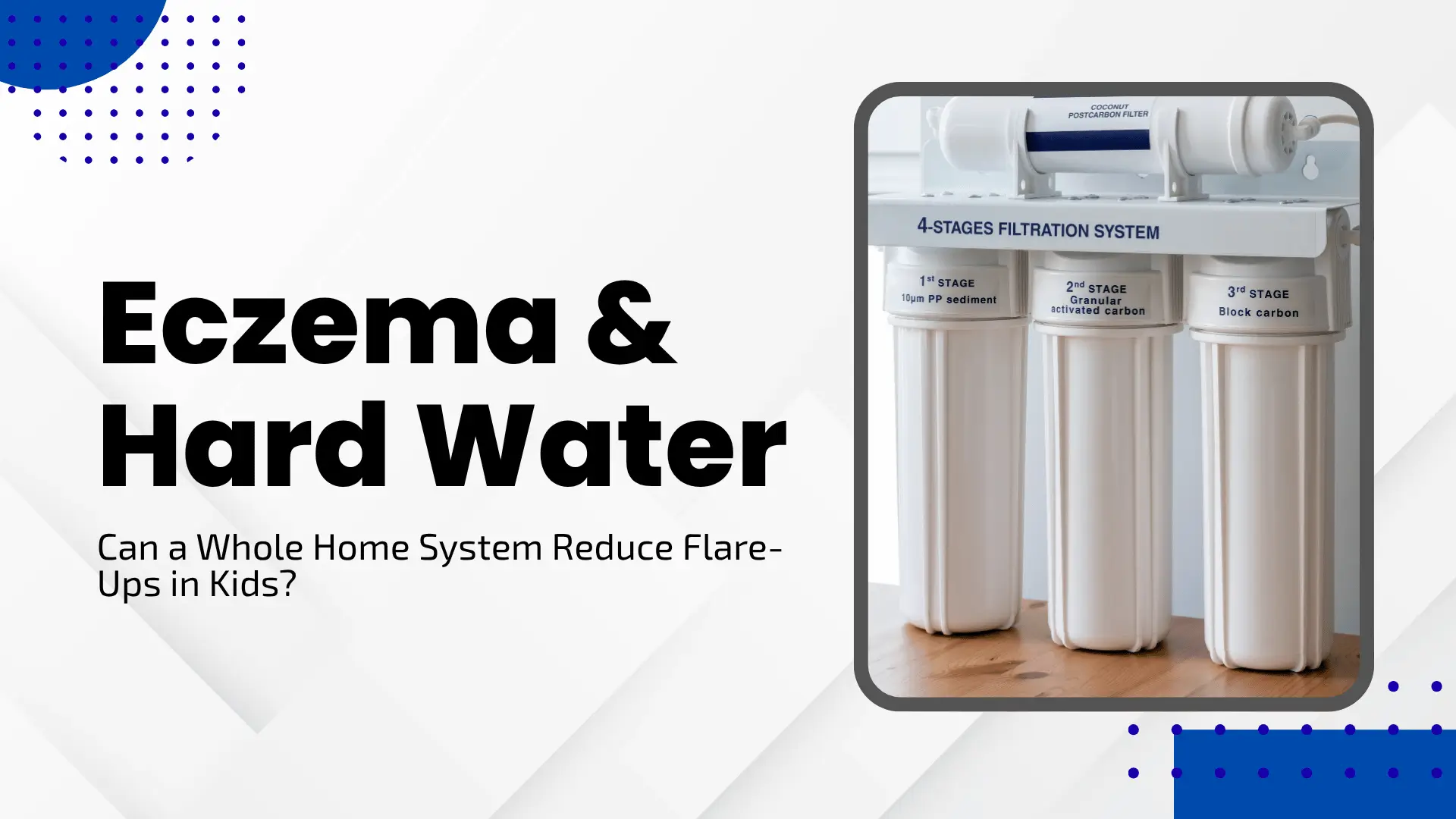
Here’s the general flow of a good whole home setup:
First, sediment filtration catches rust, sand, and particles that can irritate skin or clog up downstream equipment.
Next, a water softener system removes calcium and magnesium through ion exchange. This alone makes water feel silkier and helps soap rinse completely off your child’s skin.
Then comes carbon filtration. Activated carbon is excellent at removing chlorine, chloramines, and many organic compounds that cause skin irritation and unpleasant taste.
Some Texas homeowners add a reverse osmosis system under the kitchen sink for drinking water. That’s a separate step for water you consumebut for eczema, the priority is treating all the water used for bathing, handwashing, and laundry.
When these stages work together, you get water that’s soft, chlorine-free, and clean. Many parents report seeing calmer skin within a few weeks of switching.
Real Texas Water Conditions: What You’re Likely Facing
Where you live in Texas matters. Here’s a quick look at what homeowners typically deal with:
In Houston and surrounding areas like Katy and Sugar Land, the city draws from surface water and groundwater. Chlorine levels are noticeable, and hardness varies by neighborhood. Many homeowners searching for whole house water filtration systems Houston TX are specifically trying to address both hardness and chlorine.
In Austin and Cedar Park, water comes primarily from the Colorado River and the Edwards Aquifer. Hardness is moderate to high, and some areas have elevated sediment levels from lake drawdowns. Families looking into water filtration austin tx or austin water filtration systems often mention skin sensitivity as their main driver.
In Dallas and San Antonio, similar patterns emerge. Dallas water tends to be moderately hard with noticeable chlorine. San Antonio’s water, drawn largely from the Edwards Aquifer, can be very hard. Many homeowners searching dallas water filtration system or water filtration san antonio are parents trying to help a child with persistent eczema.
The common thread? Almost no Texas homeowner gets naturally soft, chlorine-free water straight from the tap.
Signs Your Home’s Water Might Be Affecting Your Child’s Skin
You don’t need a lab test to suspect hard water is involved. Look for these clues:
- Soap and shampoo feel like they won’t rinse off completely
- White, chalky scale builds up on showerheads and faucets
- Towels feel stiff and scratchy even after washing
- Your child’s skin feels dry or tight immediately after bathing
- Eczema patches worsen in winter when indoor heating dries the air further
The most telling sign is improvement when you’re away from home. If your child’s skin clears up during a week at Grandma’s house in a different city, your home’s water quality is worth investigating.
Does Softening Remove Contaminants? What Parents Get Wrong
This comes up constantly, so let’s be clear: water softeners do not remove chlorine, lead, bacteria, or most other contaminants. They only remove hardness minerals (calcium and magnesium).
I’ve seen families spend good money on a water softener near me expecting their eczema problems to vanish. When their child’s skin doesn’t improve, they assume water wasn’t the issue. But the real problem was chlorinewhich a softener doesn’t touch.
That’s why many Texas specialists recommend combining a softener with carbon filtration in a whole home system. Softening handles the mineral issue that makes soap residue stick. Carbon filtration removes the chemical irritants. Together, they address the full range of water-related eczema triggers.
How Long Do These Systems Last? What About Maintenance?
A quality whole home water filtration system, properly maintained, typically lasts 10 to 15 years. The media inside filters needs replacement on different schedules:
- Sediment filters: every 3 to 6 months
- Carbon filters: every 6 to 12 months depending on water use
- Water softener resin: 10 to 15 years
- Reverse osmosis membranes (if you have one): 2 to 5 years
Salt for the softener needs regular replenishment. Most Texas families go through about 40 to 80 pounds per month depending on water hardness and household size. You can find salt for filtration systems easily at home improvement stores or have it delivered.
The maintenance isn’t difficult, but it’s real. A system sitting unattended for years will eventually stop working effectively. The good news is that professional installation from certified specialists often includes a maintenance plan reminder so you don’t have to track everything yourself.
Is a Whole Home System Worth It in Texas?
For a family dealing with childhood eczema that hasn’t responded well to creams and lotions? Yes, absolutely. Here’s why:
You can buy shower filters that remove chlorine. They cost around $30 to $50 and screw onto your shower arm. But they don’t soften water, and they only treat the showernot the bathroom sink where kids wash hands, not the washing machine where towels and sheets get rinsed, not the bathtub where they soak.
A whole home system treats every drop of water entering your house. That means bath water, handwashing water, laundry waterall of it is soft and chlorine-free. For a child with sensitive skin, the consistency matters. One handwashing with hard, chlorinated water can undo a day’s progress.
The investment varies based on your home’s size, water conditions, and which components you choose. Many Texas homeowners spend between $1,500 and $4,000 for a quality whole home system installed by professionals.
What About Reverse Osmosis for Daily Drinking?
Parents often ask if reverse osmosis water is safe for kids to drink daily. The short answer: yes, absolutely.
RO systems remove more contaminants than any other common home treatment option, including lead, arsenic, nitrates, and hundreds of other potential pollutants. The water comes out very pure.
Concerns about RO water “leaching minerals” from the body are mostly unfounded. You get far more minerals from food than from water. That said, if you want to add minerals back, some under-sink RO systems include a remineralization stage.
For eczema specifically, RO water isn’t necessary for drinking unless you’re worried about specific contaminants. The bigger benefit for skin comes from treated bathing water. Many Texas families install a reverse osmosis system just for their kitchen sink while treating the rest of the house with a softener and carbon filter.
Signs You Should Test Your Water
You can’t see most water problems. Hard water doesn’t look dirty, and chlorine doesn’t always smell strong. Here’s what to do:
Order a simple home test kit from a hardware store or online. Test for hardness, chlorine, and pH. For more detailed resultsincluding potential lead, bacteria, or heavy metalssend a sample to a certified lab. Cost is typically $40 to $150.
A westinghouse water testing kit or similar can give you basic readings, but for medical concerns like eczema, consider a professional lab test. Some water treatment companies offer free basic testing as part of a consultation.
You can also request a water quality report from your city. Every Texas municipal water supplier is required to publish an annual Consumer Confidence Report. That report won’t tell you how hard the water is inside your specific pipes, but it will show what the city adds and what contaminants they monitor.
FAQ: Texas Parents Ask These Questions All the Time
Is a whole-home water purification system worth it in Sugar Land or Houston?
For families dealing with confirmed hard water and chlorine sensitivity, yes. The combination of softer water and chlorine removal typically reduces skin irritation and dryness. Many parents tell me they notice calmer skin within two to three weeks. The system also protects appliances and reduces soap scum, so you get multiple benefits beyond eczema relief.
What water issues are most common in Texas homes?
Hardness is number one. Chlorine is number two. In older neighborhoods, especially parts of Houston and Dallas, sediment and occasional lead from aging pipes are concerns. Some rural areas near Austin and San Antonio deal with high total dissolved solids or occasional bacteria. Each Texas region has its own water personality.
Do water softeners remove lead or other contaminants?
No. Water softeners only remove calcium and magnesium. If lead, chlorine, pesticides, or bacteria are your concern, you need additional filtrationtypically carbon filtration, reverse osmosis, or UV treatment. This is why many Texas families install whole home systems rather than standalone softeners.
Is reverse osmosis safe for children to drink daily?
Yes. Reverse osmosis produces very clean water that’s safe for everyone in the family, including infants and children. The water lacks minerals, but children get minerals from food. Many pediatricians consider RO water perfectly fine for daily drinking. If you’re concerned, a remineralization cartridge adds back calcium and magnesium.
How long do home water systems typically last?
A quality whole home system with proper maintenance lasts 10 to 15 years. The filtration media inside needs replacement on different schedulessediment filters every few months, carbon filters every 6 to 12 months. The softener resin typically lasts a decade or more. Reverse osmosis membranes last 2 to 5 years.
Next Steps for Texas Families
If your child’s eczema isn’t responding to standard treatments, water quality is worth investigating. Start by testing your water or requesting your city’s annual report. Then talk with a water specialist who understands both water treatment and skin health.
Certified specialists can help you design a system that addresses your home’s specific conditionswhether you’re in Houston needing chlorine removal, in Cedar Park dealing with sediment, or in San Antonio fighting hard water.
For Texas families ready to explore whole home solutions, Aqua Pure LLC has been helping homeowners throughout the state improve their water quality for years. Their team works with families to understand local water conditions and install systems that address real problems, not just sell equipment. From water softener system installation to whole home filtration and reverse osmosis, they focus on practical solutions backed by professional installation.
Finding water treatment near me that understands both water chemistry and family health concerns makes all the difference. Look for local providers who test before they recommend and who explain options clearlyno pressure, just honest guidance for your home and your kids.