


Buying a home in Texas is an exciting milestone. Between securing financing, scheduling inspections, and packing boxes, you’ve got a lot on your plate. But here’s one thing that often gets overlooked until after the keys are handed over: water quality.
Water issues don’t always announce themselves with bad smells or discolored taps. Sometimes, the problems are invisible, and they can be costly. As a Texas homeowner advisor, I can tell you that adding a thorough water quality test to your home buying checklist isn’t just smartit’s essential. This is especially true in communities like Sugar Land, Katy, and Houston, where water conditions can vary from one neighborhood to the next.
Let’s walk through why this matters, what to look for, and how to make sure the water in your new home is safe and efficient from day one.
Why Texas Water is a Special Case
Texas has a well-earned reputation for hard water. The state ranks 6th in the nation for average water hardness, with levels frequently exceeding 200 parts per millionwhich falls into the “very hard” category .
Why? It comes down to geology. As water moves through underground formations like limestone, dolomite, and gypsum, it dissolves minerals like calcium and magnesium . The result is water that can leave white crusty buildup on faucets, make soap struggle to lather, and leave spots on your dishes .
If you’re looking at a home in the Hill Country or areas with older infrastructure, you may also encounter well water systems that require extra due diligence. For example, private wells aren’t managed like public water systems, so there’s no annual Consumer Confidence Report to review unless the seller kept records . That means the responsibility for testing and treatment falls entirely on you, the buyer.
What’s Actually in Your Water?
Understanding the potential contaminants in your water helps you know what to test for. Here are the most common culprits in Texas homes:
Hard Water Minerals
As we covered, hard water is characterized by calcium and magnesium. It reduces the effectiveness of soap, causes scale buildup in pipes and hot water heaters, and can shorten the lifespan of appliances by 30-50% . If you notice a film on your skin after bathing, that’s a classic sign of hard water at work .
Chlorine and Chloramine
Many municipal systems in the Houston area use chlorine or chloramine to disinfect water. While this is great for killing bacteria, it leaves an unpleasant taste and smell that many families find off-putting. A simple activated carbon filter can go a long way here.
Sediment and Rust
Older pipes, both in city infrastructure and within a home, can contribute sediment and rust to your water. This may show up as red or brown stains in sinks and toilets, or yellowing of laundry .
Lead and Other Heavy Metals
While less common, lead can leach into drinking water from older plumbing materials. A certified water test can identify if lead is present.
Iron and Iron Bacteria
Dissolved iron can cause reddish-brown stains in sinks, toilets, and dishes, and give the water a metallic taste. Iron bacteria can also form reddish slime in toilet tanks and reduce water flow .
The Case for Pre-Closing Testing
So why test before closing? Simple: leverage and peace of mind.
If a water test reveals a serious issuelike contamination or an undersized wellyou have options. You can negotiate for the seller to install a water softener system, ask for a credit at closing, or even reconsider your offer. On the other hand, if the water is in good shape and simply needs a filter for taste, you can make an informed plan.
Many buyers in Kempner, Texas, learned this lesson the hard way when they discovered brown, smelly water after moving insomething they wish they had known about during the homebuying process . As real estate experts note, water quality isn’t always a required disclosure, so you can’t rely on the seller to volunteer the information .
Your due diligence should include:
- Well water: At minimum, test for total coliform/E. coli, nitrates, total dissolved solids, pH, iron, and manganese . Ask for the well log and pump age. Test the flow rate to make sure it can meet your household’s needs .
- City water: Request the annual Consumer Confidence Report from the water utility. This report tells you where the water comes from and what contaminants are present. However, it’s a system-wide average; a home test will tell you about your specific tap.
Water Treatment Options for Texas Homes
Once you understand what’s in your water, you can choose the right solution. Most Texas homes benefit from a combination approach.
Whole-Home Water Filtration System
A whole-home system treats water at the point it enters your house. This protects your plumbing, appliances, and water heater from damage, while also delivering cleaner water to every tap. Many homeowners in San Antonio and Austin use whole-home water filtration to reduce chlorine taste and sediment . These systems often include a sediment filter and a carbon filter.
Water Softener Systems
If your test shows high mineral content, a water softener system can be a game-changer. It works through ion exchange, replacing hard minerals with sodium or potassium. This means less scale buildup, more lather from soap, and longer-lasting appliances.
Whether you’re considering a water softener system for your new home in Houston or looking at water softener companies near me in Sugar Land, professional installation makes a difference. Brands like Westinghouse water softener and Aqua Pure water softener are popular options, and their systems are widely available. I’d recommend reading through Westinghouse water softener reviews to see what other Texas homeowners have experienced, just like you might research Aqua Pure water softener service to understand the difference between systems.
Reverse Osmosis (RO) Systems
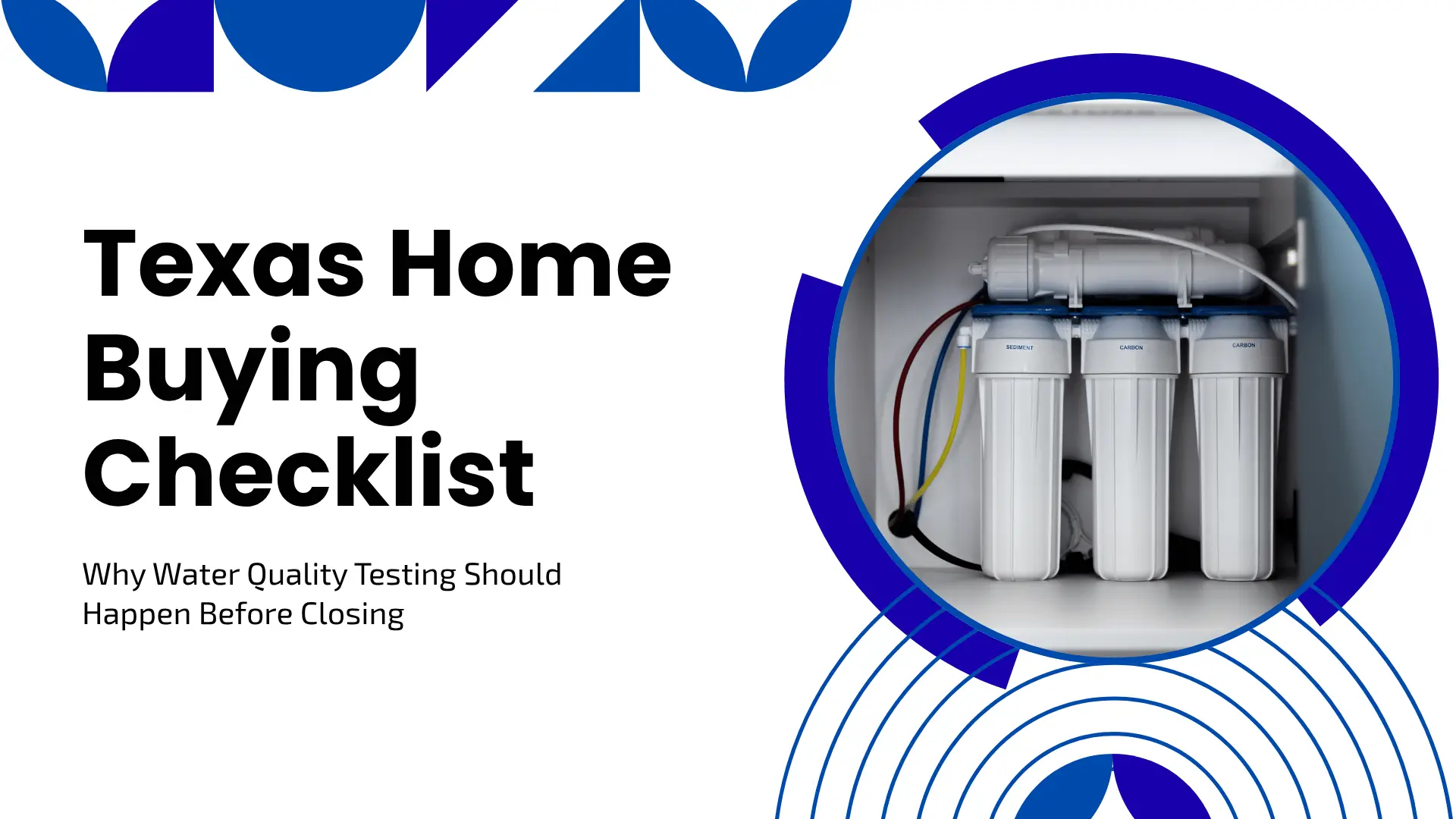
Reverse osmosis is a highly effective way to remove dissolved solids, heavy metals, and other contaminants from your drinking water. An RO system pushes water through a semi-permeable membrane, leaving impurities behind.
It’s important to note that RO systems are typically point-of-use, meaning they’re installed under a single sink (like the kitchen), not the whole house. If you have hard water, you’ll want a water softener system to protect your appliances, and an RO for drinking water quality.
A reverse osmosis system is safe for daily drinking. In fact, it’s one of the most effective ways to remove contaminants that can sneak through municipal treatment .
Making Water Quality a Priority
Buying a home is about building a future. Don’t let an overlooked water problem become an expensive lesson. Whether you choose a simple carbon filter for taste, a water softener system to protect your appliances, or a reverse osmosis system for your drinking water, understanding the water quality in your new home is one of the smartest investments you can make.
By adding water testing to your pre-closing checklist, you’re not just protecting your healthyou’re protecting the longevity of your home’s plumbing and appliances. It’s a win-win.
FAQ
Is a whole-home water purification system worth it in Texas?
Yes. Texas water is notoriously hard, and municipal systems often rely heavily on chlorine. A whole-home system protects your plumbing, extends the life of appliances, and improves the taste and smell of your water. If you’re in areas like Katy or Sugar Land with older neighborhoods, it’s practically a necessity.
What water issues are common in Texas homes?
Hard water is the most widespread issue, leaving mineral buildup and reducing appliance efficiency . Depending on your water source, you might also deal with chlorine taste, sediment, iron stains, or even bacterial contamination in private wells .
Do water softeners remove contaminants?
No, not really. Water softeners remove calcium and magnesium (the minerals that make water hard). They are not designed to remove contaminants like chlorine, lead, or nitrates. Think of a water softener as protecting your plumbing and appliances. For drinking water purity, you’ll want a reverse osmosis system or another filtration method.
Is reverse osmosis safe for daily drinking?
Yes. Reverse osmosis removes many contaminants, including heavy metals and dissolved solids. Some people worry about demineralization, but the system simply removes what’s there. As long as you’re getting minerals from a balanced diet, RO water is perfectly safe and healthy for daily drinking.
How long do home water systems typically last?
- Water Softeners: Well-maintained systems can last 10-15 years or longer, though the resin bed may need replacing around that time.
- Whole-Home Filters: Depending on the filter type, replacement cartridges may need to be changed every 3 to 12 months.
- Reverse Osmosis Systems: The membranes often last 2-5 years before they need replacing, while pre and post-filters need more frequent changes.
How Aqua Pure LLC Can Help
Navigating water treatment options for your new Texas home can feel overwhelming. At Aqua Pure LLC, we specialize in helping families in Houston, Sugar Land, Katy, and surrounding communities find the right solution for their water quality needs. Whether you need a whole-home filtration system, a water softener system, or a reverse osmosis system, our certified specialists are here to guide you.
We don’t believe in one-size-fits-all solutions. Every home is different, and we take the time to understand your specific water conditionswhether you’re dealing with hard water, chlorine, sediment, or iron. From installation to ongoing maintenance, our team ensures your water system works efficiently for the life of your home.
Contact us today to learn more about water softener installation and home water filtration system options tailored for your new Texas home. We’re here to help you enjoy cleaner, better water from the moment you move in.
[Aqua Pure LLC] is proud to be a Texas-based company committed to delivering high-quality water solutions and professional service. Let us help you start your homeownership journey with confidence and peace of mind.