


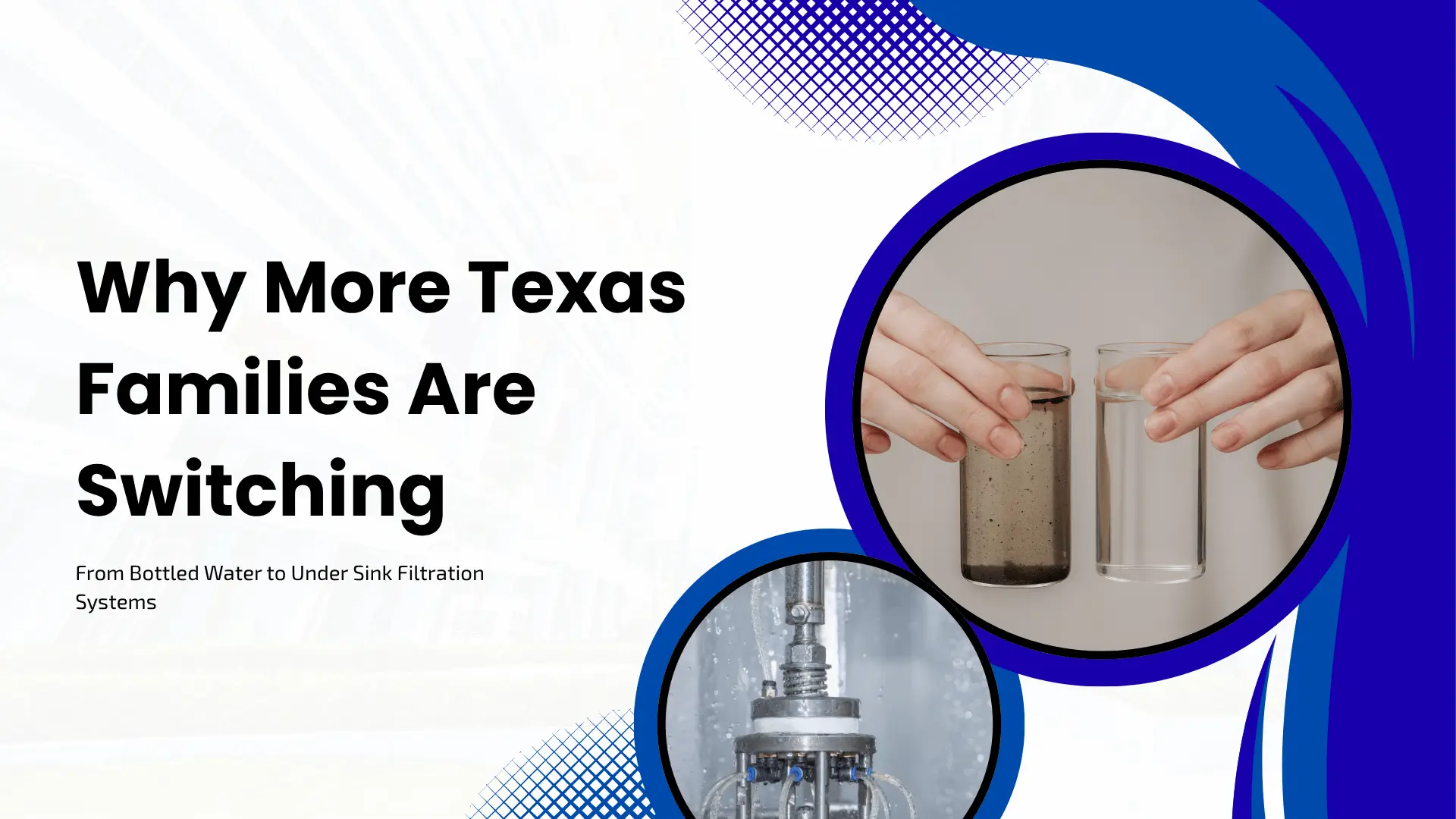
If you live in Texas, you already know how important a cold glass of water is on a scorching summer afternoon. But if your family has been relying on bottled water to get that refreshing, clean taste, you’re not alone.
In communities like Sugar Land, Katy, Houston, and San Antonio, many homeowners are growing tired of hauling cases of water from the grocery store. They are concerned about what might be in their tap water and frustrated with the plastic waste piling up in their recycling bins. But there’s a shift happening. An increasing number of Texas families are ditching the plastic jugs for a permanent solution that delivers high-quality water right from their kitchen faucet: the under sink filtration system.
This guide will explain why homeowners across the Lone Star State are making the switch, what you need to know about your local water, and how to decide if a home water filtration system is right for your household.
The Hidden Costs of Relying on Bottled Water
For years, bottled water was seen as the easiest way to avoid the taste of chlorine or the potential contaminants in city water. However, the tide is turning. A recent report highlighted that bottled water can be around 2,000 times more expensive than tap water. For a family of four, the annual cost of bottled water can easily run into the hundreds or even thousands of dollars.
Beyond the financial hit, there are other issues:
- Inconvenience: Running out of water, lugging heavy cases from the car, and finding storage space for bulky bottles is a chore.
- Environmental Impact: Plastic waste is a major concern, with a single bottle taking around 450 years to decompose.
- Quality Concerns: Many brands are simply filtered municipal water, and microplastics can leach into the water from the plastic bottles themselves.
For many homeowners, once they realize these drawbacks, the idea of turning their tap into the water source becomes very appealing.
Understanding Your Tap Water: The Texas Reality
Before choosing a system, it’s helpful to understand what is actually in your water. The Texas Commission on Environmental Quality (TCEQ) notes that no water supply is ever completely free of all contaminants. The key is knowing what type of contaminants are present in your area.
Texas water varies significantly depending on whether you live in Houston, Austin, or San Antonio. Here are some common challenges:
Hard Water and Mineral Buildup
If you have chalky spots on your dishes or struggle to lather soap, you have hard water. Nearly every major Texas city tests hard or very hard, often averaging around 12 grains per gallon. This is caused by calcium and magnesium dissolved in the soil.
While hard water isn’t a health risk, it can be a nightmare for your home. It causes scale buildup in pipes and water heaters, reducing efficiency and shortening appliance lifespans. In Central Texas, particularly in areas served by the Edwards Aquifer, this is a constant battle. A water softener system is generally the only way to tackle this issue, as standard filters won’t remove these minerals.
Disinfection Byproducts (TTHMs and HAAs)
City water utilities must disinfect water, usually with chlorine or chloramine. When chlorine reacts with organic matter, it creates disinfection byproducts. This is a notable issue in Houston, which draws much of its water from surface sources like Lake Houston. These byproducts can affect taste and odor, and they are a key reason many homeowners look for filtration.
Sediment, Lead, and Heavy Metals
Depending on the age of your pipes and your local infrastructure, sediment, rust, and lead can enter your water. Lead, in particular, is a serious health concern, especially for children. Under sink systems, especially Reverse Osmosis (RO), are highly effective at removing lead and heavy metals.
PFAS (Forever Chemicals)
PFAS are a growing concern across the nation, and Texas is no exception. These chemicals are often found near industrial areas and, in Texas, notably around Houston. Because standard carbon filters often don’t remove these “forever chemicals,” many families are turning to advanced solutions like Reverse Osmosis to ensure their drinking water is safe.
How to Tell If Your Home Needs Water Purification
Sometimes, the need for filtration is obvious. Other times, the water might seem fine, but contamination could be present. If you are experiencing any of the following, it might be time to investigate.
Signs of Hard Water
- Soap scum on sinks and bathtubs.
- Film on dishes or glassware after washing.
- Dry skin and dull hair.
- Mineral stains on clothing.
Signs of Contaminated Water
- A strong chlorine pool taste or smell.
- A rotten egg odor (often hydrogen sulfide).
- Metallic taste (could indicate iron or lead).
- Red or brown staining (iron) or blue-green staining (corrosion).
- Cloudy water or visible sediment.
Unseen Concerns
Even if your water tastes fine, checking your city’s annual Consumer Confidence Report (often called a Water Quality Report) or the EWG Tap Water Database can reveal contaminants you can’t taste, such as arsenic, radium, or nitrates.
Filtration vs. Softening vs. Reverse Osmosis
This is where things get confusing for many homeowners. What is the difference between a filter, a softener, and RO?
Water Softeners
A water softener system is not a filter. It removes hardness minerals (calcium and magnesium) through ion exchange. It swaps these minerals for a small amount of sodium. This saves your appliances, improves lather, and stops scale, but it does not remove chlorine, lead, or other contaminants. You might still need a filter for drinking water.
Under Sink Water Filters (Carbon)
A standard under sink filter uses activated carbon. This is the workhorse for taste and odor. It effectively removes chlorine, chloramines, and some chemicals. However, it doesn’t remove dissolved solids (TDS), heavy metals, or hard water minerals. If your main complaint is pool-tasting water, a carbon filter might be enough.
Reverse Osmosis Systems
This is the gold standard for drinking water. A reverse osmosis system forces water through a semi-permeable membrane to remove up to 99% of contaminants, including lead, arsenic, nitrates, fluoride, PFAS, and dissolved solids.
Yes, it removes minerals, but most modern systems include a remineralization filter. Homeowners in San Antonio, where naturally occurring minerals like uranium and radium are a concern, often rely on RO for peace of mind. A reverse osmosis system is typically installed under the sink and provides a dedicated faucet for high-quality drinking water.
UV Sanitization
Some systems use Ultraviolet (UV) light to kill bacteria and viruses. This is more common for well water but can be combined with other systems for water that may have biological contaminants.
The Under Sink Advantage: Convenience and Quality
Why are under sink systems winning the battle against bottled water? The convenience factor is huge. You simply turn on the tap to get filtered water.
While whole-house systems treat all water in the home and are great for protecting pipes and appliances, an under sink filter is the most efficient way to treat water specifically for drinking and cooking. You don’t need to pay to filter water that you are just using to wash a car or water the lawn.
Under sink systems are:
- Space-Saving: Hidden away, out of sight.
- Efficient: They target exactly what you need.
- High Flow: Modern systems can deliver a half-gallon of filtered water per minute or more.
- Cost-Effective: For less than ten cents per gallon in some cases, it’s a fraction of the cost of bottled water.
Maintenance and Longevity
One concern homeowners often have is upkeep. The good news is that under sink systems are low maintenance.
- Filter Replacement: The primary task is changing the filters. How often? Most last between 6 to 12 months, or 500 to 800 gallons.
- Professional Installation: Hiring certified specialists for the initial installation, whether for a water softener installation in Houston or a full whole house water filter installers job, ensures the system works perfectly from day one.
- System Lifespan: With proper maintenance, these systems can last for many years (often 10-15 years), providing a long-term return on investment.
FAQ: Answering Your Top Questions
Is a whole-home water purification system worth it in Texas?
It depends on your goals. If you want to protect your appliances from hard water and enjoy filtered water in every shower, a whole-house softener and filter is a huge benefit. However, for the most water filtration systems in San Antonio and elsewhere, a combination approach is used: a water softener system for the whole house, and a reverse osmosis system under the kitchen sink for drinking.
What water issues are common in Texas homes?
The big three are hard water (scale), disinfectant byproducts (taste/odor), and in many areas, heavy metals like lead and arsenic. San Antonio water hardness is well-known due to the limestone aquifer, while Houston water softener needs are often driven by scale from surface water.
Do water softeners remove contaminants?
No. A water softener system removes calcium and magnesiumthe minerals that cause hard water. It does not remove chlorine, lead, or other contaminants. To remove those, you need a carbon filter or a reverse osmosis system.
Is reverse osmosis safe for daily drinking?
Yes. It is one of the safest and most effective ways to purify drinking water. It removes a vast array of contaminants, including heavy metals and PFAS. The World Health Organization notes RO removes minerals, but because we get most minerals from food, it is safe for healthy individuals. Many RO systems even add minerals back in for taste.
How long do home water systems typically last?
With regular maintenance (changing filters on schedule), a water filtration system or water softener system can last 10 to 15 years or more. The quality of the installation and maintenance frequency significantly impacts longevity.
Making the Switch
The move away from bottled water is a move toward convenience, health, and sustainability. By installing an under sink system, you take control of your family’s water quality and eliminate the need for heavy plastic jugs.
Homeowners in places like Sugar Land, Katy, and San Marcos are increasingly asking about water softener installation and water filtration services. This trend reflects a broader awareness that we shouldn’t have to buy our water in bottles to ensure it tastes good and is safe.
If you are looking for a reliable solution, you can explore home water filtration system options that fit your household’s specific needs. Ensuring your water is free from contaminants and that your appliances are protected from hard water damage is a long-term investment in your home and health.
It’s time to enjoy the convenience of cold, crisp water flowing directly from your kitchen sink without the plastic waste or the high price tag of bottled water.
For expert advice, professional installation, and high-quality water purification services in Texas, consider reaching out to Aqua Pure LLC. Their team of certified specialists can help you navigate your local water challenges, whether you need a water softener system, a reverse osmosis system, or simply salt for filtration systems. Take the next step toward better water for your family!