


If you’ve moved to a newer development in Katy, Sugar Land, or one of the booming suburbs north of San Antonio, you’ve probably noticed something odd about your water. Maybe your coffee tastes a little off. Your shower glass has a film that won’t scrub away. Or you’re buying bottled water by the case when you swore you’d never do that again.
You’re not imagining it. And you’re not alone.
Across fast-growing Texas communities, homeowners are upgrading their water treatment systems not because they’re paranoid, but because they’re paying attention. The water coming into your home travels a long way to get there through aging infrastructure, treatment plants doing their best with surface water sources, and a distribution system that spans hundreds of miles. By the time it reaches your tap, it’s picked up things you’d rather not think about.
Here’s what’s actually going on, and what you can do about it.
The Reality of Texas Water: Hard, Treated, and Not Always What You Expect
Let’s start with the most common complaint: hardness.
San Antonio’s water supply, which comes primarily from the Edwards Aquifer, typically ranges from 15 to 20 grains per gallon of hardness . To put that in perspective, anything over 7 grains per gallon is considered hard. San Antonio’s water isn’t just hardit’s aggressively hard. That calcium and magnesium dissolves into your water as it moves through soil and rock, and it doesn’t leave until you force it out.
Houston-area homeowners deal with a different set of issues. The City of Houston provides surface water from Lake Houston, the Trinity River Canal, and Lynchburg Reservoir to many municipal utility districts . That water is treated with chlorine or chloramines to keep it safe as it travels through miles of pipes. The treatment works. But the disinfection byproducts that form along the waythings like total trihalomethanes and haloacetic acidsare regulated precisely because they’re not entirely harmless .
Even the most well-run utilities deal with this. Harris County MUD 23, for example, reported a lead consumer notice violation in late 2025 related to reporting requirements, though the utility confirmed no lead service lines requiring replacement were found . That’s the kind of thing that makes homeowners start asking questions.
How to Tell If Your Home Is a Candidate for Treatment
Not every home needs a full upgrade. But there are clear signals that your water is asking for attention.
Hard water signs show up in your daily life. Soap scum on shower tiles. A film on your hands after washing. Dishes that come out of the dishwasher with spots or a cloudy haze. That white, crusty buildup on your faucets and showerheads. Stiff laundry. Dry skin and dull hair. These aren’t just cosmetic annoyancesthey’re evidence that minerals are depositing inside your pipes, water heater, and appliances .
Filtration issues smell and taste different. Chlorine odor that reminds you of a swimming pool. Water that tastes flat or chemical. Sediment that clouds a glass of tap water. If you’re on well water, you might deal with sulfur smells, iron staining, or sediment that clogs your fixtures.
The only way to know for certain what’s in your water is to test it. A comprehensive water test from a certified laboratory will tell you exactly what you’re dealing with . Guessing leads to buying the wrong equipmenta water softener won’t fix a chlorine problem, and a carbon filter won’t touch hardness.
Softeners, Filters, and RO: What’s the Actual Difference?
This is where a lot of homeowners get confused, and understandably so. The terms get used interchangeably, but these systems do fundamentally different things.
A water softener uses ion exchange to remove calcium and magnesiumthe minerals that make water “hard.” Water passes through a tank filled with resin beads charged with sodium ions. The calcium and magnesium stick to the resin, and sodium is released into the water. You get soft water that lathers soap properly, doesn’t leave scale, and protects your plumbing . What it doesn’t do is remove chlorine, lead, bacteria, or sediment.
A water filtration system uses physical or chemical processes to remove contaminants. Activated carbon filters trap chlorine, chloramines, volatile organic compounds, and some heavy metals. Sediment filters catch dirt and rust particles. Whole-house filtration systems treat water at the point of entry, so every faucet, shower, and appliance gets filtered water .
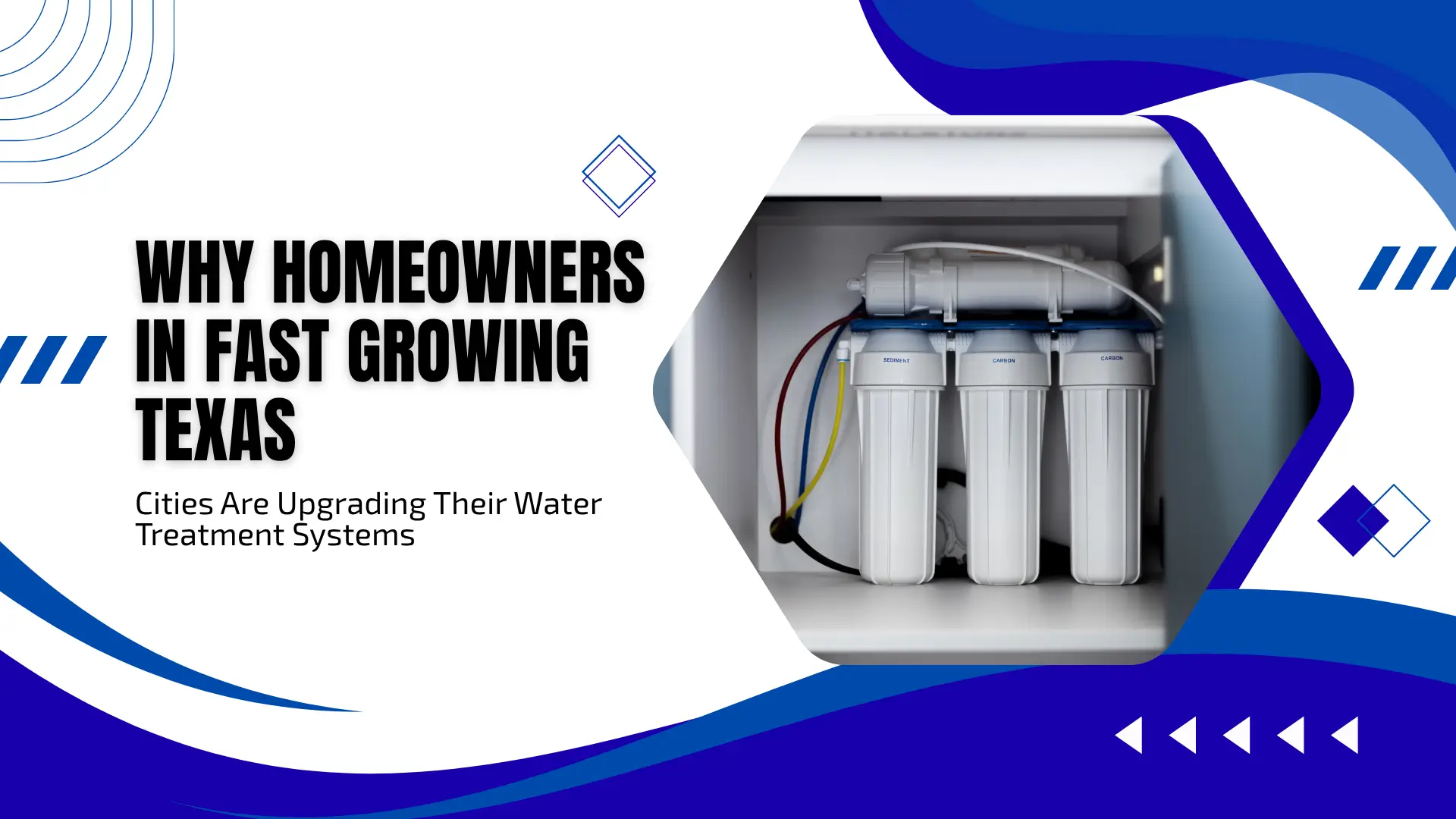
Reverse osmosis is a different beast entirely. It forces water through a semi-permeable membrane with pores so smallabout 0.0001 micronthat it removes dissolved solids, lead, copper, chromium, and a long list of other contaminants . RO is typically installed under the kitchen sink for drinking water, though it wastes some water in the process.
UV sanitization uses ultraviolet light to kill bacteria and viruses. It’s usually combined with sediment and carbon filtration for well water systems or homes where microbial contamination is a concern .
Most Texas homes dealing with both hard water and chemical contaminants need a combination approach. A water softener protects your plumbing and appliances. A whole-house filter or RO system handles the drinking water quality issues that softening can’t touch.
What a Whole-Home System Actually Looks Like
A whole-home water treatment setup isn’t a single box. It’s a configuration tailored to your water test results and your household’s needs.
The typical setup starts where the main water line enters your home. A sediment pre-filter catches larger particles first. Then water flows through a carbon filter or series of filters to remove chlorine and chemicals. If hardness is an issue, a water softener sits after the filtration stages. For drinking water, an under-sink RO system provides the final polish.
The logic behind this order matters. Chlorine degrades softening resin over time. Filtering first protects the softener and extends its lifespan. And treating the water at the point of entry means your showers, laundry, and appliances all benefitnot just the kitchen tap.
Whole-home systems are typically installed by professionals because they require cutting into the main supply line and making code-compliant connections . Improper installation can void warranties and create problems that surface during a home sale.
Maintenance: What You’re Actually Signing Up For
Every water treatment system requires some maintenance. This isn’t a set-it-and-forget-it purchase.
Water softeners need salt added regularlytypically every four to eight weeks depending on your water hardness and household water use. The system also needs to regenerate periodically, which flushes the accumulated minerals down the drain. Some modern systems automate this process .
Carbon and sediment filters need replacement according to manufacturer schedules, usually every six to twelve months. Some whole-house systems use backwashing media that cleans itself, while others rely on cartridge replacement .
RO systems have multiple filters and a membrane that require periodic replacement. The pre-filters typically last six to twelve months, while the RO membrane might last two to three years.
UV lamps need annual replacement because the bulb loses intensity over time, even if it still lights up.
The good news: once installed, a well-maintained system runs quietly in the background. The cost of salt and replacement filters is modest compared to what you’d spend on bottled water or appliance repairs from scale damage.
A Note on Choosing a Provider
There’s no shortage of water treatment companies in Texas, and the quality varies. The best approach is to start with a water testnot a sales pitch. A reputable provider will test your water, explain the results clearly, and recommend a system that addresses your actual problems rather than upselling you on equipment you don’t need .
Texas-based providers who work in the communities they serve tend to understand local water conditions in a way that national chains often don’t. They know what’s happening in Houston’s MUDs, how San Antonio’s aquifer water behaves, and what well water looks like in the Hill Country.
Aqua Pure LLC, a Texas-based water solution provider, offers water softener systems, whole-house filtration, reverse osmosis, and sanitization services. Their specialists can help you understand what’s in your water and what treatment approach makes sense for your home. If you’re the kind of homeowner who wants clear answers before spending money, that’s the conversation worth having.
Frequently Asked Questions from Texas Homeowners
Is a whole-home water purification system worth it in Texas?
For many Texas homeowners, yesespecially if you’re dealing with hard water, chlorine taste and odor, or concerns about what’s in your municipal supply. The combination of mineral hardness and disinfection byproducts is common across the state. A system that addresses both issues protects your plumbing, your appliances, and your family’s drinking water. Whether it’s “worth it” depends on your specific water quality and what you’re trying to solve.
What water issues are most common in Texas homes?
Hardness is the big one. San Antonio’s water is notably hard, and many Houston suburbs deal with moderately hard to hard water as well. Chlorine and chloramine taste and odor are common in municipal supplies. Sediment can be an issue in older neighborhoods or areas where infrastructure is aging. Homeowners on private wells may deal with sulfur, iron, or bacterial concerns.
Do water softeners remove contaminants?
No. Water softeners remove calcium and magnesium through ion exchange. They don’t remove chlorine, lead, bacteria, sediment, or most other contaminants. If you want contaminant removal, you need filtrationcarbon filters, RO systems, or both. Many homes benefit from a softener and filtration working together.
Is reverse osmosis water safe to drink every day?
Yes. RO systems remove a wide range of contaminants, including lead, copper, chromium, and dissolved solids. The concern some people raise is mineral removalRO water is demineralized. But most people get the minerals they need from food, not water. If you’re concerned, some RO systems add minerals back in a final stage. For daily drinking, RO water is safe and widely used.
How long do home water systems typically last?
It depends on the type and quality of the system. Water softener resin beds can last ten to twenty years with proper maintenance. Carbon filter media typically needs replacement every one to three years, depending on water quality and usage. RO membranes last two to three years with regular pre-filter changes. UV lamps need annual replacement. The housing and tanks themselves often last fifteen years or more.
Wrapping It Up
If you’ve been putting off dealing with your water because it felt like a hassle or a sales trap, you’re not alone. But the reality is that water quality in fast-growing Texas communities isn’t something that fixes itself. The minerals, the chlorine, the sedimentthey keep coming.
The smartest move is to start with information. Test your water. Understand what you’re dealing with. Then decide what level of treatment makes sense for your home and your budget.
If you’d like a straightforward assessment of your water and a clear explanation of your options, reach out to Aqua Pure LLC. They work with homeowners across Texas on water softener system installation, home water filtration system design, reverse osmosis system setup, and ongoing maintenance. No pressure, no jargonjust a conversation about what’s coming out of your tap and what you can do about it.