


If you live in Texas, you already know our water has a personality. In Houston, Katy, Sugar Land, and the surrounding suburbs, you might notice a faint chlorine smell when you fill a glass from the tap. Up in San Antonio, your showerhead probably collects white crusty buildup faster than you’d like. And if you’re on well water outside city limits, you might be dealing with iron staining or that distinct sulfurous “rotten egg” odor.
The truth is, Texas water varies dramatically depending on where you’re standing. Choosing the right residential water filtration system isn’t about buying the biggest or most expensive setup it’s about matching the treatment to what’s actually in your water and how your household uses it. Let’s walk through this practically, without the sales pitch.
Start Here: What’s Actually Coming Out of Your Tap?
Before you spend a dollar on any water filtration system, you need to know what you’re dealing with. Texas ranks near the bottom nationally for tap water quality, with 97% of tested cities showing at least one violation . That doesn’t mean your water is dangerous many violations are aesthetic or minor but it does mean you shouldn’t assume anything.
Most major Texas cities pull from surface water sources. Houston blends water from Lake Houston, Lake Conroe, and the Trinity River, supplemented by groundwater. San Antonio relies almost entirely on the Edwards Aquifer, which flows through limestone and picks up calcium and magnesium along the way.
You have two solid options for figuring out your water’s profile:
Pull your city’s Consumer Confidence Report (CCR). Every municipal water utility publishes one annually. It lists detected contaminants, their levels, and whether they exceed EPA limits. This is free and publicly available.
Get a professional in-home water test. A technician can test for hardness, chlorine, total dissolved solids (TDS), pH, iron, and more in about 30 minutes . If you’re on well water, you absolutely need this the EPA recommends annual testing for private wells, yet many owners go years without it .
DIY test kits from the hardware store (usually $10–$40) can detect chlorine, pH, hardness, and some metals, but they’re not reliable for trace contaminants like lead or PFAS . Use them as a starting point, not a final answer.
The Three Main Water Problems Texas Homeowners Face
Hard Water (The Most Common Issue)
If your soap doesn’t lather well, your dishes come out spotted, and your shower glass has that cloudy film you’ve got hard water. The culprit is calcium and magnesium dissolved from limestone and other mineral deposits.
San Antonio’s Edwards Aquifer supply is among the hardest in Texas at 15–20+ grains per gallon (gpg) . Houston, Austin, and Dallas typically fall in the 8–15 gpg range, though hardness varies by neighborhood and water source . For reference, anything above 10.5 gpg is considered “very hard” .
Hard water isn’t a health emergency, but it’s brutal on your home. Scale builds up inside water heaters, dishwashers, and washing machines, shortening their lifespan. It also leaves skin feeling dry and hair brittle.
Chlorine and Disinfection Byproducts
Municipal water treatment uses chlorine or chloramine to kill bacteria. That’s necessary and good. But chlorine affects taste and odor, and when it reacts with organic matter in water, it can form disinfection byproducts. A carbon filter handles this effectively chlorine and many of its byproducts bind to activated carbon as water passes through.
Sediment, Iron, and Well Water Issues
If you’re outside city limits on well water, your concerns shift. Sediment (sand, silt, rust particles) can clog fixtures and wear down appliances. Iron leaves reddish-brown stains on sinks and laundry. Sulfur bacteria produce that unmistakable rotten egg smell. These issues require different treatment than city water problems.
Matching the Treatment to the Problem
This is where homeowners often get confused. Filtration, softening, reverse osmosis, and sanitization are not interchangeable. They solve different problems.
Water softeners remove hardness minerals (calcium and magnesium) through ion exchange. Resin beads charged with sodium swap places with the hardness minerals as water flows through . The result is “soft” water that lathers better, leaves less scale, and feels silkier on your skin. A water softener does not remove chlorine, lead, bacteria, or most other contaminants it only addresses hardness.
Carbon filtration targets chlorine, chloramine, volatile organic compounds (VOCs), and taste/odor issues. Whole-home carbon filters treat all the water entering your house, so every shower and appliance gets dechlorinated water.
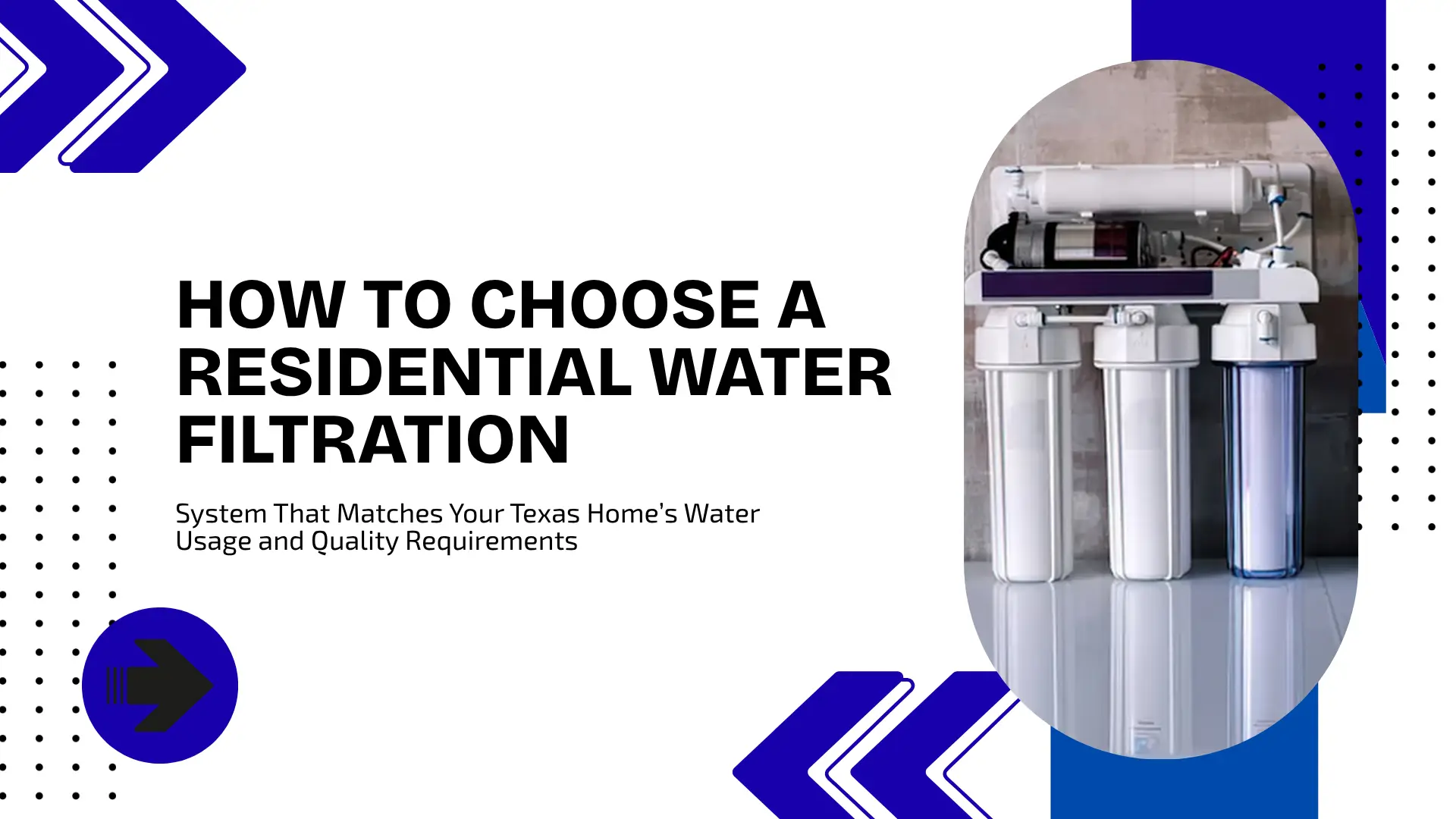
Reverse osmosis (RO) forces water through a semi-permeable membrane that rejects a wide range of dissolved contaminants lead, nitrates, fluoride, arsenic, sodium, and more . RO systems are typically point-of-use (under the kitchen sink) because they produce water slowly and waste a significant portion of input water (often 3–4 gallons wasted per gallon produced) . They’re excellent for drinking and cooking water, but impractical for whole-home treatment.
UV sanitization uses ultraviolet light to inactivate bacteria, viruses, and other microorganisms. It doesn’t remove chemicals or minerals it’s purely for microbial disinfection, most relevant for well water systems.
Many Texas homes need a combination. Hard water plus chlorine taste? A water softener system paired with a whole-home carbon filter handles both. Hard water plus drinking water concerns? Softener for the whole house, RO under the kitchen sink.
Whole-Home vs. Point-of-Use: Which Makes Sense?
A whole-home water filtration system installs at the main water line, treating every drop that enters your house. That means filtered water at every faucet, shower, and appliance. If your water has chlorine odor, sediment, or hardness affecting your entire home, a whole-home approach makes sense .
Point-of-use systems (under-sink RO, countertop filters, shower filters) treat water at a single location. They’re cheaper and simpler, but they don’t protect your plumbing or appliances from hard water scale or sediment.
Here’s a practical way to think about it: If your water issues affect cleaning, bathing, laundry, and appliance longevity go whole-home. If your only concern is what you drink and cook with point-of-use RO may be sufficient. Many homeowners end up with both.
Sizing Your System to Your Household
A filtration system that’s too small will restrict flow and leave you frustrated. Too large, and you’ve overpaid.
For whole-home systems, flow rate matters. Most households need at least 10–15 gallons per minute (GPM) to avoid pressure drops when multiple fixtures run simultaneously . A family of four with three bathrooms has different demands than a couple in a two-bedroom home.
For water softeners, sizing depends on both hardness level and daily water usage. A softener that’s undersized will regenerate too frequently, wasting salt and water. One that’s oversized costs more upfront without real benefit.
This is where a professional assessment pays off. A certified specialist can look at your test results, count your bathrooms, ask about your usage patterns, and recommend equipment sized correctly. Guessing based on square footage alone is a recipe for disappointment.
Maintenance: What You’re Signing Up For
Any water filtration system requires upkeep. Knowing the expectations upfront prevents surprises.
Sediment pre-filters typically need replacement every 3–6 months. Carbon filters last 6–12 months depending on water quality and usage. RO membranes generally last 2–5 years. UV lamps should be replaced annually . Water softener resin can last 10–15 years with proper care, though the control valve may need servicing sooner .
If you’re handy, you can handle filter changes yourself. But for softener regeneration issues, valve problems, or system troubleshooting, professional service is worth the call. Some companies offer maintenance plans that include annual inspections and filter replacements.
When to Call a Professional
You can buy a basic carbon filter online and install it yourself if you’re comfortable with plumbing. But for whole-home systems, water softeners, and RO installations, professional installation in San Antonio TX or the Houston area ensures the job is done right no leaks, proper sizing, and correct configuration for your water chemistry.
Certified specialists also have access to testing equipment that goes beyond what DIY kits offer. They can identify issues you didn’t know existed and recommend solutions matched to your actual water profile rather than generic guesswork.
A reputable Texas-based provider like Aqua Pure LLC offers free in-home water assessments and works with homeowners across the Houston, Katy, Sugar Land, San Antonio, Austin, and Dallas areas. They handle whole-home filtration, water softener system installation, reverse osmosis system setup, and ongoing maintenance.
Your Questions, Answered
Is a whole-home water purification system worth it in Texas?
It depends on your water. If you’re dealing with hard water scale, chlorine taste throughout the house, or sediment affecting appliances, a whole-home system delivers value every time you shower, wash dishes, or do laundry. If your only concern is drinking water quality, an under-sink RO system might be more cost-effective. Get your water tested first that data tells you whether whole-home treatment makes sense.
What water issues are most common in Texas homes?
Hard water tops the list, especially in San Antonio and the Hill Country where Edwards Aquifer water runs 15–20+ gpg . Chlorine taste and odor affect most municipal supplies. Sediment and iron are common in well water systems outside city limits. Some areas also see elevated TDS, which affects taste and can leave spots on dishes.
Do water softeners remove contaminants?
No. Water softeners only remove hardness minerals calcium and magnesium through ion exchange . They don’t remove chlorine, lead, bacteria, pesticides, or other contaminants. If you have both hardness and contamination concerns, you need a softener plus filtration, or a combination system.
Is reverse osmosis safe for daily drinking?
Yes, RO water is safe to drink. It removes a wide range of contaminants including lead, nitrates, and sodium . One consideration: RO removes beneficial minerals like calcium and magnesium along with contaminants. Some systems include a remineralization stage to add those back. For most households, the benefits of contaminant removal outweigh the mineral loss, especially if you eat a balanced diet.
How long do home water systems typically last?
RO membranes last 2–5 years. UV lamps need annual replacement. Sediment and carbon filters are 3–12 month consumables. Water softener resin beds can last 10–15 years, though valves and control heads may need service sooner. Whole-house carbon media (in larger tanks) typically lasts 3–5 years before replacement . Proper maintenance extends everything.
If you’re ready to stop guessing and start with actual data about your water, Aqua Pure LLC offers free in-home water testing and customized system recommendations for Texas homeowners. They’ll test your water, explain what they find, and help you choose a solution that fits your home and budget no pressure, just answers.