


If you live in Sugar Land, Katy, Houston, or anywhere across the San Antonio corridor, you already know that our water comes with a personality. Sometimes it smells like a swimming pool. Sometimes it leaves white crusty spots on your faucets. And if you’re on a well system out toward San Marcos or the Hill Country, you might be dealing with sediment or hardness that makes your dishwasher work overtime.
The good news is that modern water filtration technology has gotten really good at sorting out the bad stuff without stripping your water of the things you actually wantlike the ability to clean your clothes, keep your pipes healthy, and taste refreshing when you fill a glass. Let’s walk through how this actually works, what you can realistically expect, and how to tell if your home is a candidate for an upgrade.
Why Texas Water Often Needs a Little Help
Before we talk about the tech, it helps to understand what’s coming out of the tap. In the Houston metro area, including Sugar Land and Katy, many communities rely on a mix of surface water and groundwater. That groundwater can be rich in dissolved minerals like calcium and magnesium the dynamic duo behind hard water . Surface water sources often get treated with chlorine or chloramine to keep them safe as they travel through miles of pipes to your house . That’s a public health win, but it can leave behind a distinct taste and odor that makes your morning coffee taste a little off.
Out in San Antonio and the surrounding areas, hardness is a whole different beast. If you’ve ever looked at the showerhead in a San Antonio home and wondered why the spray is weak, it’s often because mineral scale has built up inside. The water there is notably hard, which means those calcium and magnesium deposits are eager to make themselves at home in your plumbing and appliances . It’s not a safety crisis, but it is a maintenance headache that adds up over time.
And then there’s the wild card: older plumbing. Even if your city water is treated beautifully, water sitting in older pipes or pipes with lead solder can pick up contaminants on its way to your kitchen faucet. Sugar Land’s utility reports note that while the city manages its side of the service line, homeowners are responsible for what’s inside their walls . That’s why point-of-use filtration or a whole-home carbon filter is often the final safety net.
Sorting the Tech: Softeners, Filters, and RO Are Not the Same Thing
One of the most common points of confusion I hear from homeowners is treating “filtration” and “softening” as interchangeable words. They solve different problems, and the best setups often use both.
Water softeners are the heavy lifters for hard water. They use a process called ion exchange. Think of it like a swap meet: hard water flows over resin beads that are coated in sodium. The resin grabs the calcium and magnesium (the hardness minerals) and releases sodium in their place. The result is water that rinses clean, suds up nicely, and doesn’t leave scale behind. If you’re comparing options like a water softener magnolia system for a Houston home or looking at aqua pure water softeners for a San Antonio property, the goal is the same protect the plumbing and appliances from mineral buildup.
Carbon filtration is the go-to for taste and odor. When water passes through activated carbon, the carbon traps chlorine, organic chemicals, and many of the compounds that make water smell earthy or chemical-ish . A home water filtration system that includes carbon is what gives you that crisp, clean glass of water without the pool smell.
Reverse osmosis (RO) is the precision tool. It pushes water through a very fine membrane that catches dissolved contaminants things like lead, nitrates, and some minerals that carbon might miss. A reverse osmosis system under the sink is popular for drinking water because it produces exceptionally clean-tasting water. It’s worth knowing that RO water is very “soft” and stripped of minerals, so if you’re relying on it for all your drinking and cooking, that’s something to be aware of . Many families use RO just for drinking and cooking while a softener handles the laundry and showers.
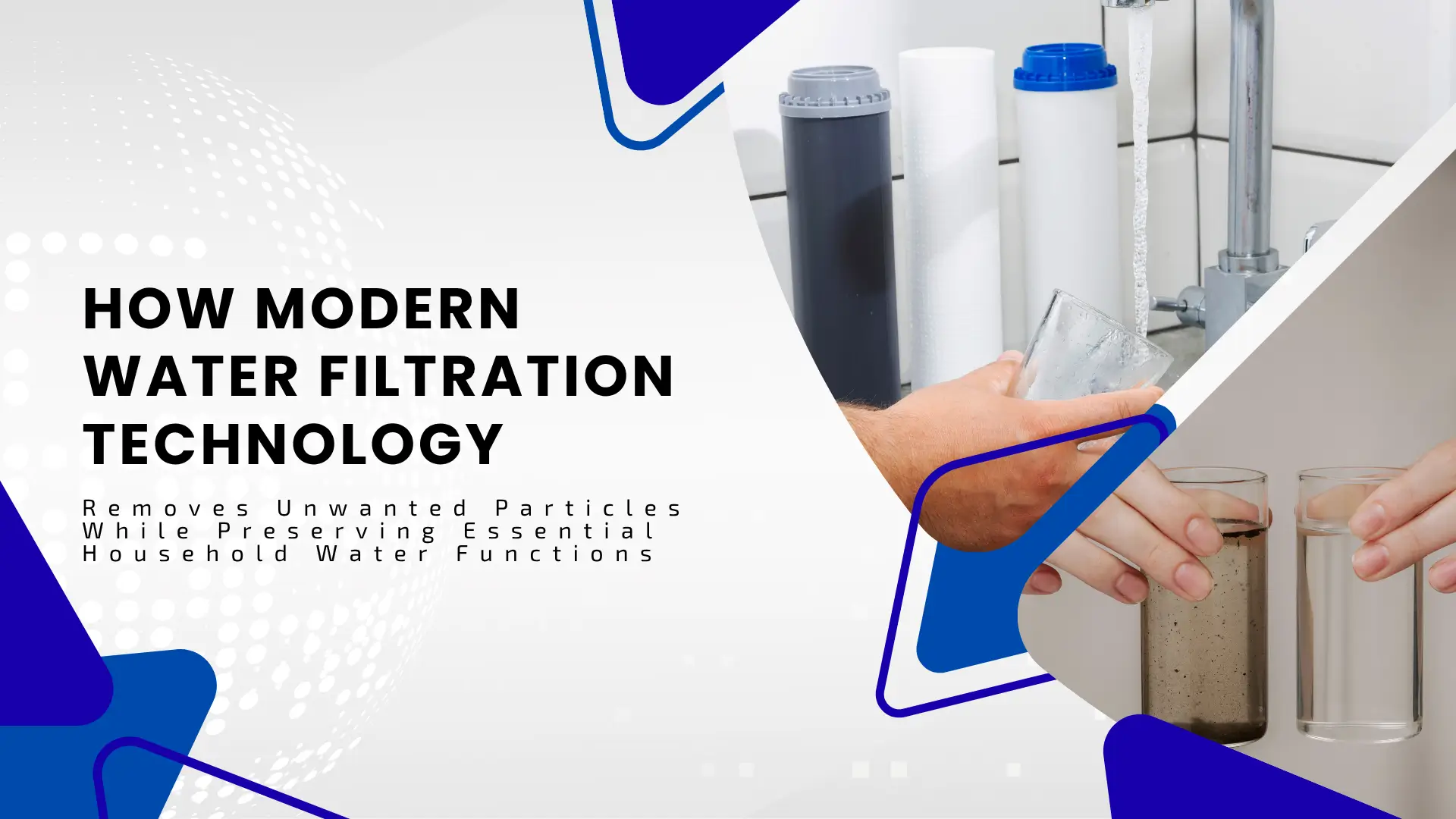
Sediment pre-filters are the unsung heroes. They catch the grit, rust, and dirt before the more delicate carbon or RO membranes get clogged. If you’ve ever had a water filtration service come out and find a brown, sludgy filter, that’s the sediment filter doing its job so the rest of the system doesn’t have to.
How a Whole-Home System Actually Works (Without the Jargon)
Imagine your main water line coming into the house. A whole-home system typically installs right there, so all the water showers, laundry, kitchen, garden hose goes through it.
A common modern setup stacks the stages. First, a sediment filter catches the big stuff. Next, a carbon tank polishes the water for taste and chlorine removal. If you have hard water, the softener sits in line to handle the minerals. And if you want drinking water that’s a step above, an RO unit branches off at the kitchen sink for that final polish.
The key point is that this isn’t about making water “empty.” It’s about removing the specific things that cause problems chlorine byproducts, hardness minerals, sediment, or lead from old pipes while letting water keep doing its job as a solvent for soap, a carrier for heat in your water heater, and a hydrator for your family.
If you’re in an area like Timber wood Park or Buda where well water might be part of the picture, a water treatment setup might also include iron filtration or sulfur removal. Well water can be fantastic, but it almost always needs a custom approach because what’s in the ground varies so much from one neighborhood to the next.
Signs Your Home Could Use a Water Quality Upgrade
You don’t need a lab coat to spot the clues. Here’s what to watch for:
The soap test. If you’re using twice as much shampoo or dish soap to get a lather, hardness is likely stealing your suds. In places like San Antonio or San Marcos, this is a daily reality for many homes .
The crusty faucet. White, chalky buildup around the base of your faucet or on the shower glass is calcium and magnesium saying hello. Over time, that same buildup happens inside your water heater and pipes.
The taste test. If your water tastes like a public pool or has a faint chemical edge, that’s the disinfectant doing its job a little too well on the flavor front. Carbon filtration is the standard fix.
The “mystery spots” on laundry. Rust-colored or yellow stains on white shirts can point to iron in the water, especially if you’re on a well or in an area with older infrastructure.
The appliance aging. If your dishwasher or washing machine is only a few years old but already making strange noises or leaving residue, hard water scale might be the culprit.
Keeping It Running: What Maintenance Really Looks Like
Nobody loves maintenance, but the good news is that modern systems are more set-and-forget than ever. That said, “forget” is not a maintenance strategy.
Sediment filters generally need a change every three to six months, depending on how much sediment your water carries . Carbon filters vary widely some last six months, some last a year or more. Water softeners need salt refills, usually every month or two depending on your household size and the hardness level. And RO membranes typically last a few years before they need replacement.
The trick is to buy your salt for filtration systems from a reliable source and keep an eye on the brine tank. If you notice the salt is bridging (forming a crusty dome above the water line), a quick stir with a broom handle fixes it. And if you ever notice a water softener acting up like the water suddenly feels hard again or the unit is cycling constantly that’s when a water softener service call saves you from bigger headaches.
For homeowners in the Houston or San Antonio metros who aren’t keen on DIY, working with a local provider who knows the specific water chemistry in your neighborhood is worth its weight in gold. Aqua Pure LLC, for example, is a Texas-based outfit that handles everything from whole house water filtration installs to RO and softener service. They’re the kind of local specialists who can look at a water report from your specific MUD district and tell you exactly what you’re dealing with.
A Few Words on the “Essential Functions” Part
I want to circle back to something important. A good water treatment system doesn’t make your water “dead” or “empty.” It removes the chlorine that dries out your skin, the hardness that kills appliances, and the sediment that clogs aerators. But it leaves behind the water itself the thing that cooks your pasta, washes your dog, and fills your kid’s bath.
Some people worry that softeners add too much sodium. That’s a fair question, especially if you’re on a low-sodium diet. The amount added is generally small, but if it’s a concern, you can either use a potassium-based softener or simply bypass the softener for your kitchen drinking line and use an RO system there instead . That’s the beauty of a well-designed system: it can be customized so the water going to your shower is different from the water going to your glass.
Common Questions from Texas Homeowners
Is a whole-home water purification system worth it in Sugar Land or Houston?
For many families, yes especially if you’re tired of hard water spots, chlorine taste, or replacing appliances early. Houston-area water is generally safe, but “safe” and “pleasant” are two different standards. A whole-home carbon filter plus a softener addresses the most common complaints: taste, odor, and scale. If you’re on a tight budget, start with a point-of-use RO for drinking water and a softener for the laundry and hot water heater.
What water issues are most common in Texas homes?
Hardness is the big one, especially in San Antonio and the Hill Country. Chlorine taste and odor are common in municipal supplies across Houston and Sugar Land. Sediment and iron are more of a concern for well water users out toward San Marcos or rural areas. And in older neighborhoods, lead from plumbing is a legitimate reason to use a certified filter for drinking water .
Do water softeners remove contaminants?
Not really they remove hardness minerals. A softener is not a purifier. It won’t remove lead, chlorine, or bacteria. That’s why softeners are usually paired with carbon filtration or RO if the goal is cleaner drinking water, not just softer laundry.
Is reverse osmosis safe for daily drinking?
Yes, RO water is safe to drink. It removes a wide range of contaminants. The main caveat is that it also removes minerals like calcium and fluoride. If RO water is your primary drinking source, that’s something to discuss with your doctor or dentist, especially for growing kids. Many families use RO for drinking and cooking while using mineral-rich water for everything else, which is a nice balance.
How long do home water systems typically last?
A well-maintained softener or carbon tank can last ten to fifteen years. The filters inside them are the replaceable parts. RO membranes usually last two to four years. The key is buying quality equipment and not ignoring the maintenance schedule. A cheap system that fails in three years is no bargain.
A Final Thought (and a Nudge Toward Local Help)
If you’re in Katy, Sugar Land, Houston, San Antonio, or anywhere in between and you’re tired of guessing whether your water is helping or hurting your home, the smartest move is a conversation with a local specialist who knows the water chemistry in your specific area. You don’t need to buy the most expensive system on the market you need the right system for the water coming out of your tap.
If you want to explore what a properly sized setup looks like for a Texas home, the folks at Aqua Pure LLC have been working with local water conditions for years and can walk you through the options without a hard sell. Whether you’re curious about a water softener system, a home water filtration system, or just want to understand what’s in your water before you decide, it’s worth a call. Your appliances and your morning shower will thank you.