


If you’ve lived in the Houston area for more than a few months, you’ve probably experienced that familiar jolt of inconvenience: a boil water notice pops up on your phone, and suddenly every tap in your house feels like a potential risk.
From Sugar Land to Katy, from The Woodlands to downtown Houston, these notices have become an increasingly familiar part of life. Whether it’s a main break, pressure drop, or treatment plant issue, the result is the sameyou’re left wondering if your family’s water is truly safe.
Here’s the reality most homeowners don’t realize: a whole home water filtration system doesn’t just make your water taste better or reduce hard water stains. It can actually serve as your household’s backup safety net when city water goes into alert mode.
Let me walk you through what’s really happening with Houston’s water, why boil notices keep happening, and how the right filtration setup gives you peace of mind whether the city’s system is running smoothly or not.
Why Houston Keeps Issuing Boil Water Notices
Houston’s water infrastructure is massive, aging, and under constant stress. The city’s system serves over two million people through thousands of miles of pipemuch of it installed decades ago. When you combine an older system with rapid population growth in surrounding areas like Katy and Sugar Land, you get pressure fluctuations, main breaks, and treatment challenges.
Common triggers for boil notices include:
- Water main breaks (increasingly common during drought and freeze events)
- Pressure drops below regulatory minimums
- Power outages at treatment facilities
- Routine maintenance or construction accidents
The city issues these notices out of cautionand rightly so. When water pressure falls below a certain level, there’s a real risk that contaminants like bacteria or viruses could enter the distribution system. But for a family with young kids, elderly parents, or anyone immunocompromised, boiling every drop of tap water for days at a time gets old fast.
What Boil Notices Actually Protect Against (And What They Don’t)
Here’s something important to understand. Boil water notices specifically target biological contaminantsthings like E. coli, Giardia, and other living pathogens that heat treatment can kill. Bringing water to a rolling boil for one minute effectively neutralizes these threats.
But boiling does nothing for:
- Lead and heavy metals (which can leach from older pipes even during normal conditions)
- Chlorine and chloramines (added for disinfection but affect taste and skin)
- Sediment and rust (common during main breaks and repairs)
- PFAS and emerging contaminants (increasing concern nationwide)
So while boiling protects you from getting sick from bacteria, you’re still drinking water that may contain metals, chemicals, or particles you’d rather avoid. That’s where a whole home filtration system changes the game entirely.
How a Whole Home Water Filtration System Provides Backup Safety
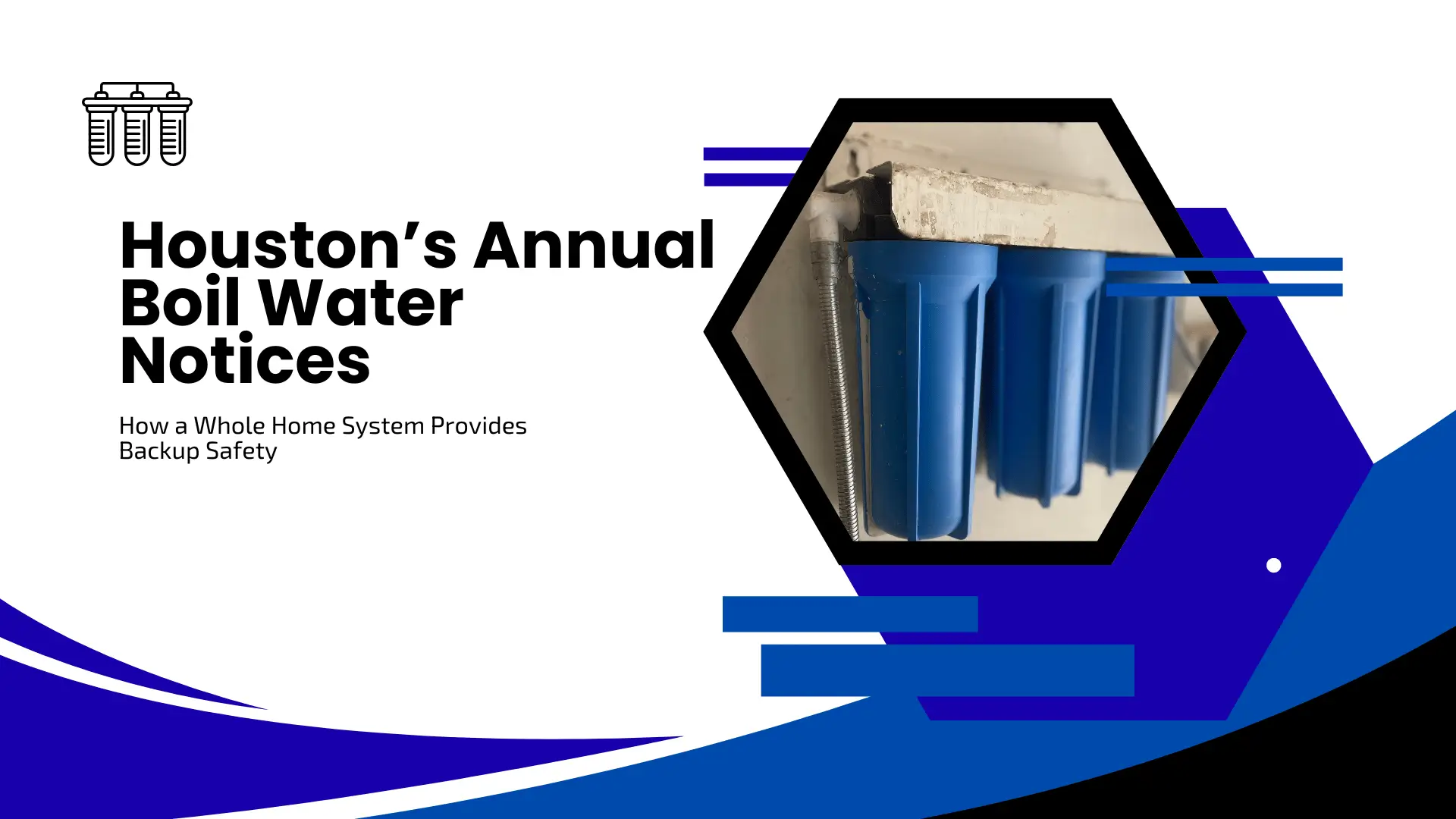
A properly designed whole house water filtration system Houston homeowners trust acts as a physical barrier between the city’s pipes and every tap in your home. During a boil notice, your system doesn’t replace boiling for biological threats unless it includes specific disinfection technologybut it does handle everything else.
Most whole home systems include several stages:
Sediment filtration catches rust, sand, and particles stirred up by main breaks. When the city repairs a line, you can bet debris travels through the system. A sediment filter stops that before it reaches your faucets or water heater.
Carbon filtration removes chlorine, chloramines, and many chemical contaminants. Even during normal operations, Houston’s water contains disinfection byproducts that affect taste and smell. During a boil notice? That chlorine taste often gets stronger because utilities adjust treatment levels.
Optional UV sanitization is the real backup safety feature during boil notices. A UV light system installed at the whole home level neutralizes bacteria and viruses on contact without heat, chemicals, or waiting. If you want true boil-notice protection, UV is the answer.
For families already using a reverse osmosis system at the kitchen sink, you’re in good shape for drinking water. RO systems remove a huge range of contaminants, including most biological threats when paired with proper pre-filtration. But an under-sink RO won’t help your shower, your laundry, or your bathroom sinks.
Real Texas Water Conditions Across the Region
It’s worth noting that water quality challenges aren’t unique to Houston. Across the state, homeowners face different combinations of issues:
In Austin and surrounding areas, surface water from the Colorado River brings sediment and organic material, plus hard water that scales pipes and appliances. Many homeowners looking for water filtration Austin tx options are primarily concerned with taste, chlorine, and mineral buildup.
The Dallas water filtration system market focuses heavily on hardness and chlorine reduction, with Dallas drawing from multiple reservoirs that vary in quality seasonally. A water filtration system Dallas homeowners choose often includes both softening and carbon stages.
In San Antonio, the Edwards Aquifer provides naturally cleaner source water, but hardness is extremesome of the hardest municipal water in the country. Search for water filtration san antonio and you’ll find most people actually need a softener first, then filtration.
Houston sits in the middle of these challenges. Our water comes from Lake Houston and Lake Conroe, treated with chlorine and ammonia, and distributed through that aging pipe network. Hard water is moderate compared to San Antonio, but sediment issues during main breaks are more frequent.
Is a Whole-Home Water Purification System Worth It in Houston?
Let me answer this plainly: yes, for most Houston homeowners, a whole home system makes practical sense even without considering boil notices.
Here’s why. The average family in Sugar Land or Katy experiences at least one or two boil notices every couple of years. Each notice lasts anywhere from 24 hours to several days. That’s multiple days of boiling drinking water, buying bottled water, or just hoping for the best.
A whole home system with UV protection means you ignore most notices entirely. Your drinking water stays safe. Your showers remain comfortable. You don’t scramble for bottled water at 10 PM because the store shelves are empty.
Beyond boil notices, the daily benefits are substantial:
- Longer appliance life (water heater, dishwasher, washing machine)
- Better skin and hair (chlorine removal makes a noticeable difference)
- Cleaner dishes and brighter laundry
- Better-tasting coffee, tea, and cooking water
The return on investment comes from fewer appliance repairs, less bottled water purchases, and simply enjoying your water more every single day.
What Common Water Issues Do Texas Homes Face?
Texas homeowners deal with a specific combination of water problems depending on location:
Hard water minerals (calcium and magnesium) cause scale buildup in pipes and on fixtures. If you see white crust on faucets or feel a film on your skin after showering, that’s hard water.
Chlorine and chloramines are added at treatment plants but create that swimming pool taste and smell. They also dry out skin and hair over time.
Sediment and turbidity become obvious during main breaks but exist at lower levels constantly. You might not see it, but your water heater feels it.
Lead and copper can leach from older service lines and household plumbing. This isn’t a treatment plant issueit’s a pipe issue, and only filtration at your home can address it.
PFAS compounds are emerging concerns nationwide, with detection in many Texas water supplies. Whole home carbon systems reduce these significantly.
Do Water Softeners Remove Contaminants?
This is one of the most common misunderstandings I hear. A water softener does not remove contaminants. It exchanges hard minerals (calcium and magnesium) for sodium or potassium ions. That’s it.
Softening prevents scale buildup and makes soap work better. But it won’t remove chlorine, lead, bacteria, or sediment. If you’re looking at westinghouse water softener reviews, keep in mind those products address hardness onlynot the contaminants that trigger boil notices.
For complete protection, you need filtration (carbon and sediment) plus optional softening and UV. Many Texas homes benefit from a combination system: whole home filtration with a softener integrated downstream.
If you already own a softener and want to check its condition, having a westinghouse water softener manual handy helps with basic troubleshooting. But for boil notice protection specifically, softeners aren’t the answer.
Is Reverse Osmosis Safe for Daily Drinking?
Absolutely. Reverse osmosis is one of the most thoroughly tested and proven water treatment technologies available. It produces water that’s not only safe but exceptionally clean.
An RO system pushes water through a semipermeable membrane that removes over 90% of total dissolved solids, including lead, arsenic, nitrates, chlorine byproducts, and many other contaminants. Some systems also remove beneficial minerals, but high-quality RO units include a remineralization stage to balance pH and add back calcium and magnesium.
For families concerned about boil notices, a reverse osmosis system at your kitchen sink provides fantastic drinking water protection. The only catch is that RO systems need consistent water pressure to work properly, so during extreme pressure drops following a main break, performance might be affected.
If you’re shopping for a reverse osmosis water filter nearby, look for systems with carbon pre-filtration and a dedicated faucet. Under-sink RO is the standard, though whole home RO exists (it’s expensive and usually overkill for most families).
How Long Do Home Water Systems Typically Last?
Different components have different lifespans:
Sediment filters need replacement every 3 to 6 months depending on water conditions.
Carbon filters typically last 6 to 12 months.
Water softener resin lasts 10 to 15 years with proper maintenance.
Reverse osmosis membranes last 2 to 5 years.
UV lamps need annual replacement (the lamp loses effectiveness even if it still lights up).
A properly installed whole home system from a reputable water filtration company should deliver 15 to 20 years of reliable service for the major components, with regular filter changes along the way.
The key difference between a system that lasts and one that fails early is professional installation and consistent maintenance. Cutting corners on either leads to problems down the road.
Maintenance Expectations and Long-Term Benefits
Let me be straightforward: any water treatment system requires maintenance. There’s no install-and-forget solution that works long-term.
Expect to:
- Change sediment and carbon filters on schedule
- Test your water annually to verify system performance
- Sanitize the system components every couple of years
- Replace UV lamps yearly
This sounds like a lot, but most homeowners spend less than an hour per year on actual maintenance. The filter changes take five minutes. The annual testing is drop-in-a-vial simple.
The benefits far outweigh the effort. Clean water from every tap. Appliances that last longer. Peace of mind during boil notices. And the simple daily pleasure of water that tastes good and feels right.
Working with a Trusted Texas Provider
When you’re ready to explore options, working with experienced local professionals makes all the difference. Companies like Aqua Pure LLC specialize in whole home water filtration system houston installations, with certified specialists who understand our specific water conditions.
They handle everything from water filtration installation houston neighborhoods to system design based on your actual water test results. Whether you need water purification companies recommendations or want to understand water treatment near me options, local expertise matters.
For homeowners in Cedar Park or the northern suburbs, cedar park water filtration system installation requires understanding different source water than Houston. The same goes for water filtration cedar park versus austin water filtration systemslocal conditions drive the right solution.
A good water service usa provider will test your water first, then recommend specific equipment based on what’s actually in your pipes. No guesswork. No one-size-fits-all systems.
Making the Decision for Your Family
Here’s my honest advice: if boil notices annoy you but don’t truly worry you, start with an under-sink reverse osmosis system for drinking water. It’s affordable, effective, and handles the most critical safety concerns.
If you want true whole-home protectionbetter showers, cleaner laundry, longer appliance life, and real boil-notice backupinvest in a whole home filtration system with sediment, carbon, and UV stages. Add a softener if hard water is an issue in your area.
Test your water first. Know what you’re dealing with. Then choose equipment that matches your actual needs, not marketing claims.
Ready to take the next step? For Texas homeowners who want professional guidance on the right system for their home, reach out to Aqua Pure LLC. Their team specializes in whole home systems, reverse osmosis, softeners, and UV sanitizationwith certified installation you can trust. Whether you’re curious about a water softener system, a home water filtration system, or a reverse osmosis system, they’ll help you understand what actually makes sense for your family and your budget.