


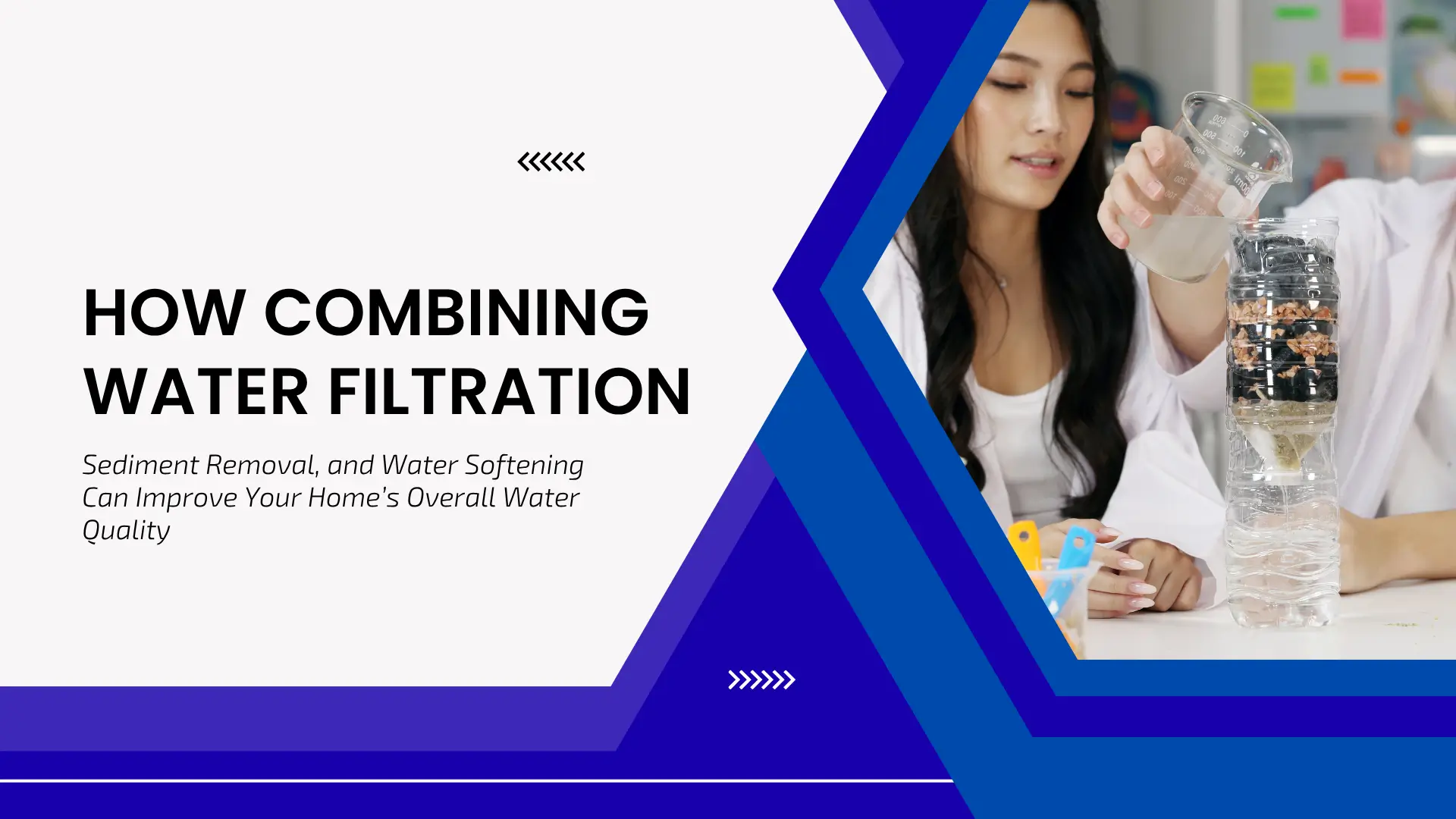
If you live in Sugar Land, Katy, Houston, or anywhere across the greater San Antonio and Austin corridor, you already know something about Texas water. It’s not just one thing. It’s a mix of challenges that show up in different ways depending on where your water comes from and how your home is plumbed.
Some days the water smells strongly of chlorine. Other days you notice white crusty buildup on your faucets. Maybe your ice maker is clogging, or your coffee tastes a little off no matter what beans you buy. For families on well water outside city limits, the issues can be even more pronounced sediment, iron staining, sulfur odors, and hardness that seems to fight every cleaning product you own.
Here’s the thing most homeowners eventually figure out: no single treatment solves every problem. A water softener alone won’t remove chlorine. A carbon filter alone won’t stop scale. And a sediment filter alone won’t touch dissolved minerals or chemicals. The real improvement comes when you combine approachesfiltration, sediment removal, and softeningso each component handles what it’s actually designed to handle.
Let me walk you through how that works and what it means for your home.
Why Texas Water Needs More Than One Solution
Texas water quality varies dramatically depending on your source. Houston-area communities often pull from a mix of surface water and groundwater, which can mean chlorine or chloramine for disinfection, along with hardness minerals that vary by neighborhood and season . In the San Antonio area, the Edwards Aquifer is the primary source, and it’s known for being hardsometimes very hardwhich means calcium and magnesium are dissolved into every drop that reaches your tap .
Well water homeowners face an entirely different set of variables. Depending on where your well draws from, you might see sediment, iron, manganese, or even bacteria that city-treated water doesn’t have to worry about . And in older homes with aging pipes, lead and copper can leach into water even if the municipal supply is perfectly clean when it leaves the treatment plant.
This is why a single “one-size-fits-all” device rarely delivers the results homeowners actually want. The most effective setups treat water in stages, each stage targeting a specific category of problem.
The Three Core Jobs: Sediment, Filtration, Softening
Think of your water as carrying three broad types of “stuff” you may want to address:
Physical particlesdirt, rust, sand, and grit that can come from aging pipes, well sediment, or municipal distribution lines. These particles are abrasive and can clog fixtures, damage appliances, and give water a cloudy or discolored look.
Chemical and organic contaminantschlorine, chloramine, disinfection byproducts, pesticides, volatile organic compounds, and trace metals like lead. Many of these are invisible and odorless at low levels, but they affect taste, smell, and long-term water quality.
Dissolved hardness mineralscalcium and magnesium, the culprits behind scale buildup, soap scum, dry skin, stiff laundry, and shortened appliance life. Hard water doesn’t usually pose a direct health risk, but it’s expensive in the long run .
Each of these categories requires a different mechanism to address. Sediment filters capture physical particles. Carbon filtration handles chlorine, taste, odor, and many chemical contaminants. Water softeners remove hardness minerals through ion exchange .
When you stack these technologies in the right order, each stage protects the next and your whole home benefits.
How a Multi-Stage System Actually Works
A well-designed whole-home setup typically flows like this:
Water enters your home from the main line and first passes through a sediment pre-filter. This is the workhorse that catches the large stuffsand, rust flakes, and particulate matter. Without it, downstream filters and softener resin can foul prematurely, especially for well water users or homes in older neighborhoods with cast iron pipes.
Next comes the carbon filtration stage, which is where chlorine, chloramine, and many organic chemicals get pulled out. Chlorine is important to remove not just for taste and smell, but because it degrades certain types of softener resin over time. Carbon filtration also improves the effectiveness and lifespan of everything downstream.
Then the water moves into the water softener system, where calcium and magnesium are swapped for sodium or potassium ions through a resin bed . This is what stops scale from forming inside your water heater, dishwasher, washing machine, and pipes. It’s also what makes soap actually lather, skin feel less tight after showering, and dishes come out without spots.
Depending on your household’s specific concerns, an optional reverse osmosis system at the kitchen sink can provide a final polishing step for drinking and cooking water, removing dissolved solids, sodium, and a wide range of contaminants that whole-home filters don’t target .
What You’ll Notice When the System Is Right
Homeowners who make the switch often report changes within the first week or two. Showers feel differentless slippery soap, softer skin, hair that doesn’t feel stripped. Dishes come out cleaner. Coffee and tea taste better because chlorine isn’t masking the flavor. Laundry comes out softer without added fabric softener.
Over the longer term, the real payoff is protection. Water heaters last longer when scale isn’t coating the heating elements. Dishwashers and washing machines don’t have to work as hard. Plumbing stays clearer. Fixtures stay shiny instead of crusting over with white deposits.
For families with concerns about lead or other contaminants in older homes, combining softening with filtration and an RO drinking water system adds a layer of confidence that a softener alone simply cannot provide .
Matching the System to Your Home’s Actual Problems
Before you spend money on any treatment equipment, the smartest step is a professional water test. Not a strip from the hardware store, but a proper analysis that tells you hardness levels, chlorine or chloramine presence, iron and manganese content, pH, and any specific contaminants of concern.
In the Sugar Land and Katy areas, for example, hardness and chlorine taste are common complaints. In San Antonio and the Hill Country, hardness tends to run high due to the aquifer source. Well water properties in communities like Spring, Buda, or Dripping Springs may have entirely different profilessediment, sulfur, or ironthat call for different pre-treatment before softening even makes sense.
Aqua Pure LLC, a Texas-based provider serving homeowners across the Houston, Katy, Sugar Land, San Antonio, and Austin areas, offers free water testing to pinpoint exactly what’s in your water before recommending equipment. With over a decade of experience installing and servicing whole-home systems, their approach is built around matching solutions to the actual water chemistry of your home rather than a generic package.
Maintenance: What to Expect
No water treatment system is maintenance-free, and that’s okay. The trade-off is predictable upkeep in exchange for consistent water quality.
Sediment pre-filters typically need replacement every three to six months, depending on how much particulate is in your water. Carbon media in a whole-home tank can last three to five years or more . Softener resin generally lasts ten to fifteen years with proper care, though iron fouling or excessive sediment can shorten that . Salt needs periodic replenishmentthe frequency depends on your water hardness and household water use.
Reverse osmosis membranes and filters at the kitchen tap have their own replacement schedules, usually annually or every few years depending on the model and water quality feeding them.
The key is not to ignore the system. A softener that runs out of salt, a pre-filter that’s completely clogged, or a carbon tank that’s exhausted stops doing its joband sometimes it stops doing it in ways you won’t notice until problems show up again. Annual or semi-annual professional inspections keep everything running as intended.
Frequently Asked Questions from Texas Homeowners
Is a whole-home water purification system worth it in Sugar Land or Katy? If you’re dealing with hard water, chlorine taste, or appliance scale, yesfor most homeowners the combination of softening and filtration pays for itself over time in appliance longevity, reduced soap and detergent use, and better daily water quality. The specific value depends on your water test results and how much the current issues bother you.
What water issues are most common in Texas homes? Hardness is nearly universal in many areas. Chlorine or chloramine in municipal supplies is common. Sediment and iron are frequent in well water. Depending on the age of your home and plumbing, lead or copper can also be a concern.
Do water softeners remove contaminants? No. Softeners remove hardness mineralscalcium and magnesiumbut they don’t remove chlorine, lead, bacteria, sediment, or most chemicals . That’s why softening is best paired with filtration if your water has multiple issues.
Is reverse osmosis safe for daily drinking? Yes. RO systems are widely used for drinking water and remove a broad range of contaminants, including dissolved solids and sodium. Some homeowners add a remineralization stage, but that’s a personal preference rather than a safety requirement.
How long do home water systems last? Softener resin typically lasts ten to fifteen years. Carbon filtration tanks generally run three to five years before media replacement. Pre-filters are shorter-lived, often months rather than years. A well-maintained system can serve your home for a decade or more with routine service.
Getting Started on Better Water
If you’ve been putting off dealing with your home’s water because it feels like a big, complicated purchase, start with the simplest step: get your water tested. You can’t fix what you haven’t measured, and guessing usually leads to either overspending or under-solving.
If you’re ready to talk through options with a local team that knows Texas water, Aqua Pure LLC offers free water testing and consultations for homeowners across the Houston, Katy, Sugar Land, San Antonio, and surrounding communities. They can help you understand what your water actually needsand what it doesn’t.