


If you’ve invested in a spa-like bathroom with a rainfall showerhead, matte black fixtures, or a freestanding tub, you probably did it for the daily experience. There’s nothing quite like stepping into a shower that feels like a high-end hotel. But here in Texas, especially across the Houston metro and communities like Sugar Land, Katy, and Spring, there’s a quiet adversary working against those beautiful upgrades.
It’s hard water. And it doesn’t care how much you spent on your fixtures.
I’ve spent years talking with homeowners about what’s happening inside their pipes, and the story is almost always the same. The white crust on the showerhead is just the visible symptom. The real damage is happening where you can’t see it.
The White Crust Is Just the Beginning
That chalky buildup on your rain showerhead and faucet aerators is calcium carbonate. It’s what happens when dissolved minerals in the water come out of solution and deposit on surfaces. In San Antonio, the Edwards Aquifer is loaded with these minerals . In Houston, the water blends surface sources with mineral-rich groundwater, and hardness varies noticeably between different municipal utility districts .
What does this mean for your luxury fixtures? Everything.
A standard showerhead might just lose some pressure. A rainfall showerhead, with its wide, flat surface and hundreds of tiny openings, becomes a magnet for scale. Those delicate spray holes clog unevenly, turning a gentle cascade into a sputtering mess. Cleaning them isn’t as simple as unscrewing the head and soaking itsome ceiling-mounted units require you to get on a ladder and disassemble components just to descale them .
Then there are the finishes. Matte black, brushed gold, and polished nickel are stunning in showrooms. In real Texas homes with hard water, they show every single water spot and mineral deposit. Unlike chrome, which hides some of the chaos, these finishes demand constant attention. And once hard water etches the surface, there’s no polishing it back to life .
What’s Happening Inside Your Walls
Here’s where things get expensive. Every time water flows through your pipes, it’s leaving a microscopic layer of minerals behind. Over months and years, that layer becomes scale. Scale narrows the inside of your pipes, which means your water pressure drops. Your tankless water heater works harder because scale insulates the heat exchanger from the water it’s trying to heat . Your fixtures’ internal cartridgesthe mechanisms that control temperature and flow grind against mineral deposits until they fail.
In Houston, plumbers see water heaters dying at 8 to 10 years instead of the 12 or more you’d expect with properly treated water . The rumbling sound from a tank water heater? That’s sediment being tossed around by the burner, boiling water through a blanket of scale. It’s not a minor annoyance. It’s a sign your water heater is on borrowed time.
Luxury fixtures often have tighter tolerances and more complex internal pathways than builder-grade options. Thermostatic valves, diverter cartridges, and multi-function shower controls are precision components. Scale doesn’t just restrict flowit can cause valves to stick, temperatures to fluctuate, and seals to degrade prematurely.
Why Texas Water Is Uniquely Hard on Your Home
Texas has a water problem that has nothing to do with drought. Much of our water comes from underground aquifers where it picks up minerals from surrounding rock. The Edwards Aquifer serves San Antonio and the Hill Country with water that’s naturally high in calcium and magnesium . In the Houston region, communities like Sugar Land, Katy, and Spring draw from a mix of groundwater and surface water sources, and the hardness can swing significantly depending on which system serves your neighborhood .
There’s also the chlorine factor. Municipal water treatment plants add chlorine to disinfect water, which is necessary for public health. But chlorine is tough on rubber seals, gaskets, and some metal finishes. It also contributes to that distinctive taste and smell that sends many homeowners to the bottled water aisle.
If you’re on well water anywhere in the region, you can add sediment, iron, and potentially bacteria to the list of concerns. Well water treatment service isn’t just about hardnessit’s about making sure what comes out of your tap is consistently safe and pleasant.
Filtration, Softening, RO: What Actually Solves What
This is where a lot of homeowners get confused. There’s a difference between filtration and softening, and understanding it matters when you’re deciding what your home needs.
Water softeners use ion exchange to remove the minerals that cause hardness. They trade calcium and magnesium for sodium. The result is water that doesn’t leave scale, lathers better with soap, and is gentler on your plumbing . A water softener system protects your pipes, water heater, and fixtures from the inside out. If you have visible scale and your appliances are dying young, softening is addressing the root cause.
Filtration removes things like chlorine, sediment, and some chemicals. A home water filtration system improves taste and odor, and carbon filters can reduce the chlorine that degrades rubber components in your fixtures. Filtration doesn’t remove hardness minerals, but it addresses the other stuff that makes water unpleasant.
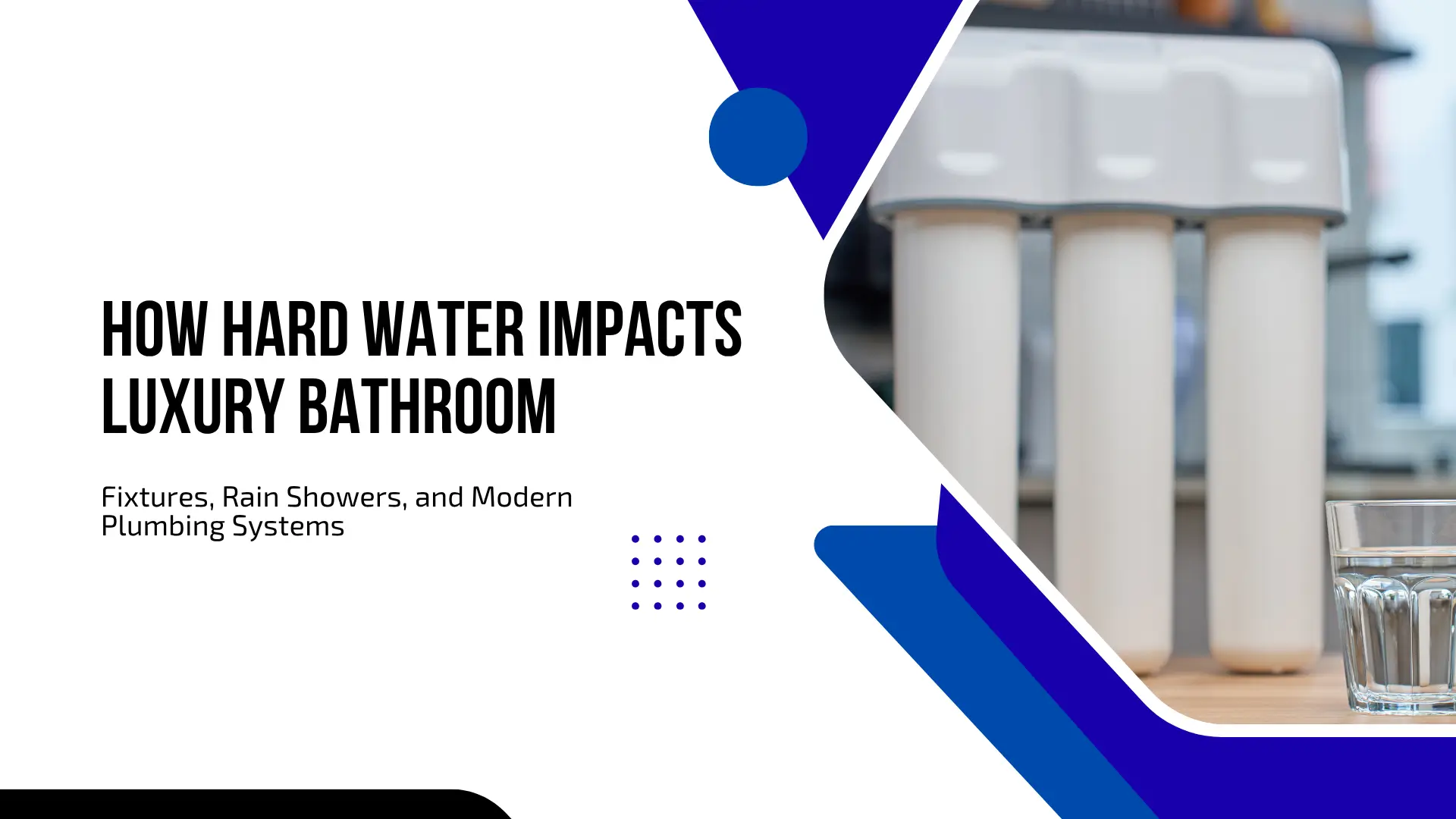
Reverse osmosis forces water through a membrane that captures dissolved solids, including minerals and many contaminants. An RO system is typically installed at a single pointusually under the kitchen sinkfor drinking and cooking water. It produces very pure water, but it also strips out beneficial minerals, and it wastes some water in the process.
The most comprehensive approach for a home with hard water and municipal chlorine is a combination: a whole-house softener to protect the plumbing, paired with carbon filtration to address taste and odor, and possibly a point-of-use RO for drinking water.
When to Call a Professional (And What They’ll Actually Do)
If you’re seeing scale on fixtures, noticing reduced water pressure, or hearing your water heater rumble, you’re past the point of “maybe I should look into this someday.” A proper water test tells you exactly what’s in your waterhardness levels, chlorine, sediment, and potentially other contaminants. Guessing wastes money and time.
A reputable water treatment company will test your water first, explain the results in plain language, and recommend solutions based on what your home actually needs. Not every house needs the same setup. A newer home in Katy with a softener loop already installed might just need a quality unit. An older Houston home with galvanized pipes and no existing treatment might need a more comprehensive approach.
Professional water filtration installation in San Antonio or a water softener installation in Houston isn’t a DIY project. Water treatment equipment needs proper sizing, correct plumbing connections, and drainage for backwash cycles. A salt-based softener that isn’t regenerating properly becomes a breeding ground for bacteria . An undersized system won’t keep up with your family’s water use.
Protecting the Investment You Already Made
If you’ve spent thousands on a bathroom renovationthe rain shower, the wall-mounted toilet, the sculptural faucetprotecting that investment with a few hundred dollars of water treatment is just sensible. You wouldn’t buy a luxury car and skip oil changes. Your plumbing deserves the same consideration.
The good news is that modern water treatment isn’t complicated to live with. Softeners need salt replenishment and occasional service. Filters need periodic replacement. Most systems run quietly in the background, doing their job while you enjoy your shower.
And the benefits extend beyond your fixtures. Softer water means your skin doesn’t feel tight after showering. Your towels stay softer. Your dishwasher actually gets glasses clean without spots. Your water heater lasts longer and runs more efficiently. These aren’t luxury upgradesthey’re basics that every Texas home should have.
Questions Homeowners Ask Me All the Time
Is a whole-home water purification system worth it in Texas?
For most homeowners in our region, yesespecially if you have hard water, which describes a large portion of the Houston and San Antonio metros. The math works in your favor when you factor in appliance lifespan, reduced soap and detergent use, and the sheer annoyance of constantly fighting scale. You don’t need the most elaborate system. You need the right system for your water and your home.
What water issues are common in Texas homes?
Hard water is the big one. Calcium and magnesium are everywhere in our aquifers and surface water. Chlorine is anotherit’s necessary for disinfection, but it affects taste and can degrade rubber components. Some areas deal with sediment, especially older neighborhoods with aging infrastructure. And if you’re on a private well, you can add iron, sulfur, and bacteria to the list.
Do water softeners remove contaminants?
No. This is a common misunderstanding. Softeners remove hardness mineralscalcium and magnesiumby replacing them with sodium. They don’t remove chlorine, lead, bacteria, or most other contaminants . If you want contaminant removal, you need filtration or reverse osmosis in addition to softening.
Is reverse osmosis safe for daily drinking?
Yes, RO water is safe to drink. It removes a wide range of dissolved contaminants. The main consideration is that it also removes beneficial minerals like calcium and magnesium. Many homeowners add a remineralization stage or simply get those minerals from their diet. RO is an excellent choice for drinking and cooking water, but it’s typically not used for whole-house treatment because it wastes water and would strip minerals from your entire plumbing system.
How long do home water systems typically last?
It varies by type and water quality. Water softeners generally last 10 to 15 years with proper maintenance, though hard water and high demand shorten that . Sediment filters need replacement every few months. Carbon filters last six months to a year. RO membranes last two to three years. The equipment itselftanks and valvescan last much longer than the filter media. A professional maintenance plan keeps everything running and catches problems before they become failures.
If you’re tired of fighting scale, replacing fixtures prematurely, and wondering what’s actually in your water, it might be time to get some real answers. A professional water test takes the guesswork out of it. And if treatment makes sense for your home, a properly installed system protects your plumbing, your appliances, and the bathroom you worked hard to create.
The team at Aqua Pure LLC has spent years helping Texas homeowners with exactly these problemsfrom whole-home systems to RO drinking water and everything in between. They’re worth a call if you’re ready to stop dealing with hard water and start enjoying your home again.