


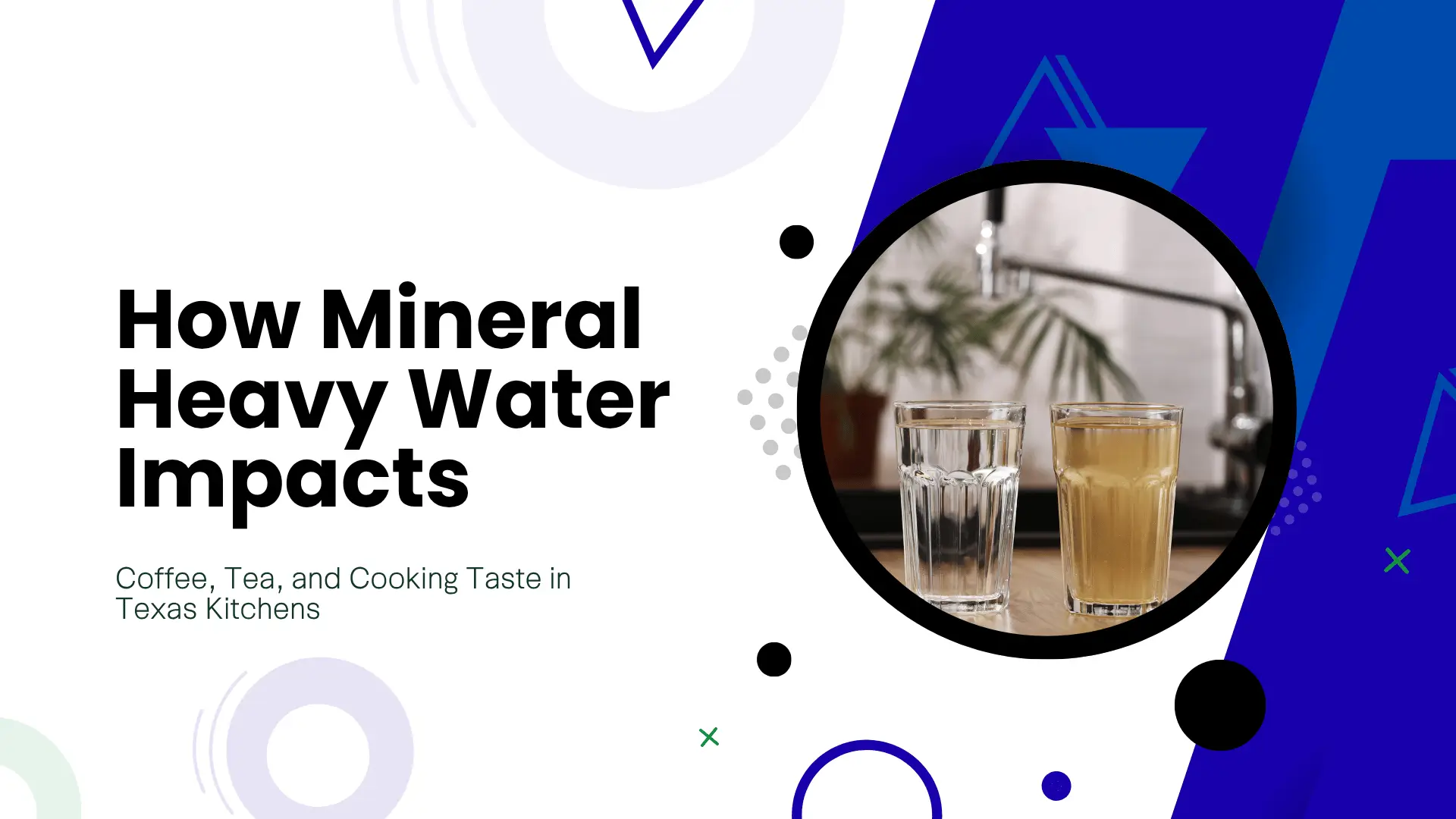
If you’ve ever brewed a morning cup of coffee in your Texas kitchen only to find it tastes flat, slightly bitter, or just… off, you’re not alone. And that pot of slow-simmered pinto beans that turned out tougher than expected? Your water might be the quiet culprit hiding in plain sight.
Here in Texas, from Houston to San Antonio and everywhere in between, we deal with some seriously mineral-heavy water. It’s not just about crusty faucets or cloudy glasses anymore. That hard water running through your pipes is fundamentally changing how your coffee, tea, and home-cooked meals taste.
Let me walk you through what’s really happening in your kettle and stockpotand what you can actually do about it.
Why Texas Water Is Different (And Harder on Your Kitchen)
Most of Texas sits atop limestone aquifers. As groundwater moves through these ancient rock beds, it picks up calcium, magnesium, and other dissolved minerals along the way. Cities like Houston, Katy, Sugar Land, and San Antonio draw heavily from groundwater sources, which means the water coming into your home is naturally rich in hardness minerals.
Surface water sources, like the Trinity River that serves parts of Dallas and Fort Worth, tend to be slightly softer but come with their own baggagethink sediment, organic matter, and seasonal taste variations.
The result? Texas homeowners consistently deal with water that measures anywhere from 7 to 15+ grains per gallon of hardness. For context, anything over 7 grains is considered very hard. And that mineral load doesn’t just vanish when you boil water for tea or brew your morning pour-over.
The Science of Taste: What Minerals Actually Do to Coffee and Tea
Here’s where things get interesting. Water makes up over 98 percent of a cup of coffee or tea. The minerals dissolved in that water act as flavor carriers, either helping desirable taste compounds extract from grounds or leavesor interfering with them entirely.
Calcium and magnesium, the two primary hardness minerals, bond with flavor molecules during brewing. In small, balanced amounts, they can enhance extraction. But in the high concentrations common across Texas, they over-extract bitter compounds from coffee while muting brighter, fruitier notes.
Tea drinkers notice this even faster. That scummy film floating on top of your black tea? That’s mineral precipitation. The same compounds that cause scale inside your water heater are binding with tannins in the tea, creating that unappealing surface layer and leaving the tea tasting dull and astringent.
How Hard Water Ruins Your Cooking (Without You Knowing It)
Cooking with mineral-heavy water is like adding mystery ingredients to every dish. You wouldn’t toss a teaspoon of calcium chloride into your pasta water on purpose, but that’s essentially what’s happening with every pot you fill.
Beans and legumes take the biggest hit. Hard water prevents bean skins from softening properly, leading to that dreaded situation where the inside is mushy but the outside remains tough and chewy. Even after hours of simmering, those pinto beans resist becoming tender.
Vegetables lose their vibrancy. Green beans, broccoli, and asparagus cooked in hard water turn olive-drab and limp because minerals interfere with chlorophyll retention. The same vegetables cooked in filtered water stay brighter and crisper.
Rice and grains absorb hard water minerals as they cook, which means they take on a slightly chalky texture and muted flavor. That pot of jasmine rice that tasted so perfect at your friend’s house in another city? Her water profile was different.
Broths and soups concentrate everything, including the dissolved minerals. Simmering stock for hours means you’re reducing mineral content right along with flavors, which can introduce a metallic or bitter back-note that no amount of salt can fix.
The Chlorine Factor: A Second Taste Problem
Many Texas municipal water systems add chlorine or chloramine for disinfection. While this keeps harmful bacteria out of your supply, it’s terrible for flavor. Chlorine reacts with organic compounds in coffee and tea, producing chlorophenolsthe same compounds that make some tap water smell like a swimming pool.
When you combine high mineral content with residual chlorine, you get a double punch against good taste. Your coffee ends up bitter AND vaguely chemical. Your tea tastes flat AND slightly medicinal. No amount of fancy beans or loose-leaf tea can overcome bad water chemistry.
Signs Your Kitchen Water Needs Help
Before you invest in any solution, here’s how to know if your water is genuinely impacting your food and drinks:
- Scale buildup on your electric kettle after just a few uses. White or yellowish deposits mean high calcium content.
- Cloudy ice cubes that leave residue in your glass as they melt.
- Coffee tastes harsh even when you buy quality beans and grind fresh.
- Tea develops a film on top within minutes of brewing.
- Boiled vegetables look dull and lose color faster than expected.
- Pasta water turns cloudy before you even add the noodles.
If you’re seeing two or more of these signs, your water is affecting your cooking and beverage quality.
Filtration vs. Softening: What Actually Fixes Taste?
This is where a lot of homeowners get confused, and for good reason. Different water problems require different solutions.
Water softening removes calcium and magnesium through ion exchange. A water softener system swaps hardness minerals for sodium or potassium ions. This absolutely improves taste for coffee, tea, and cooking because you’re removing those bitter, scale-forming minerals. However, softeners don’t touch chlorine, sediment, or other contaminants. If you’re looking for a reliable whole-home solution, many Texas homeowners searching for “whole house water filtration systems houston tx” or “water filtration austin tx” find that combining a softener with additional filtration gives the best results. You can explore a quality water softener system to address hardness specifically.
Carbon filtration is your go-to for chlorine, taste, and odor problems. Activated carbon adsorbs chlorine compounds, volatile organic chemicals, and some sediment. But carbon alone doesn’t remove hardness minerals. If your water is both hard AND chlorinated (common across Texas), you need both technologies working together.
Reverse osmosis is the heavy hitter. An reverse osmosis system removes over 90 percent of total dissolved solids, including hardness minerals, chlorine, lead, fluoride, and countless other contaminants. The water coming from an RO tap is essentially blank canvaspure enough that your coffee and tea will taste exactly like the beans or leaves intended. For cooking, it’s fantastic because you start with a neutral base. Many homes install a dedicated RO system at the kitchen sink while keeping softened water elsewhere.
Whole home systems combine multiple technologies. A typical setup for a Texas home might include sediment pre-filtration, a water softener, and a whole-home carbon tank. This gives you softened water for showers and laundry plus chlorine-free, better-tasting water at every tap. Companies like Aqua Pure LLC specialize in these integrated approaches, helping homeowners across Texas match the right combination to their specific water chemistry.
What About Reverse Osmosis for Daily Drinking and Cooking?
Some homeowners worry that reverse osmosis removes too muchthat you need minerals in water for health or taste. Here’s the honest take: You get far more calcium and magnesium from food than from water. A single bite of cheese or a handful of almonds contains more of these minerals than a gallon of hard water.
For coffee and tea, RO water is actually preferred by professional tasters. The Specialty Coffee Association has specific water chemistry guidelines, and they recommend very low mineral content for optimal extraction. Empty RO water paired with high-quality beans produces cleaner, more distinct flavors.
For cooking, RO water prevents the texture problems associated with hard water. Beans soften properly. Rice cooks evenly. Vegetables retain color. The only caveat? If you’re making bread, a tiny bit of mineral content helps gluten development. Many RO systems allow you to blend a small percentage of bypass water back in if you bake frequently.
How Long Do Home Water Systems Typically Last?
With proper maintenance, here’s what you can expect:
Water softeners typically last 10 to 15 years. The resin bed that does the actual ion exchange eventually wears out, but that’s replaceable. The valve system and tank usually hold up longer. Regular use of salt for filtration systems keeps everything running smoothly.
Carbon filters depend on usage, but whole-home tanks generally need media replacement every 5 to 10 years. Point-of-use carbon filters under the sink last 6 to 12 months depending on water quality and how much you use them.
Reverse osmosis systems last 10 to 15 years with regular filter changes. The membrane itself typically needs replacement every 2 to 3 years, while pre-filters and post-filters change every 6 to 12 months.
Whole house water filtration system houston installations often combine components with staggered replacement schedules. The key is working with a company that tracks your maintenance needs so you’re not guessing.
Common Questions Texas Homeowners Ask
Is a whole-home water purification system worth it in Texas?
For most Texas homeowners, absolutely. But “worth it” depends on your priorities. If you only care about drinking water and coffee, an under-sink reverse osmosis system gives you 90 percent of the benefit for a fraction of the cost. If you want better showers, softer laundry, longer appliance life, AND great-tasting kitchen water, a whole-home system makes sense. In hard water areas like Houston, Katy, and San Antonio, the appliance protection alone often justifies the investment. Many homeowners searching for “whole house water filter dallas” or “water filtration san antonio” find that whole-home systems pay for themselves by extending the life of water heaters, coffee makers, and dishwashers.
What water issues are common in Texas homes?
Hardness tops the list across most of the state. Beyond that, chlorine taste is nearly universal in municipal systems. Sediment shows up more in rural areas and homes with older distribution pipes. Lead can be present in homes built before 1986 with lead solder or fixtures. Some areas, particularly near agricultural or industrial zones, deal with nitrates or volatile organic compounds. The only way to know exactly what’s in YOUR water is to test it. Professional water testing through a certified lab gives you a clear picture.
Do water softeners remove contaminants?
No, and this is important. Water softeners remove hardness mineralscalcium and magnesium. They do NOT remove chlorine, lead, pesticides, bacteria, pharmaceuticals, or most other contaminants. If you’re concerned about those things, you need filtration or reverse osmosis. A softener makes your water feel silkier and prevents scale, but it doesn’t make it safer or better-tasting for drinking. Many homeowners searching for “westinghouse water softener reviews” or wondering about “westinghouse water softener manual” instructions find that while softeners are great for appliances, they don’t address taste and safety concerns that require additional filtration.
Is reverse osmosis safe for daily drinking?
Yes, completely. Reverse osmosis is one of the most thoroughly tested water treatment technologies available. Hospitals use it. Coffee shops use it. Families across Texas rely on it every day. The water comes out clean, neutral, and free from the contaminants that cause health concerns. Some early RO systems wasted large amounts of water, but modern high-efficiency models have improved dramatically. For households concerned about both taste and safety, RO is the gold standard. If you’re looking for a reverse osmosis water filter nearby, many Texas homeowners find that professional installation ensures optimal performance and efficiency.
How long do home water systems typically last?
We covered this in detail above, but here’s the short version: softeners and RO systems last 10–15 years with proper maintenance; carbon filters need media replacement every 5–10 years for whole-home units; filter cartridges need changing every 6–12 months depending on usage. The companies doing water filtration installation houston and across Texas typically offer maintenance plans to help homeowners stay on schedule.
Making Your Texas Kitchen Taste Right
The good news? You don’t have to accept bad-tasting coffee, scummy tea, or tough beans as normal. Your water is the most overlooked ingredient in your kitchen, and changing it changes everything.
Start by getting your water tested. Know what you’re dealing with. Then match the solution to the problemsoftening for hardness, carbon for chlorine, reverse osmosis for the purest drinking and cooking water.
For Texas homeowners ready to take the next step, working with local experts who understand regional water conditions makes all the difference. Aqua Pure LLC offers certified specialists who can test your water, recommend the right combination of technologies, and handle professional installation of home water filtration system solutions tailored to your kitchen and budget.
Your morning coffee deserves better. So do your pinto beans.
Ready to taste the difference great water makes? Reach out to Aqua Pure LLC for a no-pressure consultation about your home’s water. Whether you need a simple reverse osmosis system for your kitchen sink or a whole-home solution, their team knows Texas water.