


If you live in Texas, you already know our water is a mixed bag. In some neighborhoods, it tastes fine and leaves your dishes spotless. In others, you’re constantly scrubbing white crust off your faucets, your skin feels tight after a shower, and you’re not entirely sure what’s coming out of the tap when you fill your kid’s water bottle.
The truth is, Texas water varies wildly depending on where you are. Houston, Sugar Land, Katy, and Spring pull from surface water sources and often deal with chlorine or chloramine treatment and aging infrastructure. San Antonio, San Marcos, Dripping Springs, and the Hill Country sit on top of some of the hardest water in the country. And if you’re on a private well anywhere in between, you’re managing your own water quality entirely.
A complete healthy water plan isn’t about buying the biggest system or the most expensive setup. It’s about matching the right solutions to your actual water problems, then keeping them maintained so they keep working. Let’s walk through how to build that plan for your home.
Start by Understanding What’s Actually in Your Water
Before you buy anything, you need to know what you’re dealing with. You wouldn’t take medicine without knowing what’s wrong, and water treatment works the same way.
If you’re on city water in the Houston area, your utility publishes an annual water quality report (sometimes called a CCR) that lists detected contaminants. That’s a starting point, but it doesn’t tell the whole story. Water can pick up lead, sediment, or bacteria as it travels through older service lines and home plumbing after it leaves the treatment plant. Houston has been actively surveying for lead service lines, and homes built before 1988 are more likely to have lead solder or fixtures that can leach into water.
If you’re on well water, nobody is testing it for you. You need to test for hardness, iron, manganese, bacteria, nitrates, and anything specific to your area. Well water treatment service is common in rural Texas communities for good reason.
For everyone else, a simple in-home water test or a sample sent to a certified lab will tell you your hardness level (measured in grains per gallon or parts per million), chlorine or chloramine levels, pH, and total dissolved solids. This baseline is what your whole plan gets built around.
The Four Main Water Treatment Tools (and What Each One Does)
Most complete home water plans use a combination of these four approaches. They’re not interchangeable, and understanding the difference will save you from buying the wrong thing.
Water softeners tackle hard water by removing calcium and magnesium through a process called ion exchange. They replace those hardness minerals with sodium. If you’ve got white scale on your faucets, spotty dishes, stiff laundry, and dry skin, you need a softener. San Antonio water hardness averages around 357 parts per million that’s over 20 grains per gallon, which is extremely hard. Austin sits around 184 PPM, still solidly hard. Softeners protect your plumbing, water heater, and appliances from scale buildup that shortens their life and kills efficiency.
One important note: softened water adds sodium. If you’re watching your salt intake or making baby formula, you’ll want unsoftened water for drinking and cooking usually achieved by leaving a kitchen tap unsoftened or using a reverse osmosis system under the sink.
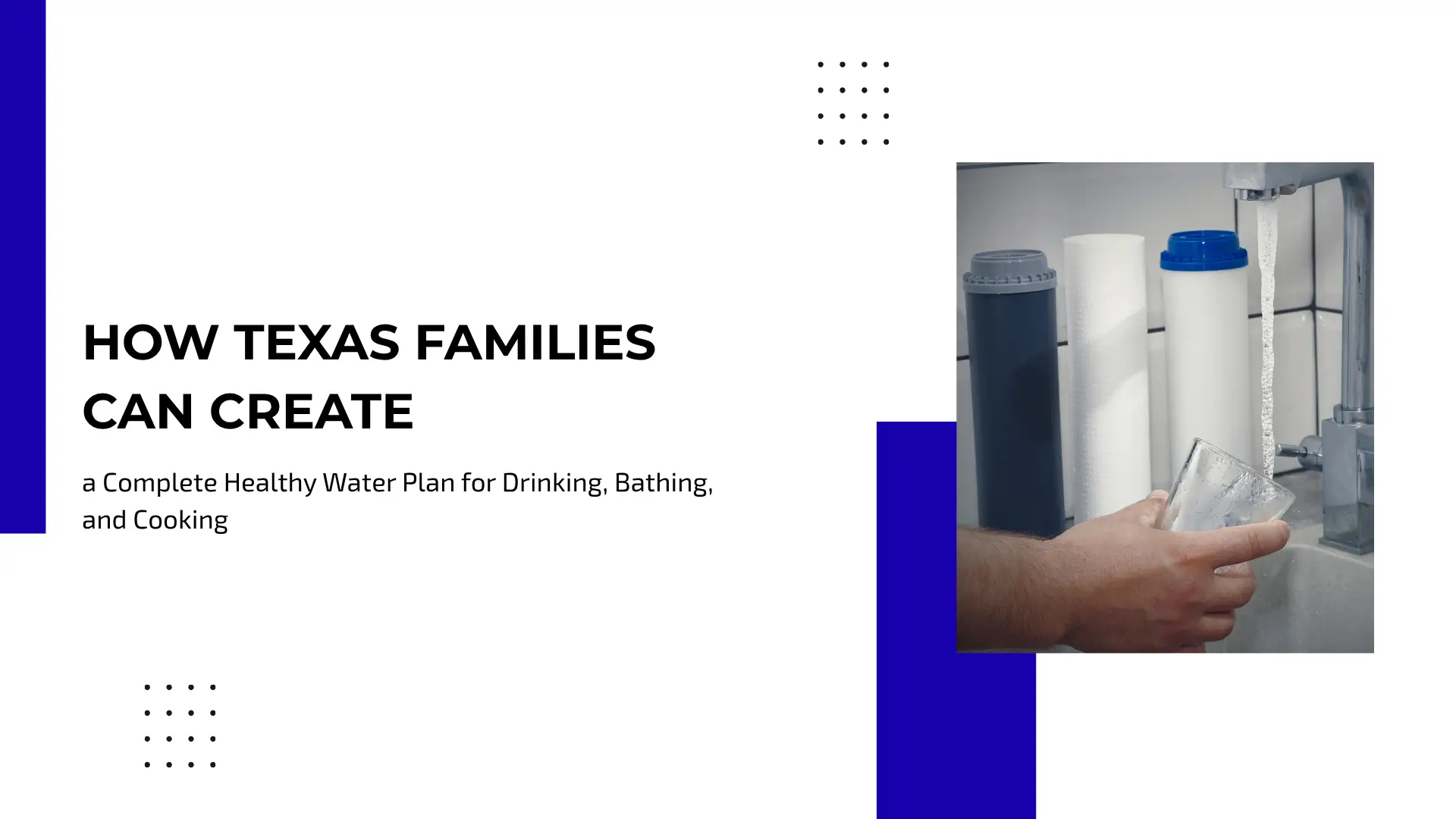
Carbon filtration removes chlorine, chloramines, and the taste and odor issues that come with them. It also captures some volatile organic compounds and pesticides. Carbon filters are the workhorse of taste and odor improvement. A whole house carbon tank typically needs media replacement every 3 to 5 years depending on usage and water quality.
Reverse osmosis (RO) pushes water through a membrane that traps dissolved solids, heavy metals, and many other contaminants at the molecular level. It’s the gold standard for drinking water quality. Under-sink RO systems give you a dedicated drinking water tap, and they’re popular in San Antonio and across Texas where water quality concerns go beyond just hardness. RO does remove minerals, so some homeowners add a remineralization stage, but for most families, the trade-off for cleaner-tasting water is worth it.
Sediment filtration is the first line of defense. A pre-sediment filter catches dirt, rust, and particles before they reach your other equipment. These are cheap, simple, and need replacing every 3 to 6 months depending on how much junk is in your water. Skipping this step lets sediment clog your carbon filters and RO membranes prematurely.
A complete plan usually looks like: sediment filter → carbon filter → softener (for hard water) → RO at the kitchen sink for drinking and cooking. You don’t have to do all four at once, but that’s the logical order if you’re building toward a full solution.
Signs Your Home Needs More Than What You’ve Got
How do you know when it’s time to upgrade from a basic pitcher filter or a standalone softener?
Hard water signs: Scale on faucets and showerheads, cloudy glassware after washing, clothes that feel stiff or look dull, soap that won’t lather, dry itchy skin, and frequent clogs or reduced water pressure. If your water heater is making rumbling noises, scale has likely built up inside it.
Contamination signs: Chlorine smell or taste (common in Houston and Sugar Land treated water), brown or yellow tint from rust or sediment, metallic taste (possible lead or iron), sulfur smell (bacteria or hydrogen sulfide, common in wells), and any gastrointestinal issues that seem linked to water consumption.
Infrastructure signs: Your home was built before 1988 and you’re in an older Houston neighborhood. You’ve received a notice from the city about unknown service line materials. You’re on a well that’s never been tested. Your water pressure has dropped noticeably over time.
If you’re seeing multiple signs from the same category, that’s your signal to get a professional water test and talk through options.
Building Your Plan: Drinking, Bathing, Cooking
A healthy water plan addresses all three use cases because they have different priorities.
Drinking water needs the highest level of treatment. This is where RO shines. A dedicated reverse osmosis system under the sink gives you water that’s been through sediment, carbon, and membrane filtration. It removes lead, arsenic, nitrates, and the dissolved solids that affect taste. If you’re on city water in Houston, Sugar Land, or Katy, this also addresses chlorine byproducts and any lead that might leach from older pipes. For families in San Antonio dealing with hard water, RO after a softener gives you clean-tasting water without the sodium that softened water carries.
Bathing and showering is about skin, hair, and inhalation. Chlorine and chloramines vaporize in hot showers, and you breathe them in. Hard water leaves soap scum on your skin that can worsen eczema and dryness. A whole house carbon filter plus a softener makes a noticeable difference softer skin, less itchy scalp, and no more scrubbing mineral deposits off the shower door. If you have sensitive skin or allergies, this is often the upgrade homeowners notice most immediately.
Cooking water matters because water is an ingredient. Pasta, rice, soups, coffee, tea they all take on the flavor of your water. Chlorine and high mineral content can make food taste off. Using filtered or RO water for cooking gives you cleaner flavors and prevents scale in your coffee maker and electric kettle.
For a house in Spring or Katy on city water, a whole house carbon filter with a softener and an under-sink RO hits all three. For a well in Dripping Springs, you might need iron filtration or a UV sanitizer before the softener and carbon stages.
What Maintenance Actually Looks Like
A water treatment system is not a set-it-and-forget-it purchase. Here’s the honest breakdown of what you’re signing up for.
Sediment filters: Every 3 to 6 months. These are inexpensive and swapping them is straightforward, but putting it off lets sediment destroy downstream components.
Carbon filters (whole house): Every 6 to 12 months for cartridges, or every 3 to 5 years for backwashing carbon tanks. Carbon exhausts silently when it stops removing chlorine, you might not notice until taste or odor changes.
Water softener: You’ll need to add salt regularly (monthly or so depending on hardness and usage) and the system will backwash itself on a schedule. The resin inside typically lasts 10 to 15 years, but you’ll know it’s exhausted when hardness breaks through despite having salt in the tank. Softener backwashing uses 30 to 100 gallons per cycle, so if you’re on a well, keep that in mind for your pump and septic system.
Reverse osmosis: Pre-filters every 6 to 12 months, membrane every 2 to 3 years, post-carbon annually. RO membranes are protected by the pre-filters, so skipping those replacements is the quickest way to ruin an expensive membrane.
Professional service: Some homeowners handle basic filter swaps themselves. But annual or bi-annual professional maintenance goes beyond just changing cartridges. It includes pressure testing, sanitizing the system to prevent biofilm growth, checking O-rings and seals, and testing water quality at the tap to confirm the system is actually performing. Neglecting this can lead to bacterial growth inside the system and premature failure of the equipment it’s supposed to protect.
Frequently Asked Questions from Texas Homeowners
Is a whole-home water purification system worth it in Texas?
It depends on your water. If you have hard water (most of San Antonio, Austin, and the Hill Country) and city-treated water with chlorine or chloramines (most of Houston, Sugar Land, Katy, and Spring), a whole-home setup addresses problems that a single under-sink filter can’t touch. The benefits are longer appliance life, less soap and detergent use, better skin and hair, and cleaner-tasting water throughout the house. If your water is naturally soft and low in chlorine, the value proposition is lower.
What water issues are most common in Texas homes?
Hard water is the big one, especially in Central and South Texas. San Antonio averages over 20 grains per gallon. Chlorine and chloramine taste and odor are common in Houston-area municipal water. Older neighborhoods in Houston and other cities may have lead service lines or plumbing fixtures that contribute lead. Well water in rural areas brings iron, manganese, sulfur, and bacteria concerns. Sediment from aging pipes is a universal issue.
Do water softeners remove contaminants?
No. Softeners remove hardness minerals (calcium and magnesium) and replace them with sodium. They do not remove lead, bacteria, nitrates, or most other contaminants. That’s why a softener is one piece of a plan, not the whole plan. You need carbon filtration and/or RO for contaminant removal.
Is reverse osmosis safe for daily drinking?
Yes. RO is one of the most effective methods for removing dissolved contaminants from drinking water. It does strip out minerals, which is why some people add a remineralization stage, but the water itself is safe to drink. Millions of households use RO as their primary drinking water source. For families with infants, it’s actually a good option because it avoids the sodium that softened water contains.
How long do home water systems typically last?
Sediment and carbon filters are consumables measured in months. Water softener resin lasts 10 to 15 years. Whole house carbon tanks last 3 to 5 years before media replacement. RO membranes last 2 to 3 years. RO storage tanks and faucets last longer with proper maintenance. The control valves on softeners and backwashing filters can last 10 to 15 years with periodic service. The variables are water quality, usage volume, and whether you actually keep up with maintenance.
Putting It All Together
A complete healthy water plan for a Texas family starts with knowing your water, then matching treatment to your specific problems. Houston-area homeowners dealing with chloramine and possible lead should prioritize carbon filtration and RO. San Antonio and Hill Country families with brutally hard water need softening first, then carbon and RO for drinking. Well owners need testing and a treatment train built around what’s actually in the ground.
You don’t have to figure this out alone. A trusted Texas-based water solution provider can test your water, explain what each stage does, and install a system that fits your home and budget. Aqua Pure LLC has been working with Texas homeowners on whole home filtration, softeners, reverse osmosis, and sanitization for years, and they understand the specific water conditions from Houston to San Antonio to the Hill Country.
If you’re ready to stop guessing and start with a real plan for your home’s water, reach out to Aqua Pure LLC and get a water test scheduled. Your appliances, your skin, and your morning coffee will thank you.