


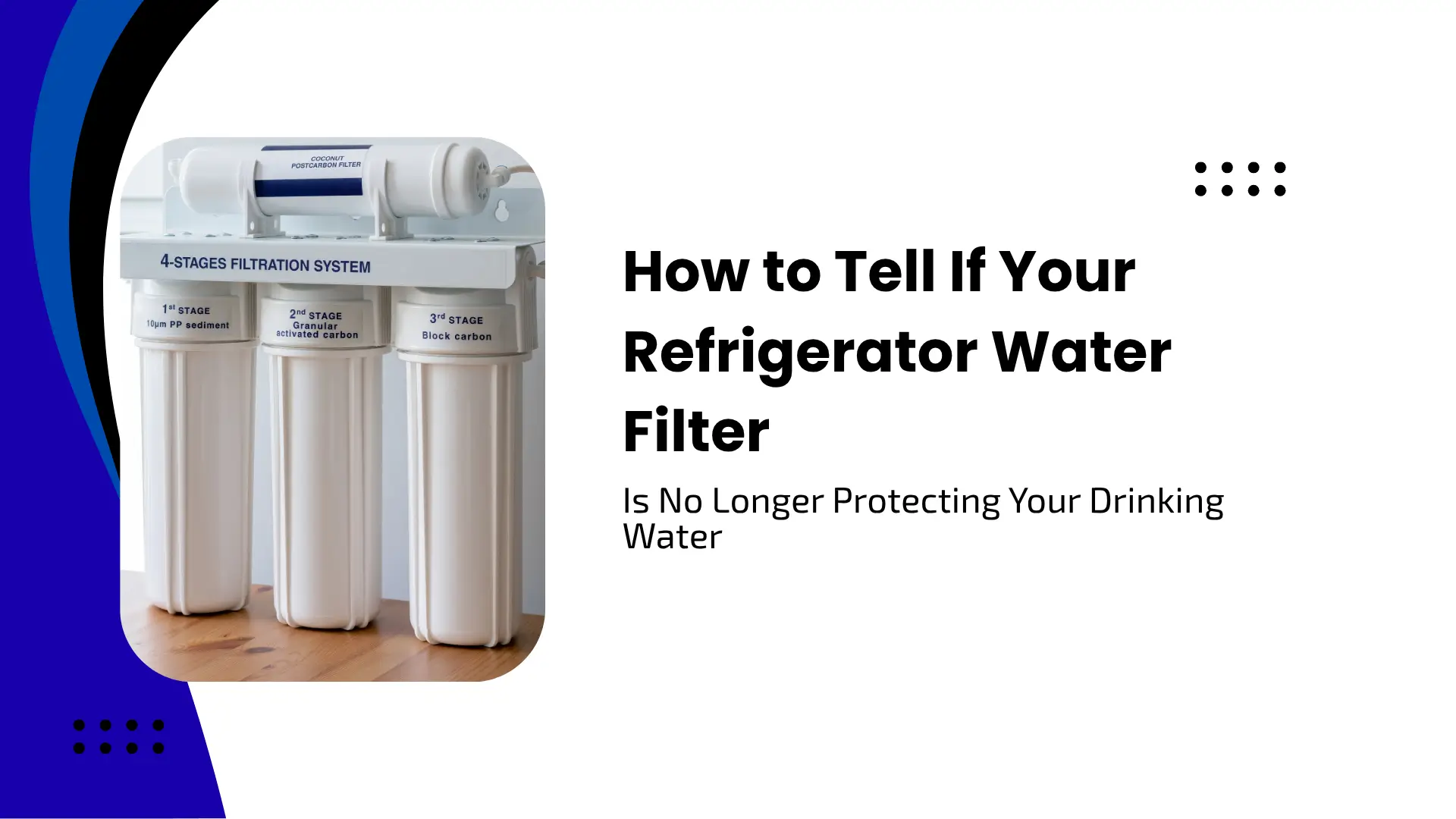
That glass of crisp, cold water from your refrigerator dispenser feels like the gold standard of home hydration, especially during a sweltering Texas summer. It tastes clean, it’s conveniently chilled, and you’ve got that little filter indicator light telling you everything is fine. But here’s a reality check many of us miss: your refrigerator water filter has a lifespan, and its failure is often silent.
Most refrigerator filters are simple activated carbon cartridges, and they are genuinely good at what they do. However, what they don’t filter out could be ending up in your glass if you aren’t paying attention. If you live in areas like Sugar Land, Houston, or Katy, where water conditions vary, understanding the limits of your fridge filter is crucial.
Let’s be clear: your refrigerator filter is a maintenance item, not a permanent solution. Once that cartridge reaches its capacity, it doesn’t just “stop” cleaning; it can start releasing trapped contaminants back into your water. Here is how to tell if your fridge filter has stopped protecting you, what your drinking water may actually contain, and when it is time to consider a more robust solution like a whole-home water filtration system.
The Warning Signs Your Filter Is Failing
You cannot always taste a failure. Many dangerous contaminants are odorless and tasteless. However, there are physical and sensory clues that signal your filter is exhausted or clogged.
1. The Flow Has Slowed to a Drip
If your water dispenser used to fill a glass in seconds and now takes an eternity, it is often because the filter is clogged with sediment. Over time, carbon filters trap particles, but once the pores are blocked, the water struggles to pass through . If you are dealing with hard water or sediment in the pipes, this blockage happens even faster.
2. Odd Tastes and Smells
The primary job of most fridge filters is to remove chlorinewhich is added by municipal supplies to kill bacteria. When the carbon media is spent, you will likely taste or smell that chlorine again . However, do not rely on taste alone. If you taste a metallic or earthy flavor, your filter may be too saturated to absorb those compounds .
3. Thin or Cloudy Ice
Ice absorbs flavors and particles. If your ice cubes are smaller than usual, hollow, or look cloudy, the water flow to the ice maker is likely restricted, or the water isn’t being properly filtered before freezing . Strange-tasting ice is another classic sign of an overdue change .
4. The “Change Filter” Light Isn’t Always Right
Many refrigerators have a timer-based light. It counts down six months from the day you plugged in the fridge or reset the button, regardless of how much water you use . If you have a large family, you might hit the filter’s capacity (usually 200–300 gallons) long before that light turns red. Conversely, the light might come on even if the filter has been sitting idle. It is a suggestion, not a lab test.
5. The “Black Specs” Phenomenon
If you notice black particles or a gray film floating in your water after changing the filter, that is usually loose carbon dust. It is technically harmless but annoying, indicating you need to flush the system . However, if these specs persist, they signal the filter media is degrading.
What Your Refrigerator Filter ISN’T Removing
Here is the big caveat about fridge filters: they are usually designed for aesthetics, not health. Most are certified under NSF/ANSI Standard 42, meaning they reduce chlorine for taste and odor .
They are rarely certified to remove the heavy hittersunless you specifically check the box for Standard 53 (health contaminants like lead, mercury, and cysts) or Standard 401 (emerging contaminants like pharmaceuticals) .
Here is what slips right through a standard fridge filter:
- Lead (unless the filter is specifically NSF 53 certified for lead reduction).
- PFAS (Forever Chemicals): Found in many groundwater sources.
- Nitrates and Nitrites.
- Bacteria and Viruses: If there is a boil notice, your fridge filter won’t save you.
- Hard Water Minerals: Calcium and magnesium that ruin your appliances and dry out your skin.
For residents in the Greater Houston area and communities like San Marcos and Timberwood Park, where hard water is prevalent, a fridge filter does nothing to combat scale buildup in your pipes or water heater.
Life Expectancy: When to Throw in the Towel
The rule of thumb is every six months. However, the better metric is gallons of usage. If you have a high-demand household, you may need to change it every 3 to 4 months . At a minimum, if you cannot remember the last time you changed the filter, it is no longer working.
The Step Almost Everyone Skips
Installation mistakes are common. If a filter is not fully seated, water can bypass the filter media entirely . You might think you are drinking clean water, but it is just unfiltered tap water sneaking around the side. Always run 2–3 gallons of water through the dispenser after replacing the filter to clear out air and carbon dust and ensure a proper seal .
When a Fridge Filter Isn’t Enough
If you are changing your filter religiously but are still concerned about lead, chloramines, or hard water, it is time to look beyond the kitchen. Your fridge handles the water you drink, but what about the water you shower in? The water that washes your clothes?
A water softener system is necessary to deal with the brutal hard water common in Texas . If you are tired of spotty dishes and dry skin, a water softener tackles the minerals that a fridge filter ignores. For contamination like PFAS or lead, a home water filtration system installed at the point of entry (whole house) ensures that every tap in your home produces safe water, not just the one on the fridge door.
Many companies, like Aqua Pure LLC, specialize in residential water treatment in San Antonio and Houston, offering solutions that range from whole-home systems to reverse osmosis systems that provide the highest level of drinking water purification.
Why Many Texas Homes Need More Than a Fridge Filter
Texas water is notorious for being “hard.” In San Antonio, the water hardness is high due to the mineral deposits in the Edwards Aquifer. In Houston, the water often contains high levels of chlorine and sediment. A fridge filter simply cannot handle the volume of sediment found in these areas, and it certainly doesn’t protect the plumbing fixtures from the damage that hard water causes.
Key Reminder: I couldn’t confirm this information for every specific suburb; water quality varies block by block. The best way to know if your fridge filter is protecting you? Test your water. A certified professional like Aqua Pure offers free water testing to pinpoint exactly what is in your home’s water and whether your fridge filteror the municipal supplyis the source of the problem.
FAQ: Your Refrigerator Filter Questions Answered
Is a whole-home water purification system worth it in Texas?
Absolutely. While a fridge filter is a stopgap, a whole-home system protects your appliances from mineral damage, your skin from chlorine exposure, and your family from contaminants that fridge filters miss. It provides peace of mind and extends the life of your water heater.
Do water softeners remove contaminants like lead?
No. Water softeners remove hard minerals like calcium and magnesium. They do not remove lead, chlorine, or PFAS. You typically need a filtration system, or a combination of a softener and a filter, to handle those issues.
Is reverse osmosis safe for daily drinking?
Yes, reverse osmosis (RO) is one of the safest and most effective ways to filter drinking water. It removes up to 99% of contaminants, including lead, arsenic, and nitrates. While it removes minerals, a healthy diet will easily replenish them, making it a great option for pure water.
How long do home water systems typically last?
With regular maintenance, a whole-home water softener system and filtration system can last 10 to 15 years. Salt for filtration systems needs to be refilled regularly, but the equipment itself is built to last if maintained.
Does my fridge filter remove bacteria?
Usually, no. Unless specifically rated for cyst reduction, fridge filters are not designed to handle bacteria or viruses. Boil advisories are critical for this reason.
Can a neglected filter make things worse?
Yes. An old carbon filter can become a breeding ground for bacteria and can release trapped contaminants (like heavy metals) back into the water as the media degrades .
Time to Take Control of Your Water
If you notice slow water flow, weird tastes, or thin ice, start with a filter change. It’s the cheapest fix. But if you are tired of constantly buying replacements, worried about contaminants that aren’t being removed, or if you are dealing with the wear and tear of hard water, a permanent solution is better.
To protect your whole homenot just your fridgeexplore professional options like home water filtration system installation that covers every faucet. Based in Texas, Aqua Pure LLC provides certified specialists who understand local water conditions like the back of their hand. They can help you decide between a softener, a whole-home filter, or a reverse osmosis system to keep your water safe for years to come.
Don’t wait until the water tastes bad. If the date on your fridge filter is a blur, go ahead and change it now and consider calling a pro to check the rest of your home’s water.
Ready to stop guessing about your water quality? Aqua Pure LLC offers free consultations and water testing to help Texas homeowners finally get peace of mind.
For hard water issues, a water softener system can drastically improve your water quality. And for the purest drinking water, a reverse osmosis system ensures every sip is clean and refreshing. Keeping your salt for filtration systems topped off is key to maintaining soft water appliances.