


If you live in Sugar Land, Katy, Houston, or anywhere across the greater San Antonio and Austin corridors, you already know that Texas water comes with its own personality. Sometimes it tastes a little off. Sometimes it leaves spots on your glasses that seem to reappear no matter how many times you wipe them down. And sometimes, your skin just feels dry and itchy after a shower, even though you moisturized right after.
These aren’t random annoyances. They’re usually signs of what’s actually in your water and the good news is, they’re fixable. A properly chosen water filtration system doesn’t just make your water taste better. It changes how your home feels to live in, day after day.
Let’s walk through what’s really going on with Texas water, how to tell if your home needs treatment, and what different systems actually do.
What’s Really Coming Out of Your Tap in Texas
Most Texas homes sit on either municipal water or a private well, and each comes with its own set of quirks.
Municipal water in cities like Sugar Land and Houston is treated and tested, which means it meets safety standards. But “safe” and “pleasant” aren’t the same thing. Sugar Land’s most recent water quality report shows average free chlorine residual around 1.53 ppmenough to keep microbes in check, but also enough to affect taste and smell for sensitive households . You’ll also see disinfection byproducts like total trihalomethanes, which form when chlorine interacts with organic matter in the water. In Sugar Land’s case, those levels stayed well below regulatory limits, but they’re still present .
Hardness is a bigger everyday issue for many Texas households. Water hardness is measured in grains per gallon or milligrams per liter of calcium carbonate. San Marcos, for example, reports water hardness around 212 mg/L, which falls into the “very hard” category . Kyle’s water supply runs between 250 and 300 mg/L on the upper end . That’s the kind of water that leaves scale on faucets, shortens the life of water heaters, and makes soap feel like it never quite rinses off.
If you’re on a private wellcommon in areas around San Marcos, Dripping Springs, and parts of the Hill Countryyou’re your own water utility. That means no one is testing your water but you. Wells can pick up sediment, iron, manganese, and in some cases, bacteria, especially after heavy rains or flooding .
Signs Your Home Is Telling You Something
Your house is pretty good at communicating when its water isn’t ideal. You just have to know what to listen for.
Hard water clues:
- White, crusty buildup on faucets and showerheads
- Spots on dishes and glassware even after washing
- Soap and shampoo that don’t lather well
- Stiff or dull laundry
- Dry, itchy skin and dull hair after showering
Water quality clues:
- Chlorine or chemical taste and smell
- Metallic aftertaste
- Cloudy or discolored water, especially after rain
- Sediment settling in your toilet tank or water heater
- Frequent plumbing repairs or appliance breakdowns
If any of these sound familiar, you’re not imagining things. And you’re not alone. These are the exact issues that send homeowners searching for answers.
Filtration, Softening, RO, and Sanitization: What’s the Difference?
One of the most confusing parts of shopping for water treatment is that the terminology gets tossed around like everyone already knows what it means. Let’s clear that up.
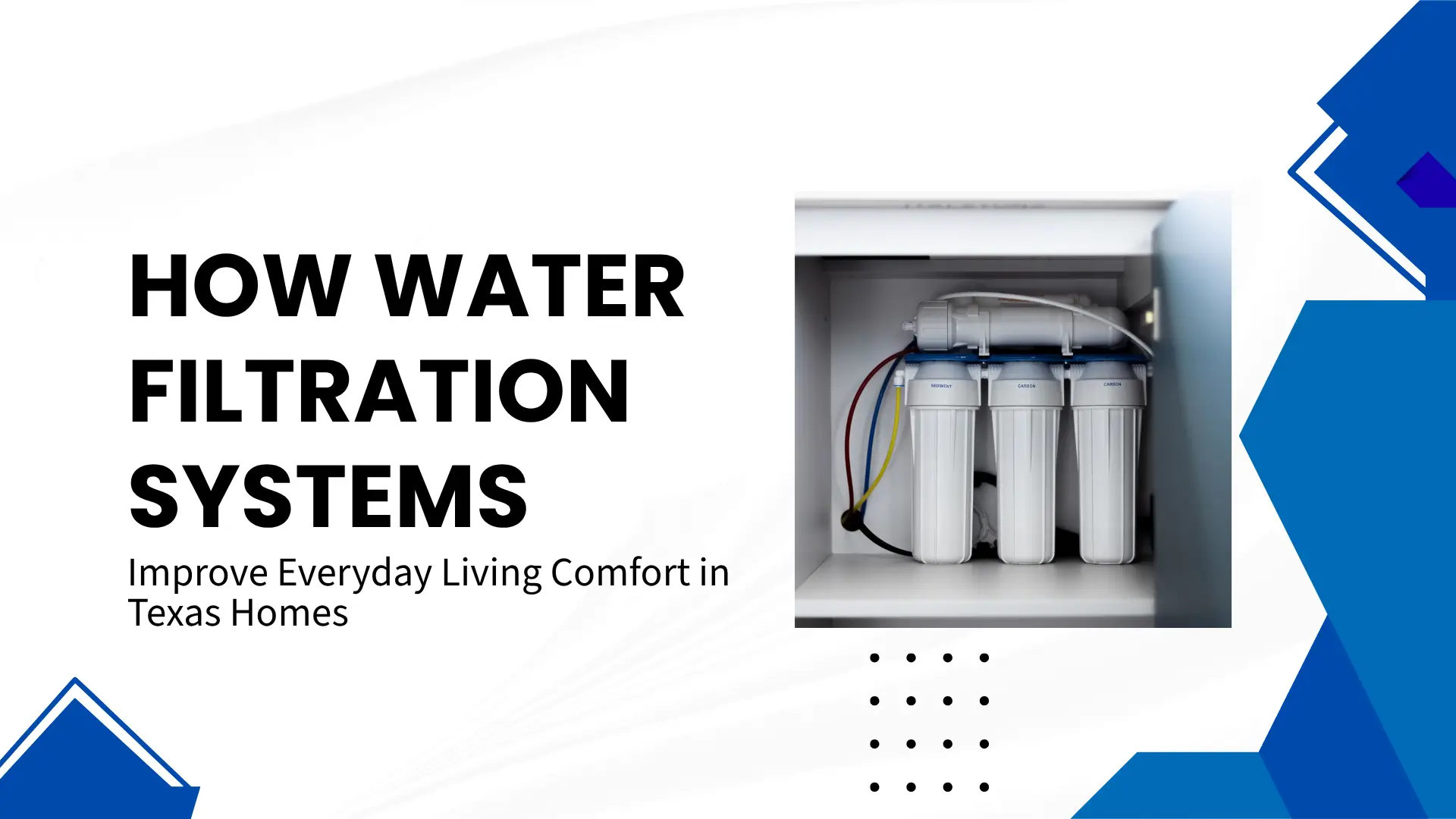
Water filtration removes physical particles and some dissolved contaminants. Sediment filters catch dirt and rust. Carbon filterswhether granular activated carbon or carbon blockpull out chlorine, some chemicals, and anything that affects taste and odor. A home water filtration system can be point-of-use (like under your kitchen sink) or whole-house, treating everything that enters your plumbing.
Water softening specifically targets the minerals that make water hardcalcium and magnesium. A water softener system uses resin beads and a salt-based regeneration cycle to swap those minerals for sodium or potassium. It doesn’t “purify” water in the sense of removing contaminants, but it absolutely transforms how your water feels and how your appliances perform.
Reverse osmosis (RO) pushes water through a semi-permeable membrane that traps a wide range of dissolved solids, including heavy metals, nitrates, and some microorganisms. RO is typically installed at a single pointusually the kitchen sinkbecause it produces water slowly and wastes some in the process. It’s excellent for drinking and cooking water.
Sanitization, often using UV light, doesn’t filter anything out. Instead, it neutralizes bacteria and viruses by damaging their DNA. It’s most relevant for well water systems where microbial contamination is a concern.
Most Texas homes end up with a combination: a whole-house filter or softener for the main water supply, plus an RO system at the kitchen tap for drinking water.
How Whole Home Systems Actually Work
A whole-house water filtration system installs at the point where water enters your home, before it branches off to your kitchen, bathrooms, laundry, and water heater.
Here’s the simple version: water flows through a series of treatment stages. A sediment pre-filter catches larger particles. Then it moves through carbon media or a carbon block to reduce chlorine and improve taste. If you have a softener, the water passes through a resin tank where hardness minerals are exchanged for sodium ions. Some systems add a post-filter or UV stage for extra polishing.
The result is that every faucet, showerhead, and appliance in your home gets treated water. No more lugging pitchers to the fridge. No more wondering if the bathroom tap is as clean as the kitchen tap.
For homes with very hard waterwhich covers a lot of ground in San Antonio, San Marcos, and surrounding areasa water softener system paired with carbon filtration is often the sweet spot. It protects your plumbing and appliances while also improving taste and odor.
What Maintenance Actually Looks Like
No water treatment system is “install and forget.” But the maintenance isn’t overwhelming once you know the rhythm.
Sediment filters typically need replacement every 3 to 6 months . Carbon filters run 6 to 12 months, sometimes longer depending on water quality and usage . RO membranes last 2 to 5 years . UV lamps should be replaced annually because their output degrades over time even if they still glow . Water softener resin can last 10 to 15 years, though the control valve and other components may need service sooner .
Whole-house carbon tanks are a bit differentthe carbon media itself usually gets replaced every 3 to 5 years, while the tank and valve can last well over a decade .
The key is to stay ahead of replacement schedules rather than waiting for problems. A filter that’s been run too long can become a breeding ground for bacteria, which defeats the purpose entirely .
Common Questions Texas Homeowners Ask
Is a whole-home water purification system worth it in Sugar Land or Houston?
For many households, yesespecially if you’re dealing with hard water, chlorine taste, or both. Sugar Land’s water is treated and meets standards, but that doesn’t mean it’s ideal for every use. A whole-house system addresses comfort and appliance protection in ways that a pitcher filter simply can’t .
What water issues are most common in Texas homes?
Hard water is the big one across Central and South Texas, with San Marcos reporting “very hard” levels and Kyle averaging around 250–300 mg/L . Chlorine taste and odor are common in municipal supplies. Private wells can have sediment, iron, manganese, and occasional bacterial contamination, especially after flooding .
Do water softeners remove contaminants?
No. Softeners remove hardness mineralscalcium and magnesiumbut they don’t remove lead, bacteria, or most dissolved chemicals. If contaminant removal is your goal, you need filtration or RO in addition to softening.
Is reverse osmosis safe for daily drinking?
Yes. RO is one of the most effective methods for reducing a wide range of dissolved contaminants. The main consideration is that it also removes beneficial minerals, so some homeowners add a remineralization stage. But for safety and taste, RO water is perfectly fine for everyday drinking and cooking.
How long do home water systems typically last?
Whole-house filtration systems generally last 10 to 15 years with proper maintenance . Water softeners often run 10 to 20 years . RO systems last 10 to 15 years, though the membrane needs replacement every 2 to 5 years . The variables that matter most are water quality, usage volume, and whether you keep up with filter changes.
Finding the Right Fit for Your Home
Every Texas home is a little different. A family in Katy with municipal water and moderate hardness has different needs than a homeowner in Dripping Springs on a private well. That’s why a one-size-fits-all approach rarely works.
The best place to start is understanding your water. You can often find your city’s consumer confidence report online, which lists what’s been detected in the treated water supply. If you’re on a well, a comprehensive water test is essentialit’s the only way to know what you’re actually dealing with.
From there, a qualified water treatment professional can help you match the right combination of filtration, softening, and possibly RO to your specific situation. If you’re in the Sugar Land, Houston, Katy, or greater San Antonio area and want to talk through your options with someone who knows Texas water, Aqua Pure LLC has been helping homeowners make sense of this for years.
Ready to stop guessing about your water? Reach out to Aqua Pure LLC to schedule a water test and get honest recommendations for your home.