


If you’ve ever pulled a glass of ice from your fridge dispenser and noticed it tastes a little off, or watched your espresso machine start sputtering after a few months of use, you’ve already met the hidden culprit: your water.
In Texas, especially around Houston, Katy, Sugar Land, and the surrounding communities, this isn’t a minor nuisance. It’s a daily reality for thousands of homeowners who are unknowingly shortening the lifespan of their favorite appliances while compromising the taste of everything they drink.
Let’s walk through what’s actually happening inside those machines, why Texas water makes it worse, and what you can realistically do about it.
Why Your Ice Maker Is the Most Vulnerable Appliance in Your Kitchen
Ice makers sit in a tough spot. They’re constantly wet, constantly cycling through freeze-and-thaw, and constantly exposed to whatever minerals and chemicals your water brings in. Over time, that exposure adds up.
When water with high mineral content freezes, the dissolved solids have to go somewhere. They concentrate. They stick to the evaporator plates, the water lines, and the internal components. That’s scale and once it starts, it doesn’t stop on its own .
You’ll notice the signs gradually. Ice production slows down. The cubes come out cloudy instead of clear. Your dispenser might start jamming because the ice is softer or stickier than it should be. And eventually, you’re calling a repair tech who tells you the machine is clogged with mineral deposits that could have been prevented.
A recent study of Houston-area tap water found that 47 out of 50 samples tested above 10 grains per gallonofficially “hard” or “very hard” . In Katy, the numbers trend even higher, with some areas hitting 10-14 grains per gallon . That’s the kind of water that turns a $2,000 refrigerator into a maintenance headache within a couple of years.
The Espresso Machine Problem Nobody Warns You About
Coffee and espresso machines are precision instruments. They heat water to exact temperatures, push it through small openings, and rely on consistent flow to extract flavor properly. When scale builds up inside the boiler or the group head, everything shifts.
Chlorine is the other issue. Municipal water in Houston and surrounding areas is treated with chlorine or chloramine to keep it safe, but that same disinfectant can react with coffee oils and create a flat, chemical-like taste . Even if you’re using good beans, bad water can ruin the cup.
The frustrating part is that these problems creep in slowly. Your espresso shots taste slightly worse each week, but you blame the beans. Your machine takes longer to heat up, but you assume it’s just getting older. By the time you realize the water was the problem all along, you’re looking at a repair bill that might cost more than a decent filtration setup.
What’s Actually in Your Water (Beyond the Obvious)
Most homeowners know their water might be “hard.” But hardness is just one piece of the puzzle.
Chlorine and chloramine are disinfectants that keep water safe at the treatment plant, but they don’t need to stay in your drinking water. They affect taste and odor, and they can degrade rubber seals and gaskets in beverage equipment over time .
Sediment and rust enter the picture as water travels through aging city mains and your home’s plumbing. Houston’s infrastructure is a mix of old and new, and by the time water reaches your kitchen, it’s picked up whatever the pipes had to offer . Sediment clogs small water lines in ice makers and coffee machines faster than almost anything else.
Lead is a more serious concern. The EPA has made clear that there is no safe level of lead exposure, and lead can leach into water from older plumbing fixtures and service lines . If your home was built before the mid-1980s, this is worth taking seriously. A recent sampling of Houston homes found detectable lead in about 8% of tested samples, typically linked to older brass fixtures .
High TDS (Total Dissolved Solids) is the catch-all term for everything dissolved in your waterminerals, salts, metals. The average reading in that Houston sampling was 385 ppm, which most bottled water standards would consider “hard to drink” . High TDS is the root cause of scale and cloudy ice.
Filtration, Softening, RO: What Actually Solves What
This is where a lot of homeowners get confused, and understandably so. There’s a lot of overlapping terminology.
Water softeners remove hardness mineralscalcium and magnesiumby swapping them for sodium or potassium. They’re excellent at preventing scale. But they don’t remove chlorine, sediment, or lead. A softener alone won’t fix taste issues or protect your family from contaminants .
Carbon filtration targets chlorine, chloramine, and many taste-and-odor compounds. It’s the workhorse for making water taste better, and it’s essential for coffee and ice quality. But carbon filters don’t remove dissolved minerals, so they won’t solve scale problems on their own .
Reverse osmosis (RO) pushes water through a membrane that rejects almost everythingminerals, metals, and most contaminants. It’s the gold standard for pure drinking water and produces the clearest ice. The tradeoff is that RO systems typically waste some water and need periodic filter and membrane changes .
Sediment filtration is the first line of defense, catching rust, dirt, and particulate matter before it reaches the more sensitive stages of your system.
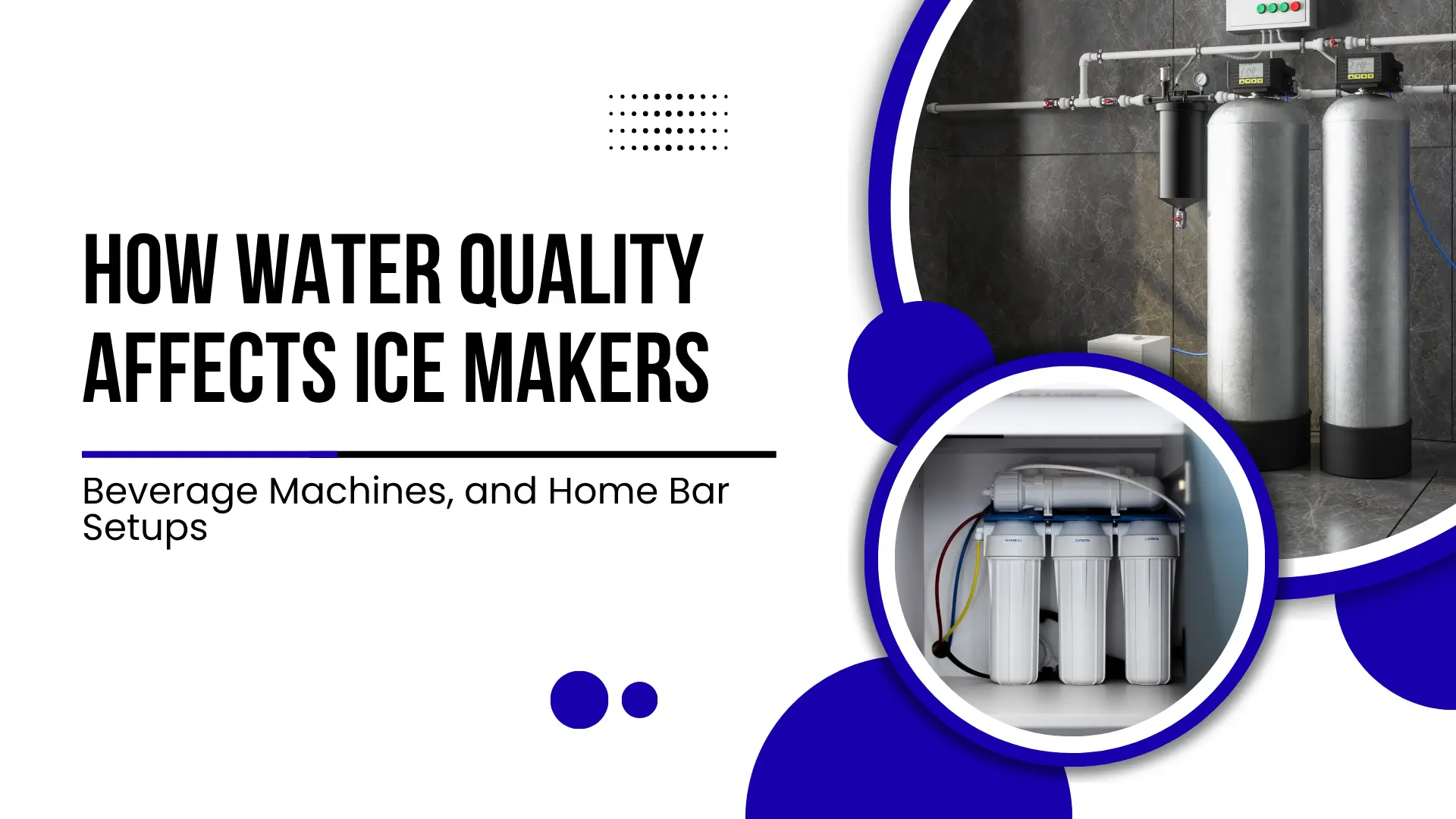
For a home bar setup or a kitchen with multiple beverage appliances, the practical answer is usually a combination. A whole-home water filtration system handles sediment and chlorine at the point where water enters your house, protecting every tap and appliance. Then, a dedicated RO system under the sink or at the bar provides the ultra-pure water your ice maker and espresso machine really need.
If you’re dealing with serious hardness, a water softener system installed before the filtration stages keeps scale from ever forming in the first place.
How to Tell If Your Home Actually Needs Treatment
You don’t need a laboratory to notice the warning signs. Here’s what to watch for:
- Cloudy ice or white crust on your dispenser that’s scale, and it’s building up inside the machine too.
- Water tastes flat or chemical chlorine or chloramine is making it through.
- Coffee and tea taste off even good beans can’t overcome bad water.
- Appliances failing early if your refrigerator or coffee maker died before its time, water is a likely suspect.
- White spots on glasses and dishes hardness minerals are leaving residue everywhere they dry.
- Visible sediment or discoloration rust or particulate is getting through.
If any of these sound familiar, a basic water test is the logical next step. Many Texas water treatment companies offer free or low-cost testing that tells you exactly what you’re dealing withhardness, chlorine levels, TDS, and whether lead or other contaminants are present.
A Quick Word on Maintenance and Longevity
Any water treatment system requires some upkeep. Sediment filters typically need changing every 6 to 12 months depending on water quality and usage. Carbon filters last longer but still need periodic replacement. RO membranes can last two to three years with proper pre-filtration. Water softeners need salt refills and occasional resin checks.
The tradeoff is straightforward. A modest annual maintenance routine costs far less than replacing appliances every few years or paying for emergency repairs. And the daily benefitsbetter-tasting water, clearer ice, coffee that actually tastes like coffeeare immediate.
For homeowners in Sugar Land, Katy, Houston, and the broader region, working with a local provider who understands Gulf Coast water conditions makes a difference. Aqua Pure LLC is a Texas-based company that specializes in residential water treatment, including whole-home systems, reverse osmosis, softeners, and sanitization. Their team handles professional installation and ongoing service, which matters when you’re dealing with equipment that needs to be configured for your specific water chemistry rather than just bolted to the wall.
Questions Homeowners Actually Ask
Is a whole-home water purification system worth it in the Houston area?
For most homeowners dealing with hard water and chlorine, yes. A whole-home system protects your plumbing, your water heater, and every appliance that uses waternot just the drinking tap. Given how hard the water is in Katy, Sugar Land, and west Houston, the equipment protection alone often justifies the investment.
What water issues are most common in Texas homes?
Hardness is the big one, followed by chlorine taste and odor. Sediment from aging infrastructure is common in older neighborhoods. In homes with older plumbing, lead and copper can be a concern. Well water users face additional challenges like iron, sulfur, and bacteria that municipal water doesn’t have.
Do water softeners remove contaminants?
No. Softeners remove hardness minerals only. They don’t remove chlorine, lead, sediment, or bacteria. If you want cleaner drinking water, you need filtration or RO in addition to softening .
Is reverse osmosis water safe to drink every day?
Yes. RO removes a very high percentage of dissolved contaminants. Some people add a remineralization stage to put beneficial minerals back in, but the water itself is perfectly safe and is widely used in homes, restaurants, and coffee shops.
How long do home water systems typically last?
It depends on the type and how well they’re maintained. Whole-home filter housings and softener tanks can last 10 to 15 years or more. RO systems typically last 5 to 10 years, with membrane replacements every 2 to 3 years. Regular maintenance is the biggest factor in longevity.
A Final Thought (and a Practical Next Step)
Your ice maker, espresso machine, and home bar setup are investments. They’re also the appliances you interact with most oftenthe ones that shape your daily coffee ritual and the drinks you serve to guests. Treating them to clean, properly conditioned water isn’t a luxury. It’s basic equipment care.
If you’re in Houston, Katy, Sugar Land, or anywhere in the surrounding area and you’re not sure what your water is doing to your appliances, a professional water test is the smartest place to start. You can learn more about the options available and schedule a consultation by visiting Aqua Pure LLC. They’ll help you figure out what your home actually needsno guesswork, no unnecessary add-ons.