


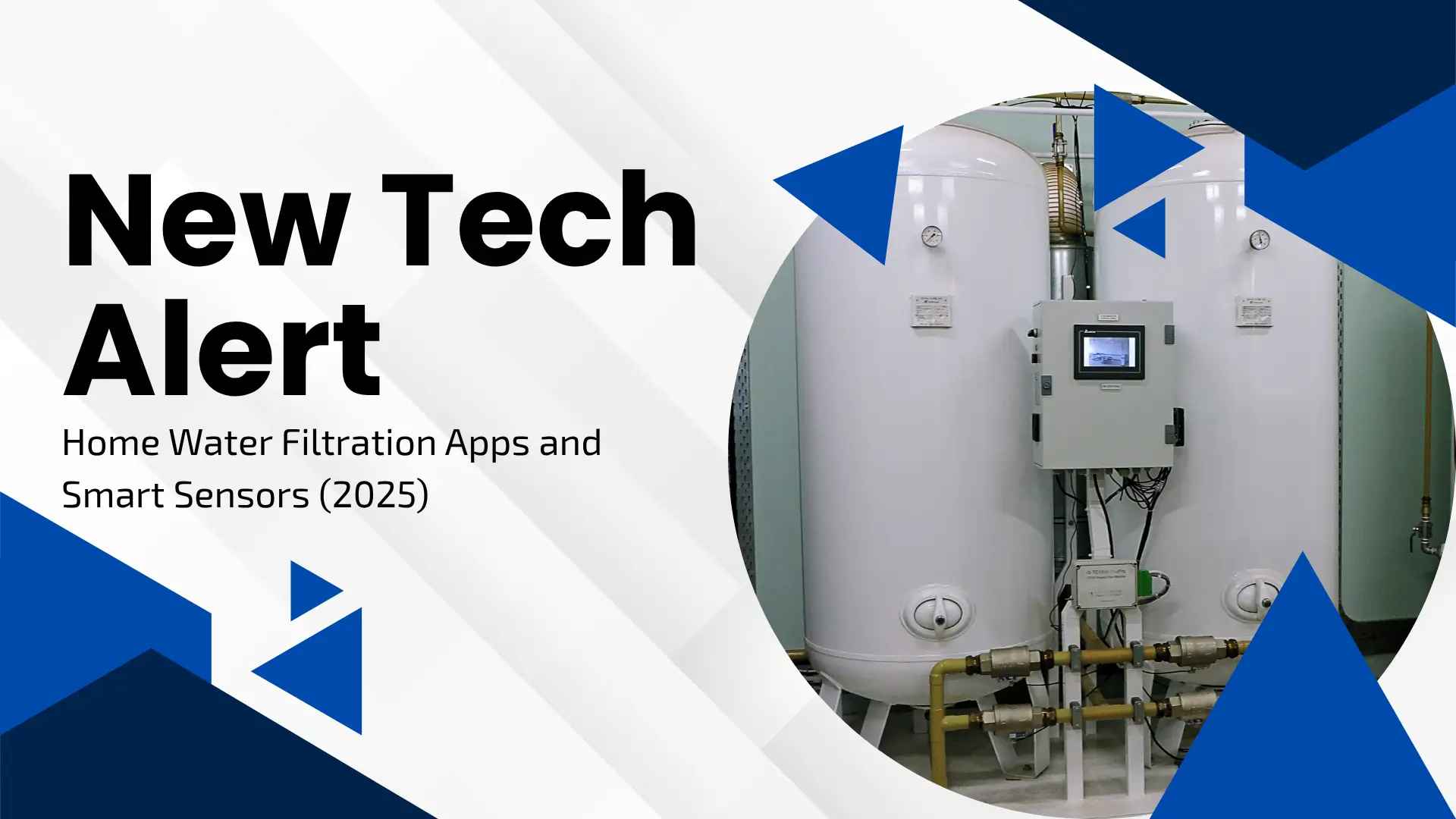
If you’re a Texas homeowner, you know the relationship with your tap water can be… complicated. Whether you’re in Houston dealing with chlorine taste, out in Katy battling hard water scale, or up in Cedar Park wondering about sediment after a heavy rain, your water is unique to your neighborhood. For years, the only way to know what was going on inside your pipes was to wait until the dishwasher turned cloudy or the water pressure dropped.
But things have changed. We are now in the era of smart water management. In 2025, the biggest shift in home water treatment isn’t just the tanks and filters themselvesit’s the technology that tells you what they are doing. We’re talking about smart sensors that monitor your water in real-time and apps that let you control your whole home water filtration system from your phone.
As a water quality specialist who has spent years working across Texasfrom Sugar Land to San AntonioI want to walk you through how this new tech is making water treatment easier, more efficient, and a whole lot less mysterious.
Why Smart Water Tech is a Game Changer for Texas Homes
Historically, water filtration has been a “set it and forget it” industry. While that sounds nice, the “forget it” part usually meant you didn’t know there was a problem until salt ran out, a filter clogged, or your water started tasting funny.
With the new generation of smart sensors and app integration, you no longer have to guess. These systems act like a fitness tracker for your plumbing. They measure flow rate, pressure, temperature, and total dissolved solids (TDS). For families in areas like Dallas or Austinwhere water hardness levels can vary drastically from one street to the nexthaving real-time data means you can adjust your system to handle exactly what is coming into your home at that moment.
How Smart Filtration Systems Actually Work
Let’s break down the tech without getting too technical. A smart whole home water filtration system typically involves two main components: the physical filtration/softening equipment and a connected bridge device that sends data to your Wi-Fi.
The Sensors: Small probes placed in the water line monitor the water before it enters your treatment system (raw water) and after it leaves (treated water). These sensors track:
- Flow rate: Telling you if you have a leak or how much water your family uses.
- Conductivity/TDS: Giving you a digital readout of how hard or soft the water is.
- Filter life: Monitoring pressure differentials to know exactly when a sediment filter is full, rather than guessing based on a calendar.
The Apps: This is where you interact with the system. In 2025, these apps have become incredibly user-friendly. They send push notifications directly to your phone:
- “High flow detected. Possible leak in the irrigation system.”
- “Salt level in water softener is low. Time to refill.”
- “Reverse osmosis membrane efficiency dropped below 90%. Service recommended.”
For homeowners in Houston, where heavy rainfall can cause municipal treatment plants to spike chlorine levels temporarily, these sensors can alert you immediately, so you know your carbon filter is working overtime to remove those extra contaminants.
Smart Filtration vs. Smart Softening vs. Smart Sanitization
One of the biggest questions I get from homeowners in Sugar Land and Katy is whether they need a softener, a filter, or a sanitizer. Here’s how the smart versions of these systems differ:
Whole Home Filtration (Smart):
Smart filtration systems focus on the health aspectsremoving chlorine, chloramines, volatile organic compounds (VOCs), and sediment. A smart system for water filtration in Cedar Park or water filtration in San Antonio often includes a UV sanitizer or advanced carbon media. The app will tell you the “usage remaining” on your carbon tank. If your water source has high sediment, the app can track how often the pre-filter needs backwashing, preventing pressure drops.
Water Softeners (Smart):
Smart softeners are a massive upgrade from the old mechanical timers of the past. Instead of regenerating (flushing the salt brine) every three days regardless of usage, a smart softener regenerates based on actual water consumption. If you have guests visiting for the weekend in Austin, the system adapts. If you’re on vacation for two weeks, it doesn’t waste salt or water.
Pro tip: When looking at Westinghouse water softener reviews, one of the top praises for modern models is the reliability of their digital metering and remote monitoring capabilities. If you are searching for a water softener near me, I highly recommend asking if the unit offers “demand-initiated regeneration” with an app interface.
Reverse Osmosis (Smart):
Under-sink reverse osmosis systems have also gotten a tech upgrade. Older RO systems would waste a lot of water. Smart RO systems use sensors to monitor the pressure and the quality of the water being produced. They alert you when it’s time to change the pre-filters or the membraneusually before the water starts tasting off. If you’re looking for a reverse osmosis water filter nearby, look for units that offer TDS meters in the app so you can see the purity level of your drinking water in real-time.
Local Water Concerns: Why Texas Needs the Tech
Texas water is a unique beast. If you live in Houston, you are likely on municipal water that relies heavily on chlorine or chloramines to keep bacteria at bay due to the warm climate. While effective, this leaves your skin feeling dry and your water smelling like a pool.
If you live in the Hill Country near Austin or San Antonio, you might be dealing with hard water from the Edwards Aquifer. Hard water wreaks havoc on tankless water heaters and leaves that crusty white buildup on faucets.
For those in the Dallas-Fort Worth metroplex, you often face a combination of hardness and high total dissolved solids.
This is why a simple pitcher filter doesn’t cut it. A whole house water filter Dallas residents install today often includes a smart head unit that can be programmed to backwash based on local usage patterns. Similarly, a water filtration system Austin TX homeowners trust usually combines a softener for the aquifer hardness and a carbon filter for the taste.
When researching water purification companies or water treatment near me, look for providers who understand these local nuances. For example, a company like Aqua Pure LLC has built a reputation across Texas by focusing on these specific regional challenges. Their certified specialists don’t just sell equipment; they match the right smart technology to the specific water chemistry of your neighborhood, ensuring that whether you need a whole house water filtration system Houston or a softener in water filtration Dallas TX, the system is calibrated correctly for the local supply.
Maintenance in the Digital Age
One of the biggest fears homeowners have is maintenance. With smart systems, the guesswork is eliminated.
In the past, you might have forgotten to buy salt for filtration systems until your shower felt slimy. Now, the app tracks your salt usage. If you have a Westinghouse water softener manual (or any modern unit), you’ll notice the digital face guides you through troubleshooting without needing a plumber for every little hiccup.
For water filtration companies, this tech is a blessing because it allows for proactive maintenance. Instead of waiting for a system to fail, alerts prompt service calls before a problem ruins your water quality or damages your home.
Frequently Asked Questions (Homeowner to Specialist)
Q: Is a whole-home water purification system worth it in Texas?
A: In my opinion, absolutely. Texas water varies wildly by municipality and season. A whole-home system protects your appliances from scale buildup (which extends the life of your $2,000 water heater), removes the chlorine that dries out your skin, and ensures that if there is ever a municipal boil water notice, you have a layer of protection at the point of entry. Given the dust storms, agricultural runoff, and aging infrastructure in some areas, whole-home systems are becoming less of a luxury and more of a standard home appliance.
Q: What water issues are common in Texas homes?
A: The big three are: Hardness (calcium and magnesium, leading to scale), Chlorine/Chloramines (taste and odor issues, skin irritation), and Sediment (sand and silt, especially in areas with well water or older city mains). In places like water filtration San Antonio and water filtration austin tx, we also see higher levels of total dissolved solids (TDS), which is why many homeowners combine a whole-house carbon filter with a reverse osmosis system at the kitchen sink.
Q: Do water softeners remove contaminants?
A: This is a common misconception. A traditional water softener system does not remove contaminants like lead, pesticides, or bacteria. It removes hardness minerals (calcium and magnesium) through ion exchange. To remove contaminants, you need a filtration system (usually activated carbon) or a reverse osmosis system. Many Texas homes now utilize a hybrid approach: a softener to protect the plumbing and appliances, paired with a carbon filter for the whole house or an RO system for drinking water.
Q: Is reverse osmosis safe for daily drinking?
A: Yes, it is not only safe but highly recommended. Reverse osmosis removes up to 99% of contaminants, including lead, arsenic, and microplastics. The concern about “demineralized water” is generally overblown if you have a balanced diet. However, if you want to add minerals back in for taste, many modern RO systems come with a “remineralization” stage. It is the gold standard for water purification at the kitchen sink.
Q: How long do home water systems typically last?
A: With proper maintenance and the help of smart sensors to optimize regeneration cycles, a high-quality water softener tank can last 10 to 15 years. Filtration tanks (carbon) typically last 5 to 10 years, depending on water usage and contaminant load. Reverse osmosis systems generally need the membrane replaced every 2 to 5 years, but the tank and faucet can last much longer. The new smart valve heads generally have a similar lifespan to the tanks, though electronics are covered under warranty.
The Bottom Line
We live in a time where we expect our homes to be smart. We monitor our doorbells, thermostats, and security cameras from our phones. It only makes sense that we start doing the same for the water we drink, bathe in, and use to wash our clothes.
The technology in 2025 is finally making water treatment accessible. You no longer need to be a chemist to understand what’s coming out of your tap. With a glance at your phone, you can know if your home water filtration system is performing, if your softener has enough salt, and if your family’s water is safe.
If you’re in the Houston, Austin, Dallas, or San Antonio areas and you’re curious about upgrading your systemor even just retrofitting your existing equipment with smart monitoringit’s worth talking to a local expert. Look for a provider that understands the specific water quality in your zip code.
For homeowners ready to take the next step, the team at Aqua Pure LLC specializes in these new technologies. They offer certified specialists who can help you navigate the options, whether you need a new home water filtration system installation, want to upgrade to a smart reverse osmosis system, or just need a reliable source for salt for filtration systems. It’s about making smart water simple, so you can stop worrying about your water and just enjoy it.