


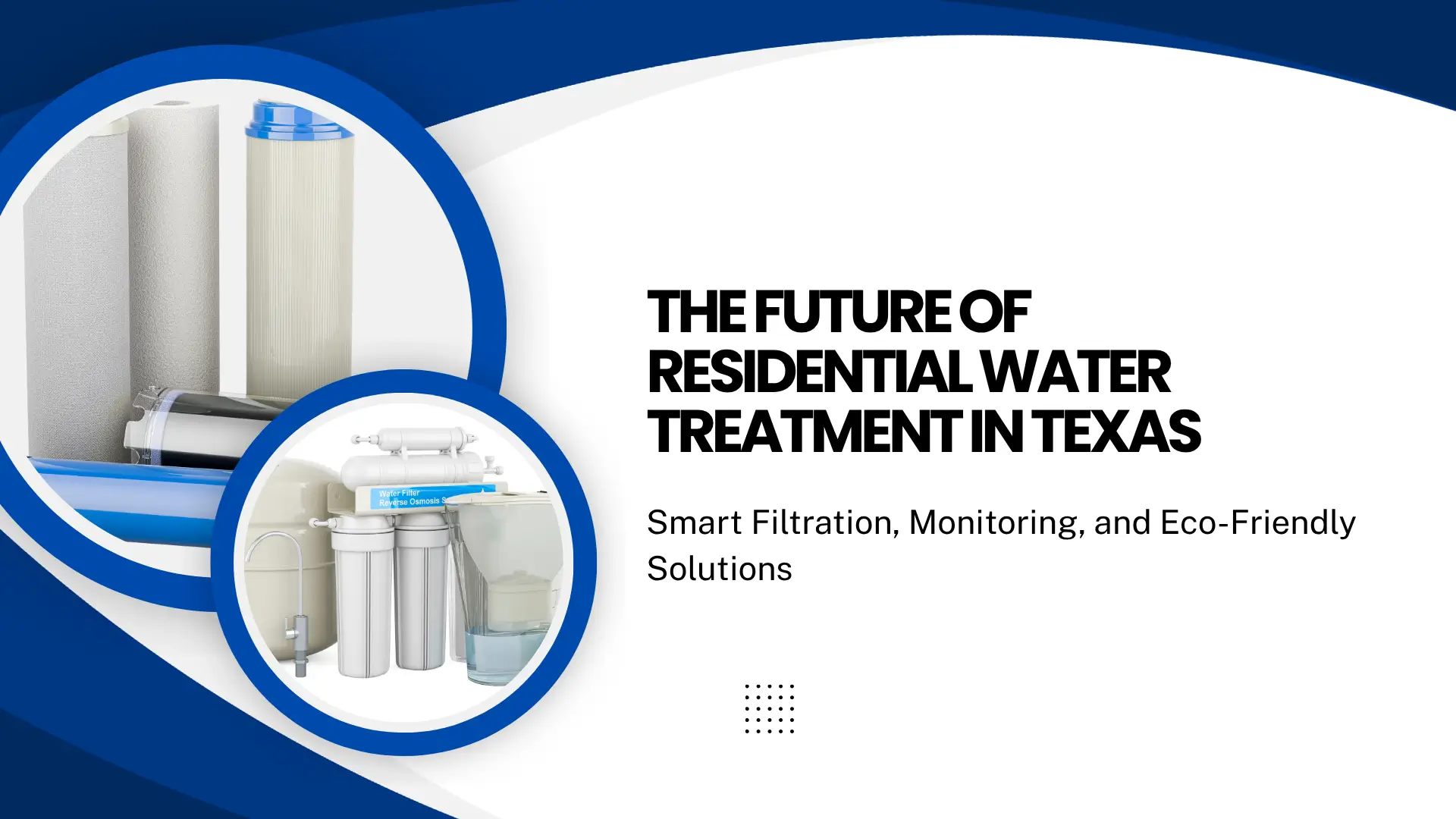
If you live in Sugar Land, Katy, Houston, or anywhere across the sprawling Texas suburbs, you already know something about your water that folks in other states don’t have to think about. It’s not just that it tastes different from city to city. It’s that the water coming out of your tap is on a journeyfrom aquifers, rivers, and lakes, through aging pipes, into your home and that journey shapes everything from how your shampoo lathers to what you’re actually drinking.
The future of home water treatment isn’t about buying the biggest, fanciest box you can afford. It’s about getting smarter. Smart filtration. Smart monitoring. Systems that actually fit the water chemistry of your specific neighborhood. And yes, eco-friendly options that don’t waste three gallons for every one gallon you drink.
Let’s walk through what’s changing, what matters, and how to think about your own home’s water.
Why Texas Water Is Different (And Why That Matters for Your System)
Texas has a water identity problem. We pull from the Edwards Aquifer in San Antonio, surface water from Lake Houston and Lake Livingston in Houston, and a patchwork of groundwater wells everywhere in between. Each source has its own personality.
San Antonio’s water, sourced primarily from the Edwards Aquifer, is famously hard. It’s a karst aquifer, which means water moves through limestone and picks up calcium and magnesium along the way. That’s what leaves the white crust on your faucets and makes your water heater work harder. Houston’s water is a mix about 90% surface water from the San Jacinto and Trinity River basins, with the rest from deep wells. Surface water tends to be softer than well water, but it comes with its own challenges: disinfection byproducts from chlorine treatment, and the occasional sediment or color issue when the system switches sources or flushes mains.
And then there’s the infrastructure question. Water that leaves a treatment plant meeting all EPA standards doesn’t always arrive at your kitchen faucet in the same condition. A recent study in East Austin found that while source water met Texas Commission on Environmental Quality standards, samples from residents’ taps showed lead and arsenic exceeding state or federal guidelines likely from corrosion of older pipes and plumbing as water traveled through the distribution system. That’s not a reason to panic. But it is a reason to pay attention to what’s happening after the treatment plant.
How to Tell If Your Home Needs Water Treatment (Before You Buy Anything)
Here’s a simple self-audit. You don’t need a lab kit for the first pass just your senses and a quick look around the house.
Signs of hard water:
- White, chalky buildup on faucets, showerheads, and glass shower doors
- Soap and shampoo that don’t lather well
- Dishes with spots even after rinsing
- Appliances like your water heater and washing machine aging faster than they should
Signs you might want filtration beyond softening:
- A chlorine or chemical taste or smell in your drinking water
- Cloudiness or discoloration, especially after rain or when your water utility switches sources
- Concerns about lead if your home was built before the late 1980s, lead solder in plumbing is a real possibility
- You’re on well water and haven’t tested in the past year
A note for the skeptical: If you’re on municipal water and your only issue is hardness, a water softener system addresses that directly. If you’re worried about what’s in the water beyond minerals, you need to know what you’re dealing with. A basic water test either from a certified lab or through a local water treatment professional gives you actual data instead of guesses.
I couldn’t confirm the exact contaminant profile of every neighborhood in Sugar Land or Katy without seeing recent test results for your specific address. Here’s how you can verify it: check your city’s annual Consumer Confidence Report (usually available on your water utility’s website), or ask a local water treatment specialist to test your tap water directly.
Filtration, Softening, RO, and Sanitization: What’s the Difference?
These terms get thrown around like they’re interchangeable. They’re not. Here’s the plain-English version.
Water softener: Removes hardness minerals calcium and magnesium through a process called ion exchange. The result is water that lathers, doesn’t leave scale, and is kinder to your pipes and appliances. A water softener system doesn’t remove contaminants like lead or chlorine. It makes your water softer, period.
Filtration (carbon-based): Uses activated carbon to adsorb chlorine, chloramine, some disinfection byproducts, and certain chemicals that affect taste and odor. This is what most whole-home carbon filters do. Good for improving taste and reducing the stuff you don’t want to drink, but it doesn’t address hardness or dissolved heavy metals effectively.
Reverse Osmosis (RO): Forces water through a semi-permeable membrane that traps a wide range of dissolved contaminants lead, arsenic, nitrates, PFAS, and more. RO is typically a point-of-use system installed under your kitchen sink for drinking and cooking water. It’s thorough, but it wastes some water in the process (though newer systems are far more efficient than older ones).
Sanitization: UV light or ozone treatment designed to kill bacteria and viruses. This is most relevant for well water users or homes with specific microbial concerns. It’s not a filter it’s a disinfectant step.
The future of residential treatment is about combining these intelligently. A whole home water filtration system for the main line, a softener if hardness is your issue, and an RO system for drinking water is a common and effective setup.
What “Smart” Actually Means for Home Water Systems
The word “smart” gets slapped on everything, but in water treatment it means two real things: monitoring and adaptation.
Monitoring is the bigger shift. Instead of finding out your filter is exhausted when your water starts tasting weird, smart systems use sensors to track water usage, remaining filter capacity, and sometimes water quality parameters in real time. Some systems can alert you via phone when it’s time for maintenance or when something changes in your water quality.
Adaptation is still emerging but promising. Systems that adjust treatment based on incoming water quality say, increasing carbon contact time when chlorine levels spike, or bypassing certain stages when your source water is already clean. The idea is efficiency: treat what needs treating, don’t over-process what’s already fine.
For homeowners in areas like Sugar Land, Katy, or Spring where water sources can shift seasonally, monitoring matters. It takes the guesswork out of “is my water okay today?”
The Eco-Friendly Angle (Without the Greenwashing)
Water treatment has a waste problem. Traditional RO systems, for example, send a significant portion of water down the drain as reject water. Old-school softeners use salt and require periodic regeneration that discharges brine.
The industry is moving, slowly but genuinely, toward less wasteful designs.
Efficient RO systems now recover a much higher percentage of water than older models. Some use pump-assisted technology to reduce reject water to a fraction of what it used to be. If you’re installing a reverse osmosis system, this is worth asking about specifically.
Salt-free or low-salt softening alternatives exist, though they work differently than traditional ion-exchange softeners. They don’t remove hardness minerals they condition water so minerals don’t stick to surfaces as readily. Results vary by home. For some, it’s enough. For others, a traditional softener is still the right call.
Longer-lasting media in carbon filters means less frequent replacement and less waste headed to landfills. Some modern systems use catalytic carbon that lasts significantly longer than standard granular activated carbon.
The honest truth: there’s no zero-impact water treatment system. But the gap between the worst and best options is wide, and it’s worth asking your installer about efficiency ratings before you commit.
Maintenance: What You’re Actually Signing Up For
A water treatment system isn’t a “set it and forget it” purchase. It’s more like a carat needs regular attention to keep performing.
Water softeners need salt refills (if you’re using a traditional ion-exchange system) and periodic cleaning. The salt for filtration systems is an ongoing cost, though not a huge one. Resin beds can last many years but eventually need replacement.
Carbon filters have a defined lifespan typically measured in gallons or months. When they’re exhausted, they stop removing what they’re supposed to remove. Smart monitoring helps here, but even without it, marking your calendar for replacement is essential.
RO systems need membrane replacement every few years and pre-filter changes more often. The membrane is the heart of the system; when it degrades, water quality drops.
UV lamps (for sanitization) lose intensity over time and need annual replacement even if they’re still glowing.
The good news: a well-installed system from a reputable provider comes with a maintenance schedule. You don’t have to become a water treatment technician. But you do need to actually do the maintenance, or the system becomes expensive decoration.
Quick Answers to Questions Texas Homeowners Actually Ask
Is a whole-home water purification system worth it in Sugar Land or Katy?
It depends on your water. If you have hard water and you’re tired of scale buildup, a softener is often worth it. If you’re on municipal water that meets standards but you want better-tasting drinking water and peace of mind about lead or byproducts, a carbon filter plus an RO for drinking is a practical middle ground. The “worth it” calculation is different for every household.
What water issues are common in Texas homes?
Hard water is the big one, especially in San Antonio and the Hill Country. Chlorine taste and odor are common in Houston-area municipal water. Sediment and occasional discoloration happen, particularly after main flushing or source switches. Lead is a concern in older homes regardless of city.
Do water softeners remove contaminants?
No. A water softener removes hardness minerals. It doesn’t remove lead, chlorine, bacteria, or most other contaminants. Don’t confuse softening with purification they’re different jobs.
Is reverse osmosis safe for daily drinking?
Yes. RO removes a wide range of contaminants and produces high-quality drinking water. The main considerations are mineral content (RO water is demineralized, which some people address with remineralization filters) and water waste (mitigated by modern efficient systems).
How long do home water systems typically last?
Softeners can last 10-15 years or more with proper maintenance. Carbon filter housings and valves often last 5-10 years. RO membranes typically last 2-3 years; the system housing can last much longer. UV lamps are annual replacements. The lifespan depends heavily on water quality and maintenance consistency.
Finding the Right Fit for Your Home
The future of residential water treatment in Texas isn’t one-size-fits-all. A family in San Marcos on well water has different needs than a Houston homeowner on municipal surface water. A new build in Katy might need nothing but a softener; a 1970s home in Sugar Land might benefit from filtration to address aging pipes.
This is where working with someone who knows Texas water matters. Aqua Pure LLC is a Texas-based provider that handles whole-home systems, softeners, reverse osmosis, and sanitization for homeowners across the state. If you’re tired of guessing what’s in your water and want a straight answer about what your home actually needs, Aqua Pure LLC is a reasonable place to start the conversation.
The smartest thing you can do isn’t buy the most expensive system. It’s understand your water first, then treat it accordingly.