


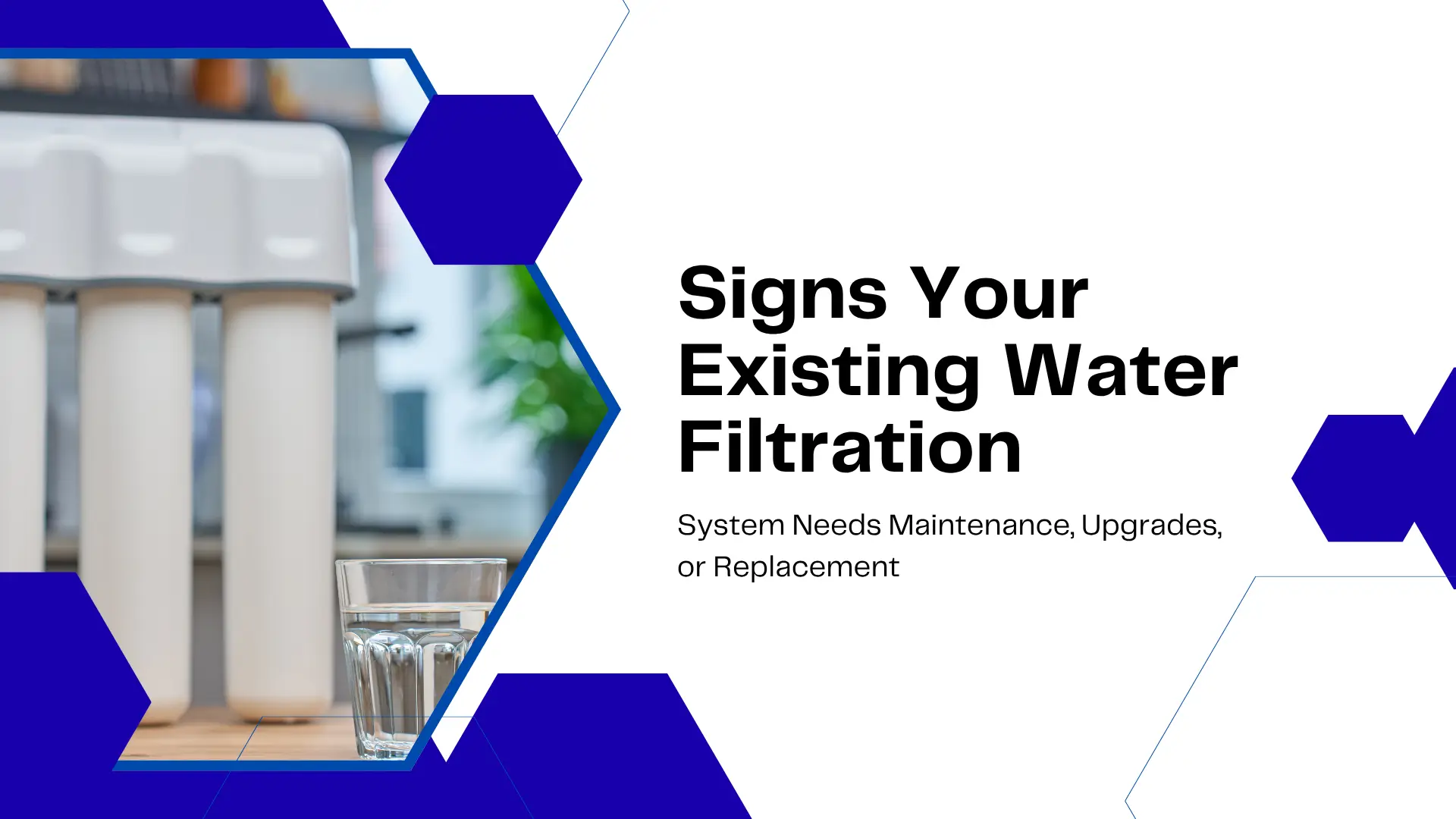
If you live in the Houston areawhether that’s Sugar Land, Katy, or anywhere along the I-10 corridor you already know the water here has a personality. It leaves white crust on your faucets, makes your soap struggle to lather, and sometimes carries an unmistakable hint of chlorine. If you’re in San Antonio, Austin, or the Hill Country communities like San Marcos or Dripping Springs, the story isn’t much different.
The good news is that many homeowners in Texas already have some form of water treatment. The not-so-good news? A lot of those systems are quietly past their prime, and the signs aren’t always obvious until something breaks or your water quality takes a nosedive.
This guide is here to help you figure out whether your current setup is still doing its jobor whether it’s time for a maintenance visit, an upgrade, or a full replacement. No sales pitch, just practical guidance from someone who’s seen what Texas water does to homes over time.
Why Texas Water Puts Your System to Work
Before we talk about system failure, it helps to understand what your water treatment is up against. Houston and its suburbs pull from a mix of surface water and groundwater that picks up calcium and magnesium as it travels through limestone and clay. The result? Water that routinely tests in the 9 to 12 grains per gallon range in places like Houston and Sugar Land, and often higher10 to 14 GPGout in Katy and west Houston . Anything above 7 GPG is considered hard. Above 10 is very hard. That’s a lot of mineral load for a softener to handle year after year.
If you’re on a private well in the outskirts of Katy, Cypress, or Fulshear, you’re dealing with an entirely different beast: iron, manganese, sulfur odor, and sediment that municipal systems filter out but wells don’t . And in some areas around Austin, researchers have found that even when source water meets standards, plumbing infrastructure and mixing water sources can introduce lead and other contaminants at the tap . That’s a scenario where a properly functioning home filtration system isn’t a luxuryit’s genuinely protective.
The Signs Your System Is Asking for Attention
Water treatment equipment doesn’t usually fail all at once. It gives you clues. Here’s what to watch for.
The water doesn’t taste or smell the way it used to
If you have a carbon-based home water filtration system, this is often the first sign that media is exhausted. That chlorine taste or odor creeping back in means the carbon has absorbed all it can and needs replacement. For well owners, a return of sulfur or metallic taste suggests iron or sulfur filters are saturated.
Your soap and skin tell the story
Hard water leaves a distinct calling card: soap that won’t lather, a filmy residue on your skin after showering, and stubborn soap scum on glass and tile. If you have a water softener system but you’re noticing these problems coming back, the resin may be depleted, the salt level might be low, or the control valve might not be regenerating properly.
Scale is winning again
Those white, chalky deposits on faucets, showerheads, and inside your coffee maker are calcium carbonate. A functioning softener keeps them at bay. When scale starts reappearing, your softener isn’t keeping up. This matters because scale doesn’t just look badit’s building up inside your water heater, dishwasher, and washing machine, shortening their lifespan and driving up energy costs.
Water pressure has dropped
A sudden or gradual decrease in water pressure throughout the house often points to a clogged sediment prefilter or a fouled membrane. For whole-house systems, sediment filters trap particulate matter and need regular replacement. If pressure is dropping, the filter is likely overloaded.
The system is old enough to vote
Most water softeners last 10 to 15 years for resin media, with control valves and tanks often going 15 to 20 years with proper service . Whole-house carbon filtration systems typically need media replacement every 3 to 5 years, though the tanks themselves can last much longer . Reverse osmosis membranes generally need replacement every 2 to 3 years, with pre and post-filters changed every 6 to 12 months . If you’re well past these intervals, you’re running on borrowed time.
Quick Reality Check: Are You Sure It’s a Filtration Problem?
Sometimes what looks like a filtration issue is actually a different problem entirely. Before you assume your system needs replacement, consider:
Is your softener actually removing hardness? A water softener uses ion exchange to swap calcium and magnesium for sodium. It does not remove chlorine, lead, bacteria, or sediment . If your complaint is about taste or contaminants rather than scale and soap scum, a softener alone won’t solve it. You may need carbon filtration or reverse osmosis in addition to softening.
Could the issue be your plumbing, not your treatment system? In older homes, lead can leach from solder or fixtures. Research in an Austin neighborhood found that lead and other contaminants were entering water after it left the treatment plantthrough the neighborhood’s plumbing itself . No softener or filter at the point of entry can fix contamination that happens downstream of the system.
Maintenance vs. Upgrade vs. Replacement
Here’s how to think about the decision.
Maintenance is your first move if the system is relatively young, the problem is straightforward (salt is low, filters are overdue), and the equipment is still appropriate for your water conditions. A professional water filtration service can replace media, clean valves, test performance, and get you back on track.
Upgrade makes sense when your water conditions have changed or your original system was undersized. Maybe you started with a basic softener but now you’re concerned about chlorine byproducts or PFAS. Adding carbon filtration or a reverse osmosis system at the kitchen tap can address contaminants that softening alone won’t touch.
Replacement is the honest answer when repair costs approach the price of new equipment, when the system is obsolete or parts are unavailable, or when your water quality needs have simply outgrown what the current setup can deliver. A 15-year-old softener with a failing valve and depleted resin isn’t worth resurrectingyou’ll spend good money chasing problems.
What Whole-Home Treatment Actually Does (and What It Doesn’t)
It’s easy to get confused by the different categories of equipment. Here’s the plain-English version.
Water softeners remove hardness minerals. They protect your plumbing and appliances from scale. They do not make water “pure” or remove contaminants .
Carbon filtration (often part of a whole-house setup) removes chlorine, chloramines, taste, odor, and some volatile organic compounds. It improves water quality for drinking, bathing, and laundry.
Reverse osmosis forces water through a fine membrane that rejects a wide range of dissolved contaminants, including lead, arsenic, nitrates, and PFAS. It’s typically installed at a single pointusually the kitchen sinkfor drinking and cooking water.
UV sanitization uses ultraviolet light to neutralize bacteria and viruses. It’s most relevant for well water or homes with repeated boil-water notices.
Many Texas homes benefit from a combination: a softener for the whole house, carbon filtration for chlorine and taste, and an RO system at the kitchen tap for drinking water. That layered approach addresses the specific problems we see in Houston, San Antonio, Austin, and the communities in between.
What Regular Maintenance Actually Looks Like
If you want your system to last, here’s the rhythm to expect.
Sediment prefilters on whole-house systems typically need changing every 3 to 9 months, depending on how much debris is in your water . Carbon media in whole-house systems generally needs replacement every 3 to 5 years . Water softener resin lasts 10 to 15 years under normal conditions, but control valves benefit from inspection every couple of years . RO pre and post-filters need swapping every 6 to 12 months, with membrane replacement every 2 to 3 years .
The specifics depend on your water quality and usage, but the principle is simple: filters and media have finite capacity. When they’re exhausted, the system stops protecting youand in some cases, a neglected filter can become a breeding ground for bacteria .
Frequently Asked Questions
Is a whole-home water purification system worth it in Texas?
For most homeowners dealing with hard water, chlorine, or both, yes. The combination of scale protection, improved taste, and reduced wear on appliances tends to justify the investment over time. If you’re on a private well with iron, sulfur, or bacteria issues, treatment isn’t optionalit’s necessary for safe, usable water.
What water issues are most common in Texas homes?
Hard water is nearly universal in the Houston metro and much of Central Texas. Chlorine and chloramine taste and odor are common with municipal supplies. Well owners frequently deal with iron staining, sulfur odor, and sediment. In some areas, older plumbing infrastructure can introduce lead at the tap even when source water meets standards .
Do water softeners remove contaminants?
No. Softeners remove hardness minerals onlycalcium and magnesium. They do not remove chlorine, lead, bacteria, sediment, or most other contaminants . If contaminant removal is your goal, you need filtration (carbon, RO) or disinfection (UV) in addition to softening.
Is reverse osmosis safe for daily drinking?
Yes. RO systems are designed for drinking water production. The water they produce is very low in dissolved solids. Some people choose to add a remineralization stage to reintroduce beneficial minerals for taste, but the water itself is safe to drink daily.
How long do home water systems typically last?
Water softeners: 10 to 15 years for resin, 15 to 20 for tanks and valves. Whole-house carbon systems: 3 to 5 years for media, longer for hardware. RO membranes: 2 to 3 years. These are general rangesyour actual lifespan depends on water quality, usage, and whether the system has been maintained .
When to Call a Professional
Some maintenance is DIY-friendly: adding salt to your softener, swapping a sediment cartridge, changing an RO prefilter. But diagnosing performance issues, testing water quality properly, and installing or servicing whole-home equipment is best left to someone who does it every day. A certified water treatment specialist can test your water, interpret the results accurately, and recommend whether you need a simple service call or something more.
If you’re in the Houston areaSugar Land, Katy, Spring, or anywhere nearbyor in the San Antonio, Austin, or Hill Country communities, Aqua Pure LLC works with homeowners on whole-home filtration, water softener system installation, reverse osmosis, and sanitization. They can help you figure out whether your current system is worth maintaining or whether it’s time to explore something better suited to your water.
Your water is too important to guess about. A quick conversation and a proper test can tell you exactly where you stand.