


If you’ve lived in Texas for more than a hot minute, you already know our water situation is… complicated. From the hard limestone layers under the Hill Country to the chlorine-heavy municipal supplies in Houston’s suburbs, what comes out of your tap isn’t the same as what your cousin gets in Dallas or your neighbor across town in Sugar Land.
I’ve talked with dozens of Texas homeowners who thought they had “bad water” but weren’t sure what to do about it. Some were tired of scrubbing white scale off faucets. Others worried about what they were drinking. And plenty just wanted their appliances to last longer than five years.
Here’s the honest truth: there’s no single “best” whole house water filter for every Texas home. But once you understand what’s actually in your specific water and how different systems work, you can make a confident choice that fits your family, your budget, and your local conditions.
Let me walk you through exactly what you need to know.
First Things First: Do You Even Need a Whole House System?
Before you start shopping, let’s figure out if a whole home water purification system makes sense for your situation.
Here are the most common signs Texas homeowners notice:
Hard water clues: Cloudy spots on glasses straight out of the dishwasher. Soap that won’t lather well in the shower. A ring around the bathtub that appears two days after you scrubbed it. White crusty buildup on showerheads and faucets. Your water heater seems to be working harder than it should.
Chlorine or chemical taste: That swimming pool smell when you run the kitchen sink. Water that tastes fine at first but leaves an aftertaste. Some family members complaining about the flavor while others don’t notice it.
Sediment issues: Rust-colored stains in sinks or toilets. Water that looks slightly cloudy or has visible particles. Your faucet aerators clog up faster than they used to.
Health concerns: You’ve seen local water quality reports mentioning lead, arsenic, or disinfection byproducts. You have young children or elderly family members in the house. You just want the peace of mind that comes with knowing your water is clean.
If you nodded along to two or more of these, a whole house system is worth a serious look.
What’s Actually in Texas Water? A Practical Breakdown
Texas draws water from three main sources: surface water (lakes and rivers), groundwater (aquifers), and a mix of both depending on where you live. Each comes with its own set of challenges.
Houston and surrounding areas like Katy and Sugar Land pull most of their water from surface sources like Lake Houston and the Trinity River. That means heavy chlorination to kill bacteria during warmer months. You’ll taste it. You’ll smell it. And while chlorine does its job, many homeowners want it gone before they drink or bathe in the water.
San Antonio water conditions are dominated by the Edwards Aquifer, which produces hard water that’s high in calcium and magnesium. The taste is generally better than Houston’s, but the scale buildup on everything is relentless. Many homeowners in the area eventually look into san antonio water filtration options specifically to handle both hardness and occasional sediment from well sources.
Austin and surrounding communities like San Marcos get a blend of Colorado River water and groundwater. water filtration san marcos tx homeowners often deal with moderate hardness plus seasonal taste and odor issues when algae blooms affect the river supply.
Smaller towns and rural areas might rely entirely on well water, which introduces its own variables: iron, manganese, hydrogen sulfide (that rotten egg smell), bacteria, and sometimes nitrates from agricultural runoff.
The point is, you can’t pick a system until you know what you’re dealing with. Order a water test kit or check your city’s annual water quality report. That single step will save you from buying the wrong equipment.
Whole House Filtration vs. Softening vs. Reverse Osmosis: What’s the Difference?
This confuses a lot of homeowners, and I don’t blame you. The terminology gets thrown around interchangeably, but these are very different tools for different problems.
Water softeners remove hardness minerals calcium and magnesium. That’s it. They don’t filter out chlorine, lead, pesticides, or bacteria. A softener exchanges those hard minerals for sodium or potassium ions through a process called ion exchange. If your main complaint is scale buildup and soap scum, you need a softener. Many Texas homeowners rely on water softener salt delivery services to keep their systems running without hauling 40-pound bags from the store every month. Companies like Aqua Pure LLC offer salt delivery for water softeners straight to your door, which is a genuine back-saver.
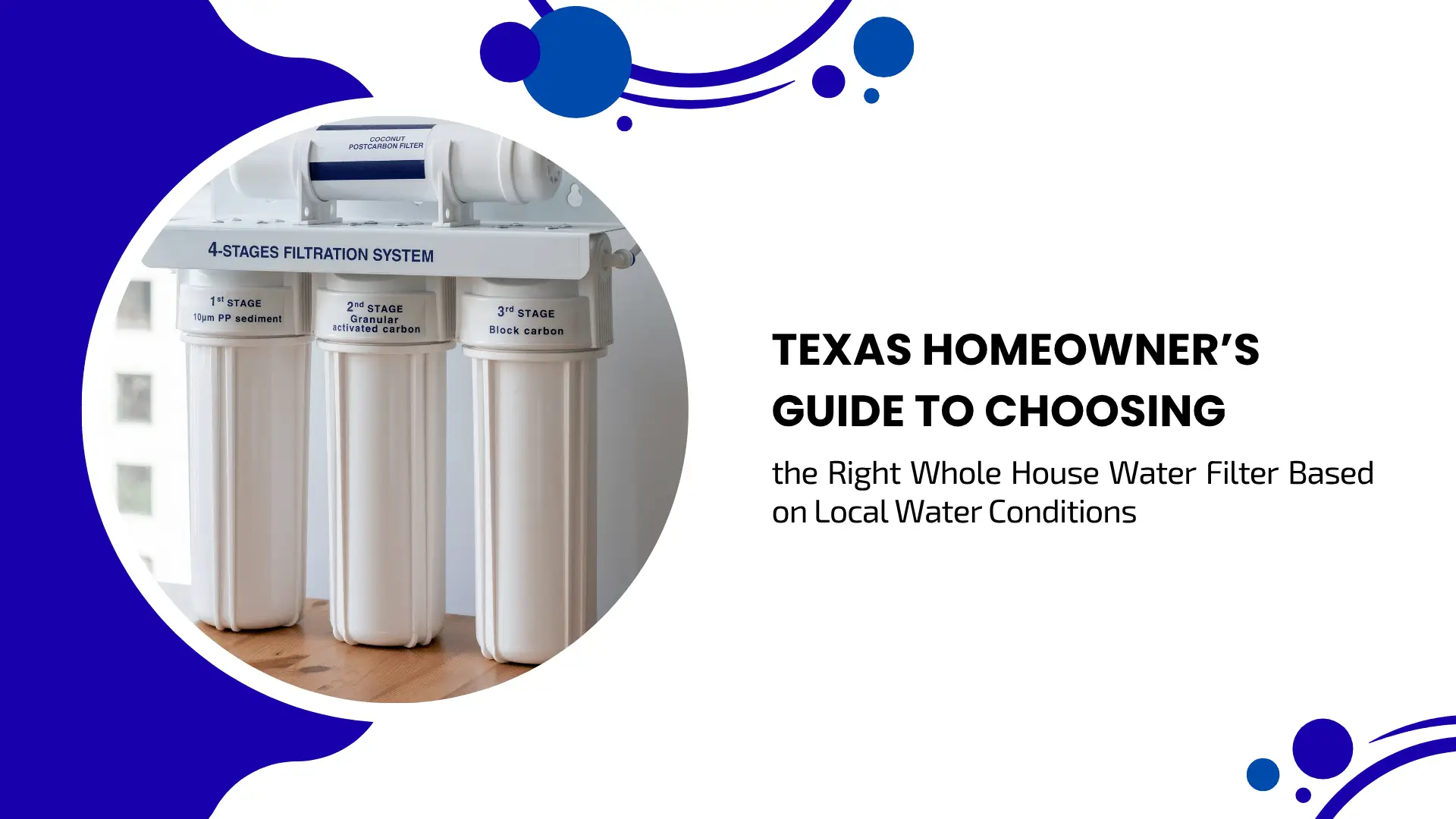
Whole house water filters use physical mediacarbon, catalytic carbon, KDF, or sediment filtersto remove specific contaminants from all the water entering your home. A good carbon filter will pull out chlorine, chloramines, VOCs, and improve taste and odor. Some systems include additional stages for sediment, iron, or hydrogen sulfide.
Reverse osmosis systems are the heavy hitters for drinking water. RO pushes water through a semipermeable membrane that removes up to 99% of total dissolved solids, lead, arsenic, nitrates, fluoride, and many other contaminants. The trade-off? They’re slow and produce wastewater. Most homeowners install a point-of-use RO system under the kitchen sink rather than trying to run their whole house through reverse osmosis.
Salt-free water softeners (often called conditioners or descalers) don’t remove hardness minerals. Instead, they change the crystal structure so the minerals don’t stick to pipes and fixtures. If you’re comparing salt free water softener vs salt based water softener, the salt-based version actually removes the hardness while salt-free just manages its behavior. The pros and cons of salt-free water softeners include no salt delivery needed and zero wastewater, but they won’t give you truly soft water the way traditional softeners will.
For most Texas homes, the ideal setup combines a whole house carbon filter (to remove chlorine and sediment) plus a water softener (if you have hard water) plus an under-sink reverse osmosis system for drinking water. That three-part approach solves nearly every common water complaint.
How Long Do These Systems Last? (Be Honest About Maintenance)
I’ll give it to you straight: no water treatment system is set-it-and-forget-it. But the maintenance isn’t difficult if you plan for it.
Whole house carbon filters need their media replaced every 6 to 12 months depending on your water usage and contaminant levels. The pre-filter (the first stage that catches sediment) usually needs replacement every 3 to 6 months.
Water softeners typically last 10 to 15 years with proper maintenance. You’ll need to add salt regularlyhow often depends on your water hardness and household size. If you’d rather not lug bags from the store, look into salt delivery for water softener services. In the San Antonio area, many homeowners use salt delivery service buda and surrounding communities to keep their softeners topped off without the hassle. water softener salt delivery san antonio options are widely available through several local providers.
Reverse osmosis systems generally last 10 to 12 years. The membrane needs replacement every 2 to 3 years. The pre-filters and post-filters get swapped annually.
Westinghouse water softener systems are known in the industry for their durability, and westinghouse water softener reviews often mention the brand’s solid construction and reliable performance. That said, proper installation makes a bigger difference than brand name alone.
For homeowners who don’t want to DIY the maintenance, water filtration maintenance in san antonio tx and water filtration installation in san antonio tx services are available through certified specialists. Companies like Aqua Pure LLC handle everything from initial setup to ongoing service.
What About the Weird Texas Water Problems?
Some issues don’t show up on standard water tests but drive homeowners crazy.
Rotten egg smell usually means hydrogen sulfide gas. It’s more common in well water but can show up in municipal supplies under certain conditions. Specialized iron and sulfur filters solve this.
Low water pressure after installing a whole house filter usually means the system is undersized or the filter is clogged. Don’t let a salesperson talk you into a system that can’t handle your home’s flow rate.
“Cut and shoot water” yes, that’s a real place in Texas near Conroeoften has high iron content that leaves reddish-brown stains on everything. A standard softener won’t fix iron stains. You need a dedicated iron filter or an oxidizing filter system.
When you’re ready to dispose of old water softener equipment, check with your local waste management facility. Many take old softeners as scrap metal. Don’t just leave it on the curb.
Frequently Asked Questions from Texas Homeowners
Is a whole-home water purification system worth it in Texas?
For most Texas homeowners, yes. The combination of hard water, chlorine treatment, and aging infrastructure in many cities means your water isn’t as clean or pleasant as it could be. A properly designed system protects your appliances, improves bathing and laundry, and gives you better drinking water. The catch is that you need the right system for your specific water conditions. A generic big-box store filter won’t cut it.
What water issues are most common in Texas homes?
Hard water tops the list by a wide margin. After that, chlorine taste and odor are the biggest complaints in surface-water cities like Houston. Well water owners deal with iron, manganese, and occasionally bacteria. Some areas near industrial sites or older housing stock have lead concerns from aging pipes.
Do water softeners remove contaminants like lead or chlorine?
No. This is a critical distinction. Water softeners only remove calcium and magnesium. They do not remove lead, chlorine, pesticides, pharmaceuticals, or bacteria. If you want those contaminants gone, you need a carbon filter or reverse osmosis system. A westinghouse water filtration system designed for whole-home use combines softening with filtration, but check the specifications carefully.
Is reverse osmosis water safe for daily drinking?
Absolutely. Reverse osmosis produces water that is exceptionally pure. The misconception about RO water “leaching minerals from your body” is not supported by any credible science. You get your essential minerals from food, not water. That said, some people don’t love the flat taste of ultra-pure RO water. Many RO systems now include a remineralization stage that adds back a small amount of calcium and magnesium for taste.
How long do home water systems typically last?
With regular maintenance: whole house filters last 5-10 years, softeners last 10-15, reverse osmosis systems last 10-12. The key is replacing filter media and membranes on schedule. Neglect cuts those lifespans in half.
Should I go salt-based or salt-free for hard water?
If you genuinely want soft watermeaning no scale buildup, better soap lather, and softer laundrychoose a traditional salt-based softener. Salt-free conditioners reduce scaling but don’t produce true soft water. The salt based vs salt free water softener decision comes down to your goals. If you’re on a low-sodium diet or have environmental concerns about salt discharge, explore potassium chloride instead of sodium or consider a salt-free conditioner with realistic expectations.
Finding Professional Help in Your Area
Once you know what you need, proper installation matters as much as equipment choice. A system installed incorrectly can bypass untreated water into your home or create pressure problems.
If you’re looking for water softener companies near me or water filtration service near me, look for certified specialists with experience in your specific water conditions. In the San Antonio area, residential water filtration systems in san antonio are widely available through local providers. water filtration system san antonio installers understand Edwards Aquifer water and can recommend appropriate pre-filtration before the water even hits your softener.
Conroe water filtration system services need to handle both surface water from Lake Conroe and groundwater from the Gulf Coast Aquifer, which have different treatment requirements.
Tomball reverse osmosis systems are popular among homeowners who want high-purity drinking water without filtering their whole house. That’s often a smart, cost-effective approach.
Making Your Final Decision
Here’s my practical advice after working with Texas homeowners for years:
Start with a water test. Know your hardness level, chlorine concentration, and any specific contaminants present in your area.
Match your system to your complaints. If scale is the problem, get a softener. If taste is the problem, get carbon filtration. If you’re worried about lead or heavy metals, get reverse osmosis for your drinking taps.
Don’t overspend on features you don’t need. Many Texas homes do beautifully with a whole house carbon filter plus a point-of-use RO system. If you have hard water, add a softener. That simple combo solves 90% of what homeowners actually care about.
If you’re in doubt, reach out to a company that offers in-home consultations. Aqua Pure LLC has been helping Texas homeowners navigate these decisions with honest recommendations based on your actual water conditions, not a sales script. Their certified specialists handle everything from whole home systems to softeners to reverse osmosis, and they can explain exactly what each option will and won’t do for your specific situation.
Your family deserves water that tastes good, cleans effectively, and doesn’t wreck your appliances. With the right information and a little guidance, you can absolutely get there.
Ready to take the next step? Visit Aqua Pure LLC to explore their water softener system options, home water filtration system solutions, salt for filtration systems, or reverse osmosis system installations. They’ll help you find the right fit for your Texas home.