


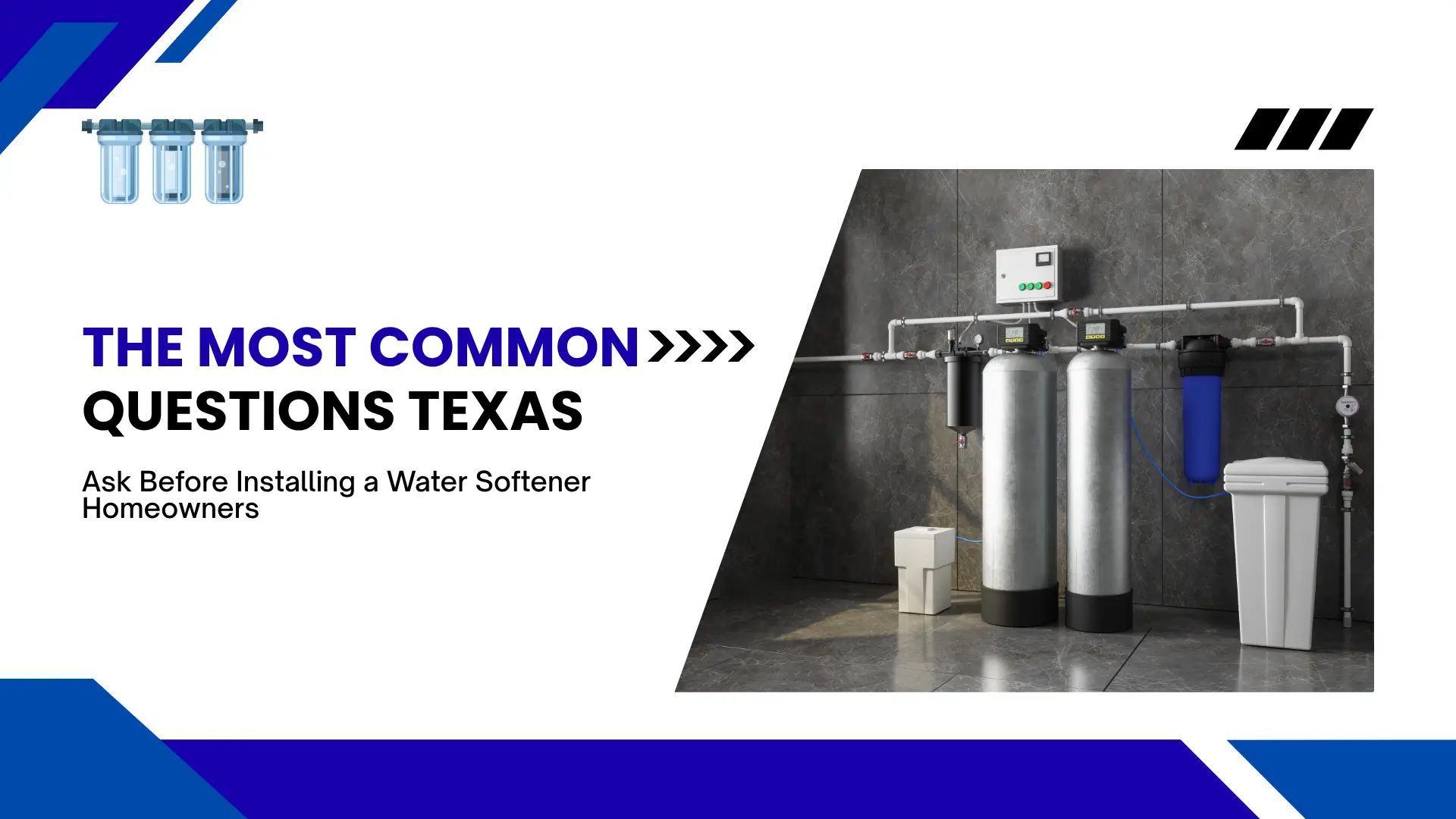
If you live in Sugar Land, Katy, Houston, or anywhere across the greater San Antonio and Austin corridors, you’ve probably noticed something about your water. Maybe it’s the white crusty stuff on your faucets. Maybe it’s how your skin feels after a shower kind of tight, kind of itchy. Or maybe you’ve just gotten used to buying bottled water because the tap stuff tastes… off.
You’re not imagining it. Texas water is notoriously hard, and it’s one of those things that homeowners here just deal with until they don’t. Before you drop money on a water softener system or a whole-home filtration setup, you’ve got questions. That’s smart. Here are the ones I hear most often from folks right here in the Houston and San Antonio metro areas.
WaitHow Do I Know If I Actually Have Hard Water?
You don’t need a lab coat to figure this out. Start with the soap test: fill a clear bottle about a third full with tap water, add a few drops of pure liquid soap (not detergent), and shake it up. If you get lots of fluffy suds, you’re probably fine. If the water looks cloudy and the suds are minimal, you’ve got hard water .
Then there are the visual clues. White, chalky buildup on your showerhead. Spots on your dishes even after the dishwasher runs. That film on your shower door that never seems to come off. Your soap won’t lather properly, and your laundry comes out stiff and scratchy .
In the Houston area, this is basically the default. A recent round of testing across neighborhoods from Sugar Land to Katy to Clear Lake found that 47 out of 50 homes tested above 10 grains per gallonofficially “hard” or “very hard” . The hardest sample hit 18 grains. For context, anything above 7 grains is considered hard, and Texas regularly ranks among the hardest-water states in the country .
If you’re on well water out toward Katy or the more rural pockets around San Antonio, you might also be dealing with iron, sulfur smells, or sediment that municipal water customers don’t see. That changes the conversation a bityou might need more than just a softener.
What’s the Difference Between a Softener, a Filter, and RO?
This is probably the biggest source of confusion, and it’s worth clearing up before you buy anything.
A water softener system targets hardness mineralscalcium and magnesium. It uses resin beads and a salt brine cycle to swap those minerals for sodium. The result is water that lathers better, doesn’t leave scale, and treats your pipes and appliances more kindly . It does not remove chlorine, lead, or bacteria.
A home water filtration systemespecially a whole-home carbon setuptargets a different list: chlorine, chloramine, sediment, taste, and odor. It makes your water smell and taste better and can reduce some chemical contaminants. But it won’t fix hardness. You’ll still get scale.
A reverse osmosis system is typically point-of-use, meaning it goes under your kitchen sink for drinking water. RO forces water through a membrane that catches things carbon filters missheavy metals like lead, arsenic, nitrates, and a wide range of dissolved solids . It’s the most thorough option for drinking water, but it’s not designed to treat your whole house.
Most Texas homes dealing with both hard water and chlorine end up with a combination: a softener for the whole house, carbon filtration for taste and chemical reduction, and maybe an RO at the kitchen sink for drinking and cooking.
Do Water Softeners Remove Contaminants?
Noand this is important. A softener removes hardness minerals. That’s it. It does not remove lead, chlorine, bacteria, or nitrates. If your concern is health-related contaminants, a softener alone won’t cut it.
That said, a softener can indirectly help with some issues. By reducing scale buildup in your pipes, it can extend the life of your water heater and reduce the places where contaminants might accumulate. But it’s not a purification device. Don’t let anyone sell you a softener as a solution for lead or bacteria.
If you’re worried about what’s actually in your waterespecially if you’re in an older Houston neighborhood with pre-1986 plumbing, where lead can leach from fixturesyou need testing and likely carbon filtration or RO .
Is Reverse Osmosis Water Safe to Drink Every Day?
Yes. RO water is safe for daily drinking. It’s actually one of the most effective ways to remove a broad range of contaminants, including things that carbon filters can’t catch .
The common concern is mineral removal. RO does strip out calcium, magnesium, and potassium along with the bad stuff. But here’s the thing: you get the vast majority of your minerals from food, not water. If you’re eating a reasonably balanced diet, you’re not going to become mineral-deficient from drinking RO water .
If it still bothers you, many modern reverse osmosis system setups include a remineralization stage that adds beneficial minerals back in. That’s a nice option if you want the purification benefits without the stripped-down taste.
The bigger practical consideration with RO is water waste. Older systems can waste three or four gallons for every gallon of clean water produced. Newer units are more efficient, but it’s worth asking about the wastewater ratio before you buy .
How Big of a Softener Do I Need?
Size matters more than you’d think. Too small and the system regenerates constantly, wasting salt and water and burning itself out early. Too big and it doesn’t run often enough to keep itself clean, which can lead to other problems .
The calculation goes like this: number of people in your house × 75 gallons per person per day × your water hardness in grains per gallon. That gives you the daily grain removal requirement. For example, a family of four with 15-grain water needs to remove about 4,500 grains per day. That points toward a system in the 32,000 to 48,000 grain range, depending on how often you want it to regenerate .
You can get a rough hardness number from your city’s annual water quality report, or you can test it yourself with strips. For anything you’re spending real money on, a professional test is worth it.
What About MaintenanceIs This Going to Be a Headache?
It’s not zero-maintenance, but it’s not complicated either.
A softener needs salt added every month or two, depending on your settings and water use. You’ll want to keep an eye on the brine tank and occasionally clean the resin bed. Most people find it’s about as involved as changing a furnace filterjust a different rhythm.
Whole-home carbon filters typically need pre-filter changes every three to six months and main filter replacements every year or so, depending on the system and your water quality. RO membranes last two to five years . The systems aren’t disposablea good one should give you 10 to 15 years of service if you keep up with it.
The key is not to ignore it. I’ve seen homeowners go four or five years without changing filters and wonder why their water tastes bad again. The system isn’t brokenit’s just exhausted.
Can I Just Install This Myself?
You can. People do. But here’s the honest version: water softener and filtration installation involves cutting into your main water line, soldering or fitting connections, and making sure everything is grounded and leak-free. A mistake can mean water damage, voided warranties, or a system that doesn’t work properly .
If you’re comfortable with plumbing and have the tools, go for it. But if you’re not sure, the cost of a professional install is usually worth the peace of mind. Licensed plumbers also know local code requirements and can size the system correctly for your specific water.
This is especially true for well water systems, which often need more than just a softener. Iron, sulfur, and sediment require different treatment stages, and getting the order wrong can make the whole system less effective.
So, Is a Whole-Home System Actually Worth It in Texas?
For most homeowners in this part of the state, yesif you’re dealing with both hard water and the chlorine or sediment that comes with municipal supply.
The math is straightforward: hard water kills water heaters. Scale buildup forces the heating element to work harder, and a water heater that should last 10 to 12 years can fail in four or five when it’s fighting 15-grain water every day . Add in the cost of replacing fixtures, dealing with clogged showerheads, and buying more soap and detergent than you should need, and the system often pays for itself over its lifespan.
The water also just feels different. Softer water means your skin isn’t tight after a shower. Your hair is easier to manage. Your dishes come out of the dishwasher without spots. Your laundry doesn’t feel like cardboard. These aren’t luxury upgradesthey’re the baseline experience water should provide.
If you’re in San Antonio or the Hill Country, you’re likely on the Edwards Aquifer, which is famously hard. If you’re in Sugar Land or Katy, you’ve got the Gulf Coast aquifer and whatever your MUD pulls, which varies but trends hard. Houston proper has its own challenges with aging infrastructure and the mineral content that comes with groundwater. The specifics change, but the overall picture is consistent: Texas water needs treatment.
A Few Quick Answers to the Rest
What water issues are most common in Texas homes? Hardness is the big one, but chlorine taste and odor, sediment, and in some areas iron or sulfur are close behind. Older homes may have lead concerns from plumbing, and neighborhoods with tankless water heaters sometimes see sediment issues from flash-heating hard water .
How long do these systems last? A well-maintained softener can go 10 to 15 years. Whole-home carbon filtration tanks often last five to 10 years before replacement. RO membranes need changing every two to five years. The equipment itself isn’t the limiting factormaintenance is .
Do I need a softener if I have an RO? They do different jobs. RO handles your drinking water. A softener protects your whole plumbing system, appliances, and skin. If you have hard water, you probably want both.
What if I’m on well water? You almost certainly need more than a softener. Well water treatment often involves sediment filtration, iron removal, and sometimes UV sanitization depending on what’s in your specific well. Get a comprehensive test before you buy anything.
If you’re ready to stop guessing and get a real assessment of what’s happening in your water, the folks at Aqua Pure LLC have been working with Texas homes for yearssizing softeners correctly, installing whole-home filtration and RO systems, and helping homeowners figure out what they actually need versus what they’ve been sold. No pressure, just straight answers about what’s in your water and what it’ll take to fix it.