


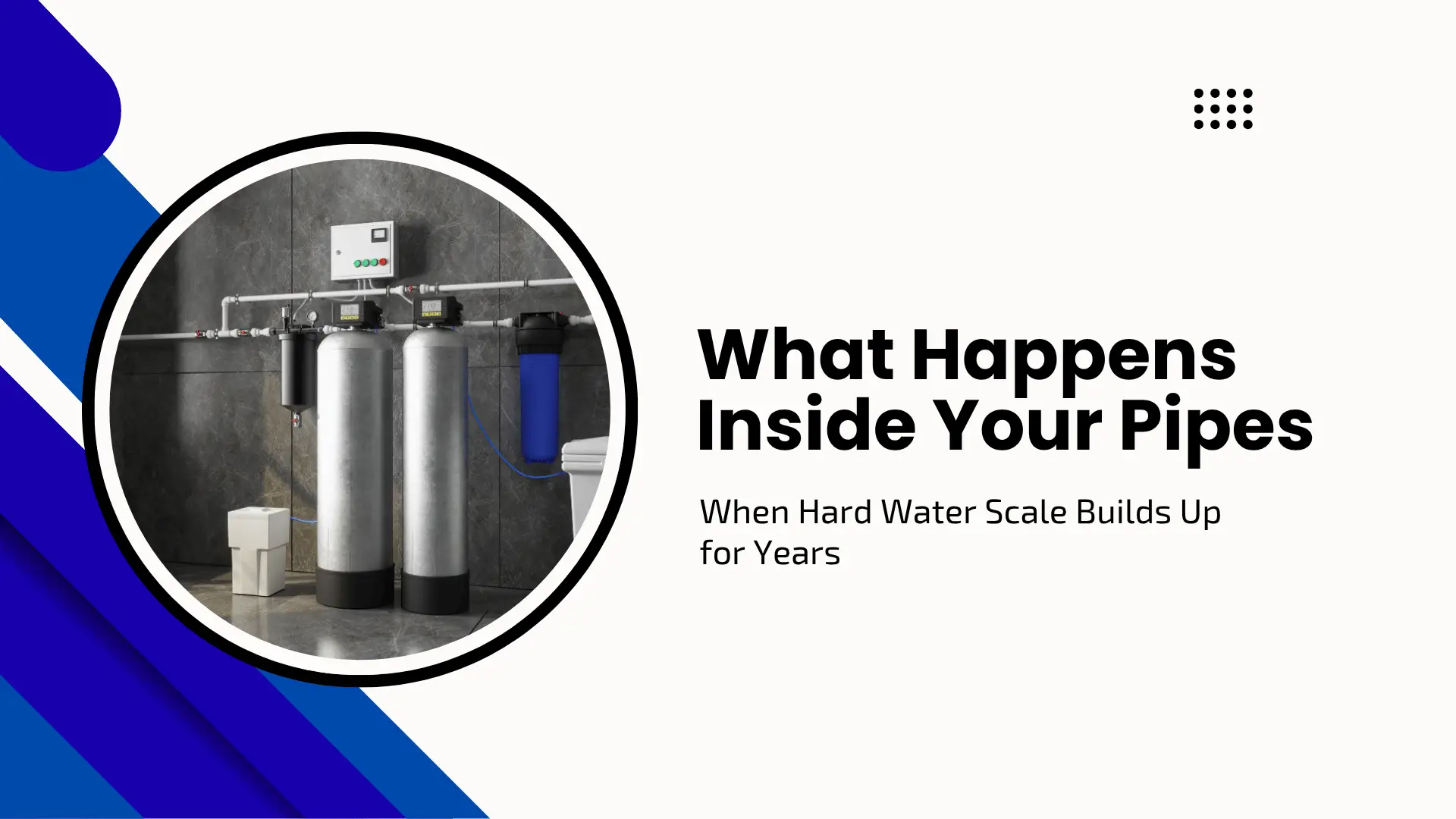
If you’ve lived in Texas for any length of time, you’ve probably noticed that white, crusty buildup on your faucets, showerheads, or inside your kettle. That’s hard water scaleand it’s not just a surface-level nuisance.
What you can’t see is what’s happening inside your pipes. And honestly? That’s where the real trouble starts.
I’ve talked with homeowners across Sugar Land, Houston, Katy, San Antonio, and surrounding communities who had no idea their pipes were slowly choking from the inside out. Year after year, hard water minerals like calcium and magnesium deposit themselves along the interior walls of your plumbing. At first, it’s a thin film. But over time? It becomes a hardened, cement-like layer that causes real problems.
Let me walk you through exactly what happens inside your pipes when hard water scale builds up for yearsand why so many Texas homeowners are finally deciding to do something about it.
The Slow, Silent Narrowing of Your Water Flow
Think of your home’s plumbing like the arteries in your body. When scale builds up, it doesn’t happen overnight. But over five, ten, or fifteen years, that buildup reduces the inner diameter of your pipes significantly.
I’ve seen homes where half-inch copper pipes had scale buildup so thick that the actual opening for water to pass through was closer to a quarter-inch. That means less water pressure at your shower, longer wait times for hot water at the kitchen sink, and your appliances working harder than they should.
One homeowner in San Marcos told me they thought their water pressure issues were just “how the house was built.” After inspecting their pipes? Nearly forty percent of the interior diameter was clogged with hard water scale. A whole-home water treatment solution turned things around completely.
Higher Energy Bills That Sneak Up on You
Here’s something most people don’t connect to hard water: your energy bills.
Scale is an insulator. When it builds up inside your water heaterand trust me, it willthat layer of minerals acts like a blanket between the heating element and the water itself. Your water heater has to run longer and work harder to get water to the temperature you want.
For tankless water heaters, the problem can be even more severe. The narrow passages inside a tankless unit can become completely blocked by scale, triggering error codes and shutting the system down entirely.
If you’ve noticed your gas or electric bill creeping up year after year with no change in your family’s habits, hard water scale inside your water heater and pipes could easily be the culprit.
Appliance Death: Slow, Expensive, and Totally Preventable
Your dishwasher, washing machine, and coffee maker are not built to handle years of hard water abuse.
Inside a dishwasher, scale clogs spray arms, ruins heating elements, and leaves that filmy residue on your glassware. Washing machines develop mineral buildup in valves and pumps. Even your ice maker isn’t safescale can clog the water inlet valve and leave you with no ice during a Texas summer.
I’ve had more than one homeowner in Conroe tell me they replaced a dishwasher twice in five years before realizing hard water was the real problem. Once they installed a proper system, their appliances started lasting like they were supposed to.
What Hard Water Scale Actually Is (And Why It Sticks)
Let me explain this simply so you understand why scale is so stubborn.
Hard water contains dissolved calcium and bicarbonate. When that water is heatedor even just sits in your pipes for a whilethose minerals transform into calcium carbonate. That’s the same stuff limestone is made of.
So basically, you’re growing limestone inside your pipes. And once it bonds to the pipe wall, you’re not scrubbing it away with a cleaning brush.
This is why a salt-based softener remains the most effective solution for most Texas homes. The ion exchange process removes those hardness minerals before they ever have a chance to settle in your plumbing.
How to Tell If Your Pipes Are Already Affected
You don’t need to cut open your walls to get a pretty good idea of what’s happening inside your pipes. Here are the signs I tell homeowners to watch for:
Gradually decreasing water pressure. If it used to take thirty seconds to fill your kitchen sink and now it takes a full minute, scale is likely the reason.
White or chalky residue on fixtures. What you see on the outside is also happening on the inside.
Soap that doesn’t lather well. Hard water reacts with soap to form “soap scum” instead of nice suds.
Stiff laundry and dingy whites. Your washing machine is fighting an uphill battle against mineral-laden water.
Frequent water heater repairs or early failure. If you’re replacing heating elements or flushing sediment regularly, hard water is your problem.
One family in Katy ignored these signs for years. When a pinhole leak finally developed in a pipe behind their kitchen wall, the plumber showed them a section of pipe that was almost completely sealed shut with scale. The repair cost? Thousands. A water softener system would have prevented the whole thing.
Why Texas Homes Are Especially Vulnerable
If you’ve spent any time looking into san antonio water quality or water conditions across the Houston and Sugar Land areas, you already know: Texas has exceptionally hard water.
Much of our water comes from underground aquifersthe Edwards-Trinity Plateau Aquifer, the Gulf Coast Aquifer, and others. As water moves through limestone formations, it picks up those calcium and magnesium deposits before it ever reaches your tap.
Cities like San Antonio, Austin, and Houston consistently rank among the hardest water in the country. So if you live in San Antonio, nearby Buda, or anywhere in between, this isn’t a “maybe” problem. It’s a matter of when, not if, scale becomes an issue in your home.
Some Texas homeowners have tried salt-free alternatives. And look, salt-free conditioners have their placethey change the structure of minerals so they don’t stick as easily. But if you already have scale buildup or you want to remove existing hardness from your water, a salt-based system is what actually works. Understanding the pros and cons of salt-free water softeners is important before you make a decision.
What Actually Removes Hard Water Scale?
Here’s where I want to be really clear, because there’s a lot of confusion out there.
Water filtration removes contaminants like chlorine, sediment, lead, and other unwanted particles. That’s different from water softening, which specifically targets hardness minerals.
A whole-home system often combines both. You might have:
- A sediment filter to catch dirt and rust
- A carbon filter to remove chlorine and improve taste
- A water softener using salt-based ion exchange to remove calcium and magnesium
- A reverse osmosis system under your kitchen sink for drinking water
For Texas homeowners worried about everything from hard water scale to chlorine taste to potential lead from old plumbing, this layered approach makes the most sense.
And yes, that means using salt. If you’ve avoided a water softener because you don’t want to lug heavy bags from the store, I hear you. That’s why many homeowners now use water softener salt delivery services to keep their system running without the hassle. With salt delivery for water softeners, you never run out and you never strain your back carrying forty-pound bags.
For families near San Antonio, there’s even salt delivery service Buda residents use regularly. And if you’re in Sugar Land or surrounding areas, you can find water softener salt delivery service that fits your schedule. Some companies even offer salt for water softener delivery right to your garage or utility room.
What About Drinking Water Safety?
This question comes up constantly: “If a water softener removes hardness, does it also remove contaminants that could hurt my family?”
Short answer: No. A standard water softener is not designed to remove things like lead, chlorine, pesticides, or bacteria. It swaps calcium and magnesium for sodium or potassium. That’s it.
That’s why many Texas homeowners pair a whole-home water filtration system with a reverse osmosis system at their kitchen sink. The RO system removes a much wider range of contaminants, giving you bottled-water quality straight from your tap.
Is reverse osmosis safe for daily drinking? Absolutely. The myth that RO water “leaches minerals from your body” isn’t supported by evidence. You get the vast majority of your essential minerals from food, not water. RO water is clean, safe, and tastes great.
How Long Do These Systems Last?
A properly maintained water softener typically lasts ten to fifteen years. A whole-home filtration system with regular filter changes can last even longer. Reverse osmosis membranes usually need replacement every two to three years depending on your water quality and usage.
The key phrase there is “properly maintained.” That means adding salt to your softener before it runs empty, changing sediment and carbon filters on schedule, and having your system checked periodically.
If you’re wondering how to dispose of an old water softener when it finally reaches the end of its life, check with your local waste management facility. Many communities have specific guidelines for appliance disposal, and some parts can be recycled.
Why More Texas Homeowners Are Acting Now
I’ve noticed a shift over the past few years. Homeowners aren’t just tolerating hard water anymore. They’re realizing that the cost of doing nothinghigher energy bills, appliance replacements, potential pipe repairsadds up to far more than installing a proper system up front.
Companies like Aqua Pure LLC have been helping Texas families with whole-home systems, reverse osmosis, softeners, and water sanitization for years. Their certified specialists handle everything from water testing to professional installation to ongoing water filtration maintenance in San Antonio TX and surrounding areas.
Whether you need residential water filtration systems in San Antonio or water filtration installation in San Antonio TX, working with local experts who understand Texas water conditions makes all the difference.
Frequently Asked Questions
Is a whole-home water purification system worth it in Texas?
For most Texas homeowners, yesespecially if you’re on well water or municipal supply from an aquifer. The combination of hard water, chlorine treatment, and potential sediment makes a whole-home system a practical investment. You’ll protect your pipes, extend appliance life, and have better tasting water from every tap.
What water issues are common in Texas homes?
Hard water is number one, by a wide margin. After that, chlorine taste and odor are common in city water. Sediment can be an issue, especially if your area has aging infrastructure. And while lead isn’t普遍 in source water, it can leach from older home plumbing or service lines.
Do water softeners remove contaminants?
No. Water softeners remove hardness minerals only. For contaminants like lead, chlorine, VOCs, or PFAS, you need filtrationtypically carbon filters or reverse osmosis.
Is reverse osmosis safe for daily drinking?
Yes. Reverse osmosis is one of the most thoroughly tested and widely used water treatment methods available. It’s safe for daily drinking, cooking, and making coffee or tea. Many families prefer it because it removes impurities that affect taste.
How long do home water systems typically last?
Water softeners: 10–15 years with basic maintenance. Whole-home filtration systems: depends on filter type, but the housing itself can last decades. Reverse osmosis systems: 10–15 years with regular membrane and filter changes.
Ready to Take the Next Step?
If you’ve been dealing with hard water scale, low pressure, or just wondering what’s happening inside your pipes, the best first step is simple: get your water tested. Once you know exactly what’s in your water, you can choose the right solution.
For Texas homeowners who want professional guidance, Aqua Pure LLC offers free water testing and personalized recommendations. Whether you need a water softener system, a reverse osmosis system, or just salt for filtration systems delivered to your door, they work with homeowners across Sugar Land, Houston, Katy, San Antonio, and surrounding communities.
Your pipes have been working hard for you for years. Isn’t it time you returned the favor?