


If you live in Katy, Sugar Land, or anywhere around Houston, you already know something about your water. It might be the white crusty stuff that keeps showing up on your faucets. Or maybe it’s the way your skin feels tight and itchy after a shower. For some folks, it’s that faint chlorine smell every time they turn on the tap.
Here’s the thing: most homeowners start researching water solutions because of a specific problem they can see or feel. But once you start digging, you run into a wall of confusing terms. Filtration. Purification. Softening. Reverse osmosis. UV. It’s enough to make anyone’s head spin.
Let’s cut through that confusion.
The Core Difference in Plain English
Think of it this way. Filtration is like a screen door it catches the big stuff floating in the air while letting the breeze through. Purification is more like a clean room in a laboratoryit doesn’t just catch particles, it actively eliminates the things that could make you sick.
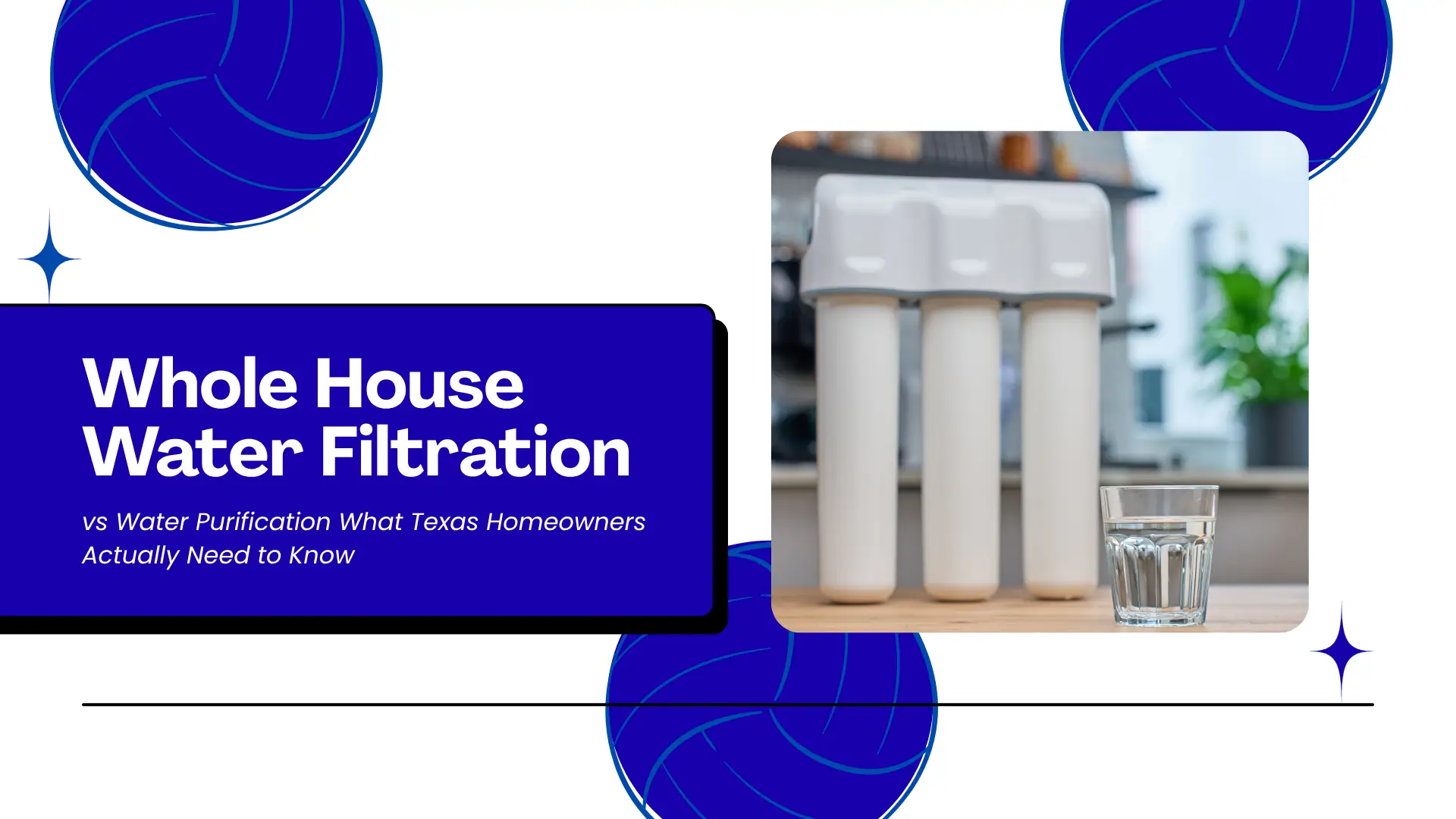
In practical terms, a whole-house water filtration system removes sediment, chlorine, and chemical odors from every tap in your home . A purification system goes further, using technologies like ultraviolet light to kill bacteria and microorganisms before they ever reach your faucet .
Most Texas homes with city water don’t actually need full purification. What they need is targeted filtration and softening. But homes on private wellsespecially out toward Fulshear, Richmond, or the rural edges of Fort Bend Countyoften need both .
What’s Actually Coming Out of Texas Taps
Here’s where local knowledge matters.
Houston-area water comes from a mix of surface water and groundwater. The groundwater picks up minerals from limestone aquifers, which is why hardness levels in Katy consistently test at 10–14 grains per gallonthat’s “very hard” territory . Sugar Land runs a bit lower but still lands in the hard-to-very-hard range . For comparison, anything above 7 grains per gallon is considered hard.
What does that mean for your home? Scale builds up inside your water heater, your dishwasher, and your pipes. You replace appliances sooner than you should. Your soap doesn’t lather properly. Your skin and hair pay the price .
But hardness minerals aren’t the only thing in the water. Houston treats its municipal supply with chlorine and chloramine to keep it safe from bacteria . Those disinfectants are necessary, but they also create that taste and smell many homeowners dislike. They can also dry out skin and hair over time.
And here’s something fewer people talk about: even water that meets EPA standards can still contain trace amounts of things like lead from older plumbing, PFAS compounds, or disinfection byproducts. A recent water quality analysis of Houston’s system noted that five contaminants were detected above health-based guidelines, though not above legal limits . That doesn’t mean the water isn’t safe. It means “legal” and “ideal” aren’t always the same thing.
Filtration, Softening, RO, and Purification: What Does What
This is where most homeowners get tripped up. These aren’t competing optionsthey’re different tools for different jobs.
Water softeners target hardness minerals specifically. They use ion exchange to swap out calcium and magnesium for sodium or potassium. A water softener system solves the scale problem, protects your appliances, and makes soap work properly . But it doesn’t remove chlorine, lead, or bacteria.
Carbon filtration handles taste, odor, and chemical contaminants. A whole-house carbon filter sits on your main water line and removes chlorine, chloramine, and many volatile organic compounds from every tap . This is what makes your shower feel different and your drinking water taste cleaner.
Reverse osmosis is a point-of-use technology, typically installed under your kitchen sink. It forces water through a semi-permeable membrane that captures contaminants down to a microscopic level . RO produces the cleanest drinking water available, but it’s too slow and wasteful to run your entire house . It also strips out beneficial minerals, which is why some homeowners add a remineralization stage.
UV purification uses ultraviolet light to destroy the DNA of bacteria, viruses, and other microorganisms . This is primarily a concern for well water users. City water is already disinfected, so UV is less critical unless you have specific concerns.
The practical takeaway: most Houston-area homeowners benefit from a combination of softening and carbon filtration. A reverse osmosis system at the kitchen sink gives you bottled-quality drinking water without the plastic waste . Well owners often need all four.
How to Tell What Your Home Actually Needs
Before you buy anything, figure out what problem you’re actually solving. Here are the signs that point to specific solutions:
You probably need a water softener if:
- White, chalky buildup appears on faucets and showerheads within days of cleaning
- Dishes come out of the dishwasher with spots or film
- Soap and shampoo don’t lather well
- Your skin feels dry or itchy after showering
- Laundry feels stiff or looks dull
You probably need carbon filtration if:
- Your water smells like a swimming pool
- Drinking water has an unpleasant taste
- You notice a chemical odor when running hot water
You might need reverse osmosis if:
- You’re concerned about lead, arsenic, or PFAS
- You want the cleanest possible drinking water
- You currently buy bottled water for drinking and cooking
You might need UV purification if:
- You’re on a private well
- You’ve had recent water testing show bacterial contamination
- You want an extra layer of protection for immune-compromised family members
If you’re not sure, get your water tested. A certified lab test gives you actual numbers instead of guesses. Be cautious about free tests offered by companies that also sell equipmentthere’s an obvious conflict of interest there .
What Maintenance Actually Looks Like
Nobody talks about this part enough.
Water softeners need salt. How much depends on your water hardness and how much water your family uses. You’ll also need to clean the brine tank periodically and check that the system is regenerating properly.
Carbon filters need media replacement. The timeline variessome last a year, others go several years depending on the specific media and your water chemistry. When carbon gets exhausted, it stops removing chlorine effectively.
RO systems have multiple filter stages. Sediment and carbon pre-filters typically need replacement every six to twelve months. The RO membrane itself can last two to five years with proper maintenance .
UV lamps lose intensity over time. Most manufacturers recommend annual replacement even if the lamp still glows.
The good news: modern whole-house systems are designed to be relatively hands-off. Programmable control heads handle backwashing and regeneration automatically . You’re not babysitting the systemyou’re just staying on top of consumables.
What About Aqua Pure?
If you’re in Sugar Land, Katy, or the surrounding areas, you may have seen Aqua Pure LLC mentioned in local water discussions. They’re a Texas-based company that installs and services whole-home water filtration systems, water softener systems, and reverse osmosis drinking water systems . They work with well-known equipment brands including Westinghouse water filtration and water softener products .
What stands out from their customer reviews is the emphasis on educationsales representatives who explain the water chemistry and why specific solutions make sense for specific homes, rather than just pushing the most expensive package . That matters when you’re making a decision this significant.
Aqua Pure serves homeowners across the greater Houston area and beyond, including Austin and San Antonio . They handle professional installation and offer ongoing service for things like filter changes and salt for filtration systems.
Frequently Asked Questions
Is a whole-home water purification system worth it in Houston?
For most homeowners, yesbut “purification” might not be the right word. What makes sense for Houston water is filtration and softening. The hardness alone justifies a water softener. The chlorine and taste issues justify carbon filtration. Whether you add reverse osmosis for drinking water is a personal preference, but many families find it eliminates bottled water purchases entirely.
What water issues are most common in Texas homes?
Hardness is the big one, especially in the Houston metro and extending toward San Antonio and the Hill Country. Chlorine taste and odor are nearly universal in city water. Iron and sulfur are common in well water, particularly in rural areas outside the city limits. Sediment shows up in older neighborhoods with aging infrastructure.
Do water softeners remove contaminants?
No, and this is an important distinction. Softeners remove hardness mineralscalcium and magnesium. They don’t remove chlorine, lead, bacteria, or most other contaminants. If someone tells you a softener alone will fix your water quality concerns, they’re either misinformed or not being straight with you. Softening is one piece of the puzzle, not the whole picture .
Is reverse osmosis safe for daily drinking?
Yes, absolutely. RO water is among the purest drinking water available. The concern some people raise is mineral removalRO strips out calcium and magnesium along with contaminants. If that matters to you, you can add a remineralization stage to put beneficial minerals back in. For most healthy adults, the minerals you get from food far exceed what you’d get from water anyway .
How long do home water systems typically last?
It depends on the components. Water softener tanks and control valves often last 10–15 years or more. Carbon media typically needs replacement every 3–7 years. RO membranes last 2–5 years. UV lamps need annual replacement. The system itselfthe tanks, valves, and housingis built to last. The consumables are what you replace over time .
A Final Word
The right water solution isn’t about buying the most expensive system or the one with the most stages. It’s about matching the technology to the actual problems in your water. Houston-area homeowners face specific challengeshardness, chlorine, and occasionally moreand the solution that works for your neighbor might not be the right fit for your home.
Start with testing. Understand what you’re dealing with. Then have a conversation with someone who can explain your options without the sales pressure.
If you’re ready to talk through your specific situation, the team at Aqua Pure LLC has been helping Texas homeowners solve water problems for years. They can walk you through whether a water softener system, a home water filtration system, or a reverse osmosis system makes the most sense for your homeand they won’t try to sell you something you don’t need.