


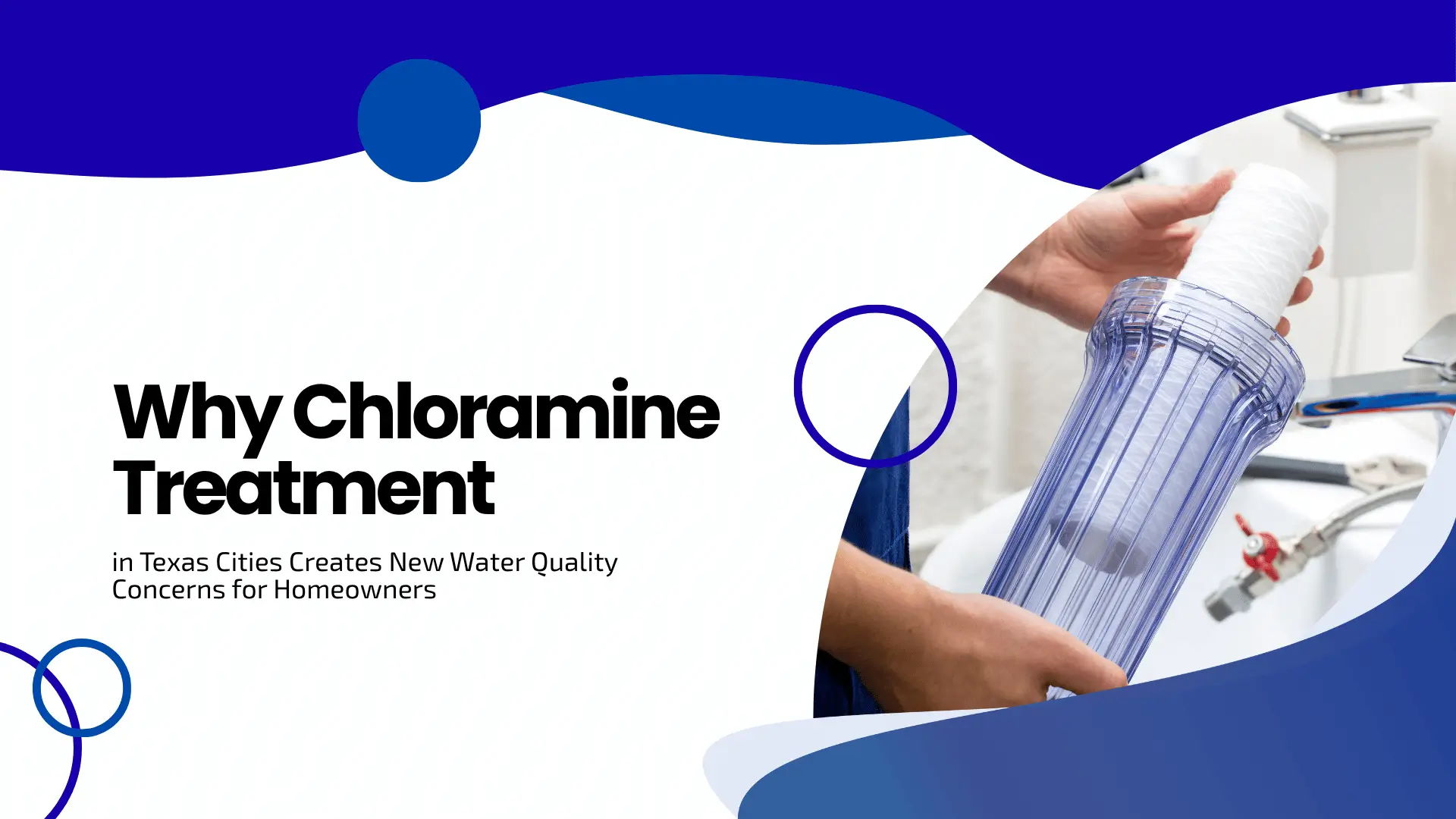
If you’ve noticed a different taste or smell coming from your tap water lately, you’re not alone. Many Texas homeownersespecially those in Sugar Land, Houston, Katy, and San Antonioare realizing that their city water isn’t quite what it used to be.
For decades, most Texas municipalities relied on free chlorine to disinfect drinking water. But a quiet shift has been happening across the state. More and more cities are switching to chloraminea longer-lasting disinfectant made by combining chlorine with ammonia.
On the surface, this sounds like a good thing. Chloramine stays active longer as water travels through miles of pipes, which means fewer bacterial issues at your tap. But here’s what your water utility probably isn’t telling you: chloramine creates a whole new set of problems for homeowners, especially when it interacts with your home’s plumbing, your family’s health, and your existing water treatment equipment.
Let me walk you through what’s really happening with Texas water and what you can do about it.
What Exactly Is Chloramine, and Why Is Texas Using It?
Chloramine isn’t newit’s been used in some U.S. water systems since the 1930s. But Texas cities have been adopting it more aggressively over the past decade. Houston began its large-scale switch years ago, and surrounding communities like Sugar Land and Katy have followed suit.
Here’s the simple chemistry: free chlorine is reactive and dissipates quickly. That’s great for killing germs at the treatment plant, but by the time water reaches a home in Conroe or San Marcos, much of that disinfecting power is gone. Chloramine lasts longer, so utilities can ensure water stays disinfected all the way to your glass.
The problem? Chloramine is less effective at killing certain pathogens than free chlorine. And more importantly for you as a homeowner, it’s much harder to remove from your drinking and bathing water.
The Real Problems Chloramine Creates Inside Your Home
This isn’t just a chemistry lesson. Chloramine causes specific, noticeable issues that Texas families are dealing with every day.
Skin and Hair Problems You Might Not Expect
Because chloramine doesn’t evaporate like chlorine does, it stays in your shower water. Many homeowners report increased skin dryness, itchiness, eczema flare-ups, and brittle hair after their city switched to chloramine. If someone in your family already has sensitive skin or respiratory issues like asthma, the change can be dramatic.
I’ve talked to homeowners in San Antonio who couldn’t figure out why their kids’ skin issues suddenly worsened. The culprit wasn’t soap or laundry detergentit was chloramine in the shower.
Lead and Copper Pipe Concerns
Here’s where things get more serious. Chloramine is more corrosive than free chlorine to certain metal plumbing components. If your home has older copper pipes or lead solder (common in homes built before 1986), chloramine can accelerate corrosion, potentially releasing lead and copper into your drinking water.
This is a hidden danger because you can’t taste, see, or smell lead. And while Texas cities test water at the treatment plant, that doesn’t account for what happens inside your specific home’s plumbing.
Problems for Kidney Dialysis and Fish Tanks
If anyone in your home requires kidney dialysis, chloramine in tap water is dangerousit must be completely removed before use. The same goes for aquarium owners. Chloramine is toxic to fish and amphibians, which is why pet stores sell specialized water conditioners. But many homeowners don’t realize this until they lose fish after a water change.
How Chloramine Affects Your Existing Water Treatment
This is where most Texas homeowners get caught off guard. If you already have a water softener, you might assume it’s removing chloramine. It’s not.
Standard salt-based softeners are designed to remove hardness minerals like calcium and magnesium. They do absolutely nothing to remove chloramine. The same goes for basic carbon filtersmost aren’t designed to handle the chloramine molecule, which is much harder to adsorb than free chlorine.
So if you’re relying on a basic fridge filter or a standard whole-house sediment filter, you’re still bathing in and drinking chloramine-treated water.
What Actually Removes Chloramine?
Removing chloramine requires a specific type of catalytic carbon filter. Standard activated carbon has some limited ability, but high-quality catalytic carbon is specially processed to break the chloramine bond effectively.
For whole-home protection, you need a filtration system designed specifically for chloramine removal, typically with longer contact time (called “empty bed contact time”) than standard carbon filters provide. This is why professional installation mattersa certified specialist needs to size the system correctly for your home’s water flow and chloramine levels.
A whole-home system can remove chloramine before it reaches any tap in your house, protecting your skin, hair, and plumbing. Then, many homeowners add a reverse osmosis system under the kitchen sink for drinking water, which provides an extra layer of protection.
Is Your Home Affected? Here’s How to Tell
You don’t need a lab test to suspect chloramine issues. Look for these signs:
- Your water smells or tastes different than it used tomore chemical-like or medicinal
- Family members are complaining about dry, itchy skin or brittle hair
- You’re noticing blue-green stains on fixtures (that’s copper corrosion)
- Your existing softener or filter doesn’t seem to be making water taste better anymore
The only way to know for certain is to test your water. Contact your city water utility for their annual water quality report, but rememberthat report covers water leaving the treatment plant, not what comes out of your tap. A home water test specifically for chloramine and heavy metals will give you real answers.
The Bigger Picture: Chloramine Isn’t the Only Texas Water Problem
Here’s the honest trutheven if your city switched back to free chlorine tomorrow, Texas homes still face serious water quality challenges. Hard water is widespread across the state, especially in San Antonio, Buda, and San Marcos, where mineral-heavy groundwater leaves scale on fixtures and shortens appliance lifespans.
Then you’ve got sediment from aging municipal pipes, potential lead contamination, and in some areas, agricultural runoff. Chloramine treatment solved one problem for water utilities but created several new ones for homeowners.
This is why many Texas families are moving away from piecemeal solutionsa softener here, a fridge filter thereand investing in whole-home water purification systems that address multiple issues at once.
Frequently Asked Questions About Texas Water and Chloramine
Is a whole-home water purification system worth it in San Antonio or Houston?
For most families, yesespecially with chloramine becoming standard. A properly designed whole-home system removes chloramine, reduces hardness, filters sediment, and protects every tap in your house. When you add up what you’d spend on bottled water, skin lotions, appliance repairs, and replacement plumbing fixtures, the investment often pays for itself in a few years.
What water issues are most common in Texas homes?
Three big ones: hard water (scale buildup and soap scum), chloramine (skin irritation and corrosion concerns), and sediment (dirt and particles from aging pipes). Homeowners in different areas face different combinationsSan Antonio has famously hard groundwater, while Houston deals more with treatment byproducts.
Do water softeners remove contaminants like chloramine or lead?
No, and this is a critical distinction. Standard water softeners remove hardness minerals only. They do not remove chloramine, chlorine, lead, pesticides, or most other chemical contaminants. For those, you need filtrationoften a catalytic carbon filter or reverse osmosis system. Many homeowners install a softener and a filter together.
Is reverse osmosis water safe for daily drinking?
Absolutely. Reverse osmosis (RO) is one of the most effective drinking water treatments available. It removes chloramine, lead, arsenic, nitrates, pharmaceuticals, and hundreds of other contaminants. The water is clean, great-tasting, and perfectly safe for daily drinkingincluding for children and pregnant women. Some people add a remineralization stage to improve taste, but RO water alone is safe and healthy.
How long do home water treatment systems typically last?
With regular maintenance, a quality water softener can last 10 to 15 years. Whole-home filtration systems varycarbon media typically needs replacement every 3 to 5 years depending on water usage and contaminant levels. Reverse osmosis membranes last about 2 to 3 years. The key is working with a company that offers water filtration maintenance in San Antonio TX and surrounding areas, so your system stays effective.
Taking Control of Your Home’s Water Quality
Here’s the bottom line: Texas cities made a decision to use chloramine for valid public health reasons, but that decision shifted the burden onto homeowners. The water leaving your treatment plant is technically safe, but the water coming out of your shower and kitchen tap may be causing problems you didn’t sign up for.
The good news is that you have options. A properly designed whole-home water filtration system can remove chloramine, protect your family from lead exposure, and dramatically improve your daily water experience. Many homeowners pair this with a water softener system installed to handle hard water problems simultaneously.
For drinking water, a dedicated reverse osmosis system under the kitchen sink provides bottled-water quality without the plastic waste or ongoing expense.
If you’re in Sugar Land, Houston, Katy, San Antonio, or surrounding Texas communities, you don’t have to guess about your water quality. Local specialists who understand exactly what’s in your city’s water can test your home, explain what’s coming out of your taps, and design a system that fits your family’s needs and budget.
Want to learn more about protecting your home from chloramine and other Texas water concerns? Reach out to Aqua Pure LLC. Their team works with homeowners across the state, offering everything from water testing to professional installation of whole-home filtration systems, water softeners, and reverse osmosis units. They know Texas water because they live here too.
Your family deserves water you can trustfrom every tap in the house, every single day.